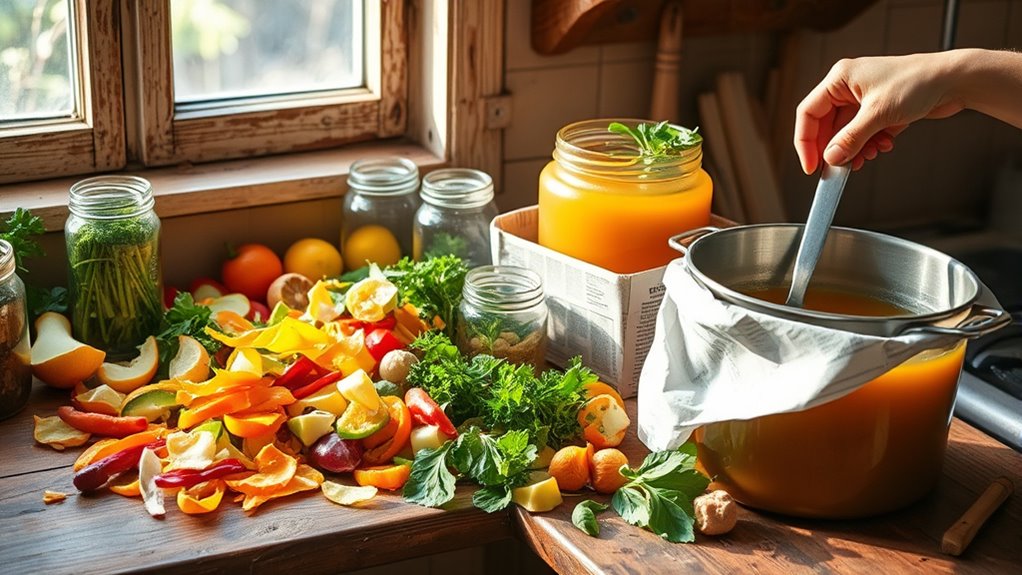

To reduce food waste at home, plan your meals ahead to buy only what you need, and organize your shopping lists accordingly. Properly store ingredients—using airtight containers and keeping produce in ideal conditions—to extend their freshness. Freeze leftovers and surplus ingredients in small portions to prevent spoilage. Get creative by pickling, drying, or fermenting excess produce. These simple tips help you waste less and make the most of what you buy—discover more ways to cut waste efficiently.
Key Takeaways
- Plan meals ahead to buy only necessary ingredients and avoid impulse purchases.
- Store produce properly in airtight or breathable containers to extend freshness.
- Freeze surplus cooked meals and ingredients in smaller portions for future use.
- Preserve excess ingredients via pickling, drying, or fermenting to prolong usability.
- Utilize all parts of ingredients and get creative to reduce food waste in cooking.
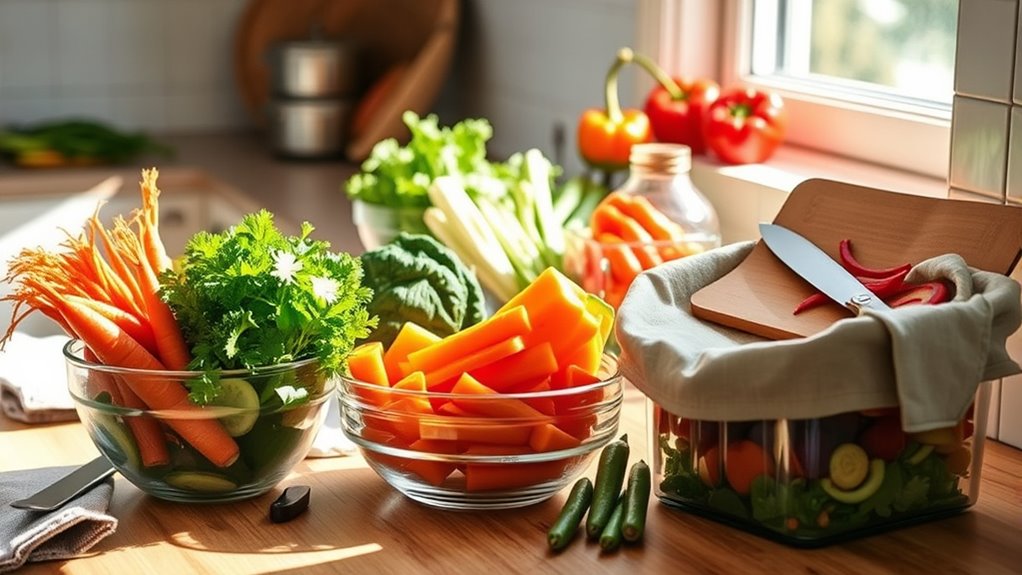
Have you ever wondered how to make your home cooking more sustainable? One of the simplest ways is by focusing on meal planning. When you plan your meals ahead of time, you can buy only what you need, which reduces impulse purchases and minimizes leftovers that might go to waste. Take a few minutes each week to map out your meals, considering what ingredients you already have and what you’ll need to buy. This approach not only prevents overbuying but also helps you organize your shopping list efficiently. With a clear plan, you avoid grabbing extra items just because they look appealing or because you’re unsure if you’ll use them. In turn, this cuts down on food waste generated from unused produce, leftovers, or spoiled ingredients.
Ingredient preservation plays a pivotal role in low-waste cooking. Once you’ve purchased your ingredients, it’s essential to store them properly to extend their freshness. Use airtight containers for cut vegetables, herbs, and leftovers to prevent spoilage, and learn the best methods for storing different produce—such as keeping root vegetables in a cool, dark place and berries in breathable containers. Freezing excess portions of cooked meals or fresh ingredients can considerably prevent waste. For example, if you cook a large batch of soup or stew, divide it into smaller portions and freeze what you won’t consume within a few days. This way, you always have ready-made meals on hand, reducing the temptation to throw away unused food.
Another effective strategy is to get creative with ingredient preservation techniques like pickling, drying, or fermenting. These methods allow you to extend the life of surplus produce, saving it from ending up in the trash. For instance, overripe bananas can be mashed and frozen for smoothies or baking, while vegetable scraps can be turned into flavorful broths. Learning how to properly store and preserve ingredients ensures that nothing goes to waste and that you maximize the value of your grocery shopping. It also encourages you to use all parts of your ingredients—stems, peels, and cores—that are often discarded, further reducing waste.
Frequently Asked Questions
How Can I Repurpose Leftovers Creatively?
You can repurpose leftovers creatively by turning them into new meals with recycling ideas in mind. For example, transform roasted vegetables into a hearty soup or use cooked grains in a stir-fry. Get inventive with creative meal ideas like making wraps, salads, or frittatas from your leftovers. This not only reduces waste but also keeps your meals interesting and flavorful. Embrace your creativity and make the most of what you already have!
What Are the Best Storage Tips to Extend Food Freshness?
Think of your fridge as a treasure chest, safeguarding freshness. You should store food in airtight containers, sealing in flavor and preventing spoilage. Proper refrigeration keeps perishable items cool and slows bacteria growth, much like a pause button on decay. Always label leftovers with dates, so you know what’s freshest. These habits help extend food’s life, reduce waste, and keep your meals delicious longer.
How Do I Plan Meals to Minimize Waste?
You can minimize waste by planning your meals carefully, starting with a detailed meal prep. Make a shopping list based on your planned meals to avoid impulse buys, and stick to it. Consider portion sizes to prevent leftovers. As you shop, buy versatile ingredients and use seasonal produce. This approach helps you use everything you buy, reduces spoilage, and cuts down on unnecessary waste, making your home cooking more sustainable.
Which Foods Are Most Waste-Prone and How to Avoid Spoilage?
You should watch out for foods like expired produce and spoiled dairy, as they’re most waste-prone. To avoid spoilage, store produce properly in breathable containers and keep dairy at the right temperature. Use leftovers promptly and plan meals around items nearing expiry. Regularly check your fridge, and don’t forget to label leftovers to track freshness. This way, you minimize waste and save money.
How Can I Compost Kitchen Scraps Effectively?
Think of your composting bin as a magic garden where kitchen scraps transform into black gold. To compost effectively, start with a balanced mix of greens and browns, like fruit peels and dry leaves. Regularly add kitchen scraps to your composting bin, turning it gently to aerate. Keep it moist but not soggy. This way, your kitchen scraps decompose quickly, enriching your soil and reducing waste.
Conclusion
By embracing low-waste home cooking, you’re not just saving food—you’re saving the planet. Every small choice, from planning meals to repurposing leftovers, adds up to a powerful ripple of change. Imagine a world where your kitchen becomes a sanctuary of sustainability, a place where your actions echo beyond your home. Together, we can turn the tide on waste and nurture a future where abundance, not excess, reigns. The power to make a difference is in your hands.