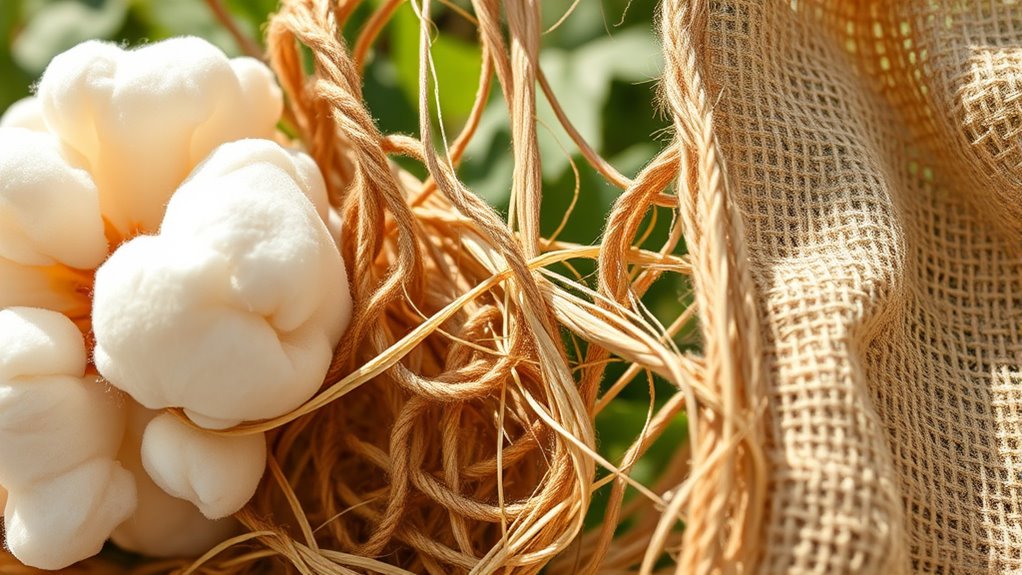

When choosing sustainable textiles, opt for organic cotton, hemp, and linen to make eco-friendly choices. Organic cotton is grown without harmful chemicals, reducing pollution and conserving water, while supporting fair treatment of farmers. Hemp grows quickly with minimal water and no pesticides, and it improves soil health. Linen, derived from flax, is durable and requires fewer chemicals and water. To discover how to make the most responsible choices, continue exploring these eco-conscious options.
Key Takeaways
- Organic cotton reduces environmental impact by avoiding synthetic chemicals and conserving water, verified through standards like GOTS and USDA Organic.
- Hemp grows quickly with minimal water and pesticides, naturally suppresses weeds, and enhances soil health, making it highly sustainable.
- Linen, derived from flax, requires fewer chemicals and less water, offering durable and biodegradable textile options.
- Supply chain transparency ensures ethical sourcing, verifies eco-friendly practices, and builds trust in sustainable textile choices.
- Choosing these fibers supports eco-friendly farming, reduces pollution, and promotes responsible resource management throughout production.

When selecting textiles, making sustainable choices is essential for reducing your environmental impact. Every decision you make influences not only the environment but also the people involved in the supply chain. Organic cotton, hemp, and linen are excellent options because they tend to have a lower environmental footprint compared to conventional fibers. But to truly make a difference, you should also consider the transparency of the supply chain. Knowing where and how your textiles are produced helps guarantee that they align with your values and that sustainable practices are maintained throughout the process.
Organic cotton stands out because it’s grown without synthetic pesticides or fertilizers, which reduces soil and water pollution. It also consumes less water compared to conventional cotton, making it a more sustainable choice. When buying organic cotton, look for certifications like GOTS (Global Organic Textile Standard) or USDA Organic, which verify that the fibers meet strict environmental and social standards. Supply chain transparency plays a crucial role here, as it allows you to trace the journey of the cotton from farm to finished product. This way, you can confirm that the farmers and workers are treated fairly, and that eco-friendly practices are upheld throughout the process. Additionally, sustainable farming practices contribute significantly to the overall environmental benefits of organic textiles.
Choosing organic cotton with transparent supply chains ensures fair treatment and eco-friendly practices from farm to finished product.
Hemp is another remarkable textile that boasts a minimal environmental impact. It grows rapidly and requires little water, no synthetic pesticides, and naturally suppresses weeds, reducing the need for herbicides. Hemp also helps improve soil health by adding organic matter back into the earth. When you choose hemp fabrics, you’re supporting a crop that’s highly sustainable from seed to fiber. However, as with other textiles, supply chain transparency is essential. It ensures that the hemp is cultivated responsibly and processed ethically, so you can trust that your purchase aligns with your sustainability goals.
Linen, derived from the flax plant, is known for its durability and natural biodegradability. It’s typically produced with fewer chemicals and less water than other fibers, making it an eco-friendly choice. Linen’s production process benefits from transparency because it allows you to verify that farms and factories follow environmentally responsible practices. When you prioritize supply chain transparency, you’re more likely to support brands dedicated to ethical sourcing and sustainable manufacturing. This not only reduces your environmental impact but also encourages the industry to adopt more responsible practices.
Top picks for "choos sustainable textil"
As an affiliate, we earn on qualifying purchases.
Frequently Asked Questions
How Do Organic Textiles Compare in Durability to Conventional Fabrics?
Organic textiles generally hold up well in durability testing, often matching or exceeding conventional fabrics. You’ll find that organic cotton, hemp, and linen tend to have excellent fabric longevity because they’re made from strong, natural fibers. With proper care, these sustainable fabrics can last for years, making them a smart choice for durable clothing and home goods. Their durability guarantees you get long-lasting wear while supporting eco-friendly practices.
What Certifications Should I Look for When Choosing Sustainable Textiles?
Think of certification standards like a trusted map guiding you through a forest of options. When choosing sustainable textiles, look for eco label criteria such as GOTS, OEKO-TEX, and USDA Organic. These certifications confirm your fabrics meet strict environmental and social standards, giving you confidence in their sustainability. They act as markers of integrity, helping you select textiles that align with your values and promote responsible production.
Are There Any Environmental Downsides to Hemp Cultivation?
Yes, hemp cultivation can have environmental downsides. It may affect soil health if not managed properly, leading to soil degradation over time. While hemp generally requires fewer pesticides than other crops, some growers still use pesticides, which can harm ecosystems. To minimize these impacts, look for sustainably farmed hemp that prioritizes soil health and reduces pesticide use, ensuring you’re supporting eco-friendly practices.
How Does Linen Production Impact Water Resources?
You might think linen production consumes a lot of water, but it actually has relatively low water usage compared to other textiles. Its ecological effects are minimal because linen is made from flax, which grows efficiently with less water and fewer chemicals. This makes linen a sustainable choice, as it reduces strain on water resources, helping preserve ecosystems while still providing durable, eco-friendly fabric options for your wardrobe.
Can Sustainable Textiles Be Used for All Types of Clothing?
Sustainable textiles can be used for many types of clothing, thanks to their fashion versatility and fabric adaptability. You’ll find organic cotton, hemp, and linen suitable for everything from casual wear to formal attire. While some designs might require specific fabrics, these eco-friendly options generally meet your needs, helping you stay stylish and environmentally conscious. With proper tailoring, sustainable textiles can truly serve all your clothing needs.
Conclusion
By choosing organic cotton, hemp, and linen, you’re making a powerful impact on the planet—more than just a drop in the ocean. These sustainable textiles are revolutionizing fashion and reducing environmental harm, proving that your choices can change the world. So next time you shop, remember, your decision is a superhero move for the Earth—fighting pollution and saving resources one fabric at a time. Go ahead, be bold, and wear your eco-consciousness proudly!