
To create a water-saving bathroom, install low-flow fixtures like toilets, showerheads, and aerators, which cut water use without sacrificing performance. Greywater systems can recycle water from sinks and showers for uses like irrigation, further reducing consumption. These upgrades lower your utility bills and lessen environmental impact. By making these simple changes, you’ll enjoy both savings and sustainability. Keep exploring to discover how to implement these solutions effectively in your home.
Key Takeaways
- Low-flow fixtures, such as toilets and showerheads, significantly reduce water use while maintaining performance.
- Greywater systems recycle wastewater from sinks, showers, and baths for non-potable uses like toilet flushing and irrigation.
- Upgrading fixtures with WaterSense labels ensures water efficiency without sacrificing comfort or convenience.
- Installing greywater systems and low-flow fixtures can lower utility bills and lessen environmental impact.
- Combining low-flow fixtures with greywater reuse promotes sustainable bathroom practices and responsible water management.

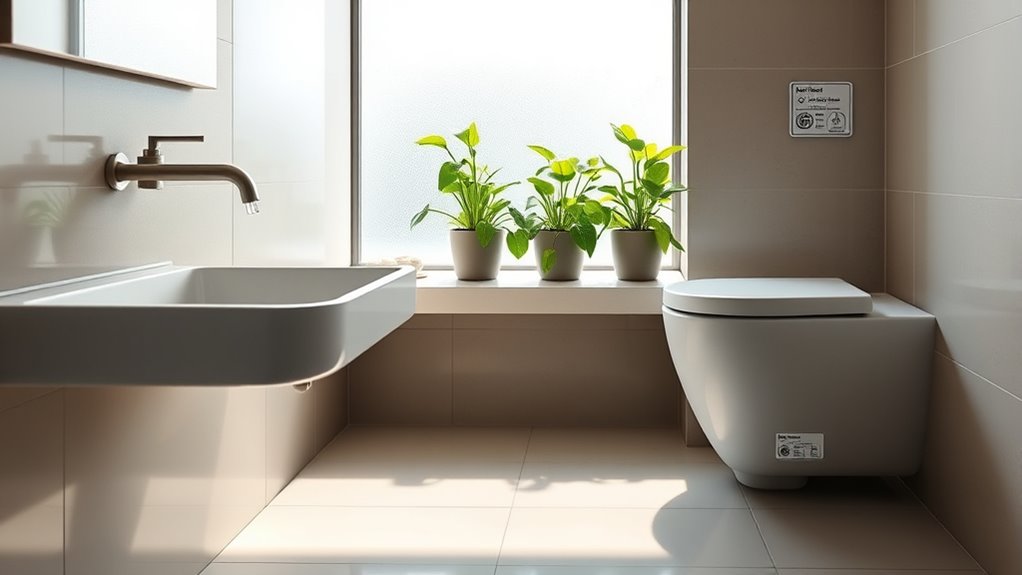
Have you ever considered how much water your bathroom uses each day? It’s probably more than you realize, especially with traditional fixtures that aren’t designed to conserve. Improving toilet efficiency is one of the simplest ways to cut down on water waste. Modern low-flow toilets use considerably less water per flush—sometimes as little as 1.28 gallons compared to older models that can use 3.5 or more gallons. These high-efficiency toilets work just as well, but they do so while using less water, helping you save money on your water bill and reduce your environmental impact. When shopping for a new toilet, look for models labeled as WaterSense or EPA approved, as these meet strict efficiency standards and ensure you’re choosing a fixture that minimizes water use without sacrificing performance.
Switch to WaterSense toilets to save water and reduce your environmental impact effortlessly.
Shower aerators are another smart upgrade to reduce water consumption without compromising your comfort. These small devices screw onto the end of your showerhead, mixing air with water to maintain pressure while using less water overall. By installing shower aerators, you can cut your shower water use by up to 50%, which translates into noticeable savings over time. Plus, they’re inexpensive and easy to install—no plumbing expertise needed. When you turn on your shower, you’ll notice the flow remains strong and satisfying, even though you’re using less water. It’s a simple change that can make a meaningful difference in your bathroom’s water footprint.
Beyond toilets and showerheads, other fixtures like faucets can also be upgraded with low-flow aerators. These little additions ensure you’re not wasting water when brushing your teeth or washing your hands. Incorporating water-saving fixtures into your bathroom can significantly reduce overall water consumption. Combining these updates creates a more efficient bathroom that meets your needs while conserving resources. Keep in mind that water-saving fixtures don’t just benefit the environment—they also save you money on utility bills. Over time, the savings on water and energy costs add up, making these upgrades a smart financial choice.
Incorporating these water-efficient fixtures into your bathroom isn’t just about compliance or trendiness; it’s about making a conscious decision to use water responsibly. Small changes, like choosing a high-efficiency toilet and installing shower aerators, can have a lasting impact. You won’t notice a difference in your daily routine, but you will see the benefits reflected in your water bills and in your contribution to reducing water waste. Making these adjustments is an essential step toward creating a more sustainable and eco-friendly home environment, all without sacrificing comfort or convenience.
Frequently Asked Questions
How Much Water Can Greywater Systems Save Annually?
You can save up to 30,000 gallons of water annually with greywater systems, depending on your household size and water usage habits. By following greywater regulations, you guarantee safe reuse, maximizing water recycling benefits. This sustainable approach reduces your reliance on municipal water, lowers utility bills, and minimizes environmental impact. Properly installed greywater systems are a smart investment, helping you conserve water effectively while adhering to local guidelines.
Are Low-Flow Fixtures Compatible With Existing Plumbing?
Yes, low-flow fixtures are generally compatible with existing plumbing, making fixture installation straightforward. You should check plumbing compatibility before upgrading to guarantee proper fit and function. Most low-flow toilets, faucets, and showerheads are designed to work with standard plumbing setups, so you won’t need extensive modifications. This makes switching to water-saving fixtures an easy way to reduce water use without hassle.
What Maintenance Do Greywater Systems Require?
You should perform regular maintenance routines on your greywater system to guarantee system durability. Check filters and screens frequently to prevent clogs, and clean them as needed. Inspect pipes and connections for leaks or damages, and flush the system periodically to prevent buildup. Following these steps helps your greywater system operate efficiently, reduces the risk of breakdowns, and extends its lifespan, making your water-saving efforts more sustainable and reliable.
Are Low-Flow Fixtures Cost-Effective Over Time?
Yes, low-flow fixtures are cost-effective over time because they reduce water bills and promote savings. While installation challenges may arise initially, the long-term cost savings outweigh these upfront efforts. By choosing low-flow fixtures, you lower your water consumption and utility costs, making them a smart investment for your home. Over time, these fixtures pay for themselves through decreased water usage and lower maintenance needs, providing ongoing financial benefits.
Can Greywater Reuse Affect Indoor Air Quality?
Sure, greywater reuse can affect indoor air quality if you ignore indoor air pollutants and plumbing compatibility. It’s like inviting a guest who turns out to be a toxic cloud—smelly, unhealthy, and hard to control. If your plumbing system isn’t compatible, bacteria and mold might thrive, releasing bad odors and pollutants into your home. So, think twice; proper planning keeps your indoor air fresh and your greywater system safe.
Conclusion
By choosing water-saving fixtures and greywater systems, you can remarkably reduce your home’s water footprint. Imagine installing low-flow toilets and capturing greywater from showers to irrigate your garden—you’re not only conserving water but also lowering your utility bills. For example, a homeowner in California saved over 30% on water costs after retrofitting their bathroom with these eco-friendly solutions. Embrace these innovations today and make a tangible difference for the environment and your wallet.