

Understanding privacy laws and data regulations for your smart home is vital to protect your personal information while enjoying the convenience these devices offer. Laws require manufacturers to secure your data through encryption, security updates, and transparent privacy policies. You have rights to control what data is collected and how it’s used, often needing to give explicit consent. Staying informed about these regulations helps you make safer choices—continue to explore how to guarantee your smart home remains private.
Key Takeaways
- Privacy laws require smart home devices to obtain clear user consent before collecting sensitive data.
- Manufacturers must implement security measures like encryption and regular updates to protect homeowner information.
- Users have rights to access, modify, or delete their data and can customize privacy settings on connected devices.
- Transparency policies inform homeowners about data sharing, third-party access, and affiliate disclosures.
- Regulations aim to balance smart home convenience with privacy protections, ensuring responsible data management.
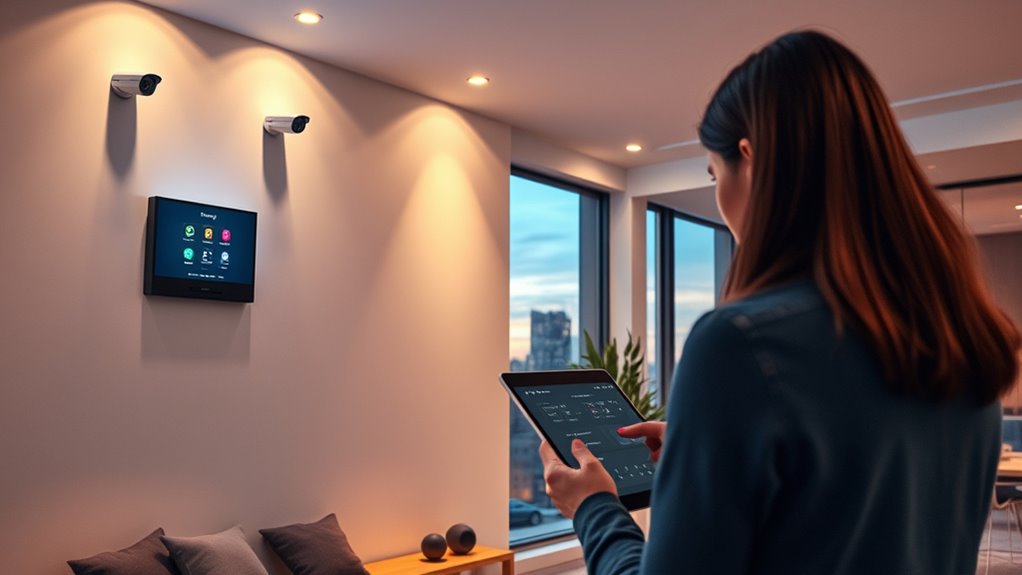
Have you ever wondered how privacy laws keep up with the rapid growth of smart home technology? As more devices connect to your home network—smart speakers, security cameras, thermostats—the amount of personal data generated skyrockets. That’s where data security and consent management come into play, ensuring your privacy remains protected amid technological advances. Laws around the world are evolving to regulate how your data is collected, stored, and used, but it’s up to you to understand your rights and responsibilities.
Data security is the foundation of privacy laws concerning smart homes. These laws aim to prevent unauthorized access, data breaches, and misuse of your personal information. Manufacturers and service providers are required to implement robust security measures to safeguard your data. This includes encryption, regular security updates, and secure storage practices. By doing so, they reduce the risk of hackers infiltrating your smart devices or intercepting sensitive information like voice commands or security footage. As a homeowner, you should also take proactive steps—using strong, unique passwords for your devices, enabling two-factor authentication, and regularly updating firmware—to bolster your data security. These practices help create a layered defense, making it harder for malicious actors to access your personal data.
Consent management is equally essential in the domain of smart homes. Privacy laws emphasize your right to control how your data is collected and used. When you install a new smart device or app, you’re often prompted to accept terms and privacy policies. These documents should clearly explain what data is being collected, why it’s needed, and who will have access to it. Good consent management means you read these policies carefully and make informed choices. Sometimes, you can customize your privacy settings to limit data sharing or opt out of certain features. Legislation also mandates that companies obtain your explicit consent before collecting or processing sensitive information, giving you a say in your digital privacy. This transparency helps you understand the scope of data collection and empowers you to take control of your information.
Additionally, awareness of affiliate disclosures and privacy policies ensures you understand how your data might be used for marketing or partnerships, which is an important aspect of digital privacy. In essence, privacy laws are designed to strike a balance between technological convenience and individual rights. They require companies to implement strong data security measures and promote clear consent management practices. As a homeowner, staying informed about these regulations is vital. It means you can better protect your personal data, make informed decisions about device usage, and hold providers accountable if your privacy is compromised. By understanding the interplay of data security and consent management within the framework of current laws, you’re better equipped to enjoy the benefits of your smart home without sacrificing your privacy.

Tapo 1080P Indoor Pan/Tilt Wired Security Camera – Works as a Baby & Pet Monitor, Motion Detection, 2-Way Audio, Siren, Night Vision, Subscription-Free Local Storage or Optional Cloud, Black, C201
- Pan/Tilt Range: 360° horizontal, 114° vertical view
- Motion & Sound Alerts: Instant notifications for motion, person, crying
- Storage Options: Local microSD or cloud storage
As an affiliate, we earn on qualifying purchases.
As an affiliate, we earn on qualifying purchases.
Frequently Asked Questions
How Can Homeowners Ensure Their Smart Home Data Remains Private?
You can keep your smart home data private by enabling smart device encryption to protect your information during transmission. Always review and accept user consent protocols before installing or updating devices, ensuring you’re aware of how your data is used. Regularly update device firmware, change default passwords, and disable unnecessary features. These steps help safeguard your data, giving you control over your smart home privacy and preventing unauthorized access.
Are There Penalties for Violating Privacy Regulations in Smart Home Setups?
Yes, there are penalties for violating privacy regulations in smart home setups. If you ignore privacy compliance, you could face legal consequences such as fines or lawsuits. Regulatory authorities actively monitor data practices, so it’s vital that you follow laws to protect your privacy and avoid penalties. Staying informed about data regulations helps guarantee your smart home remains compliant and prevents costly legal issues.
What Rights Do Homeowners Have Over Their Smart Home Data?
You have the right to data ownership over your smart home data, meaning you control how it’s used and shared. You should also have access to clear consent management options, allowing you to decide what data is collected and for what purpose. Regulations aim to protect your privacy, so guarantee your smart device providers respect these rights and give you transparency and control over your data at all times.
Do Privacy Laws Vary Between Different Countries or Regions?
Yes, privacy laws vary between countries and regions due to international differences and regional enforcement. You should be aware that data protections in one area might be stricter or more lenient than in another. These variations impact how your smart home data is collected, stored, and shared. Always stay informed about local regulations to guarantee your rights are protected and your smart home devices comply with regional enforcement standards.
How Can Homeowners Dispute Data Breaches or Misuse of Their Information?
When faced with data breaches or misuse, remember that “an ounce of prevention is worth a pound of cure.” You can dispute issues by exercising legal remedies, such as filing complaints with data protection authorities or seeking legal advice. Push for data transparency from companies, demanding clear explanations and accountability. Your proactive stance helps defend your rights and ensures companies uphold privacy standards, making your smart home safer and more secure.
Conclusion
As a homeowner, understanding privacy laws is vital, especially with over 60% of smart home devices collecting personal data. Staying informed helps you protect your privacy and avoid potential misuse. Remember, your data is valuable—know your rights and choose devices that prioritize security. By being proactive, you can enjoy the convenience of smart technology without sacrificing your privacy. Take control today, and make smart homes safer for everyone.