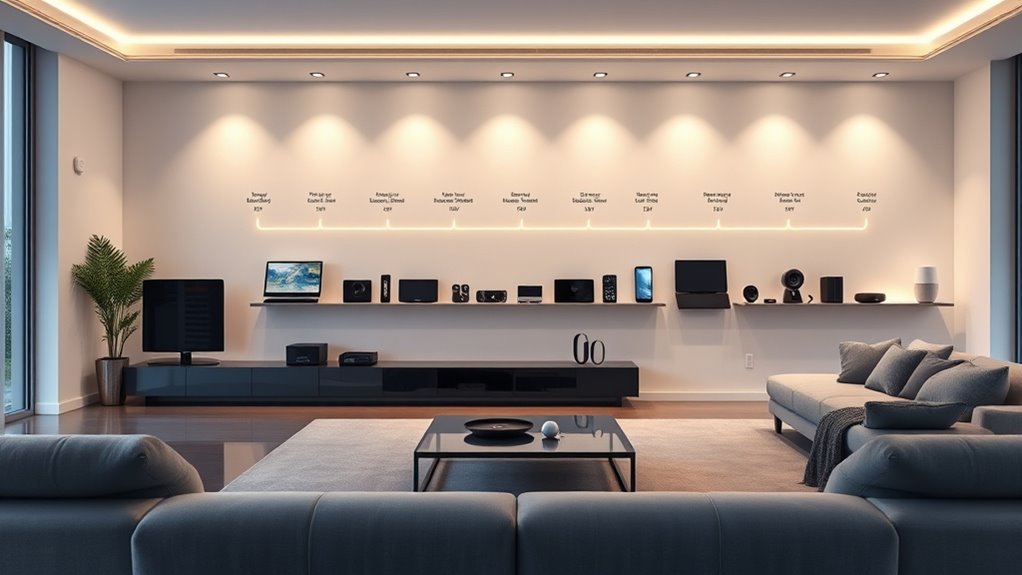

Over the decades, smart home protocols have evolved from fragmented, manufacturer-specific systems to more unified standards designed for better device communication. Early protocols like Zigbee, Z-Wave, and Wi-Fi aimed to improve compatibility but often faced interoperability issues. Industry initiatives like Thread and the upcoming Matter are now working to create seamless, cross-platform communication. If you keep exploring, you’ll discover how these developments aim to make your smart home more integrated and easier to control.
Key Takeaways
- Early smart home devices used proprietary protocols, leading to limited interoperability and fragmentation.
- Protocols like Zigbee, Z-Wave, and Wi-Fi emerged to standardize device communication across manufacturers.
- Industry initiatives such as Thread and the upcoming Matter protocol aim to unify protocols for seamless integration.
- Over time, standards have evolved to support more reliable voice control and cross-platform device compatibility.
- The future focuses on universal standards to create a fully interconnected, hassle-free smart home ecosystem.
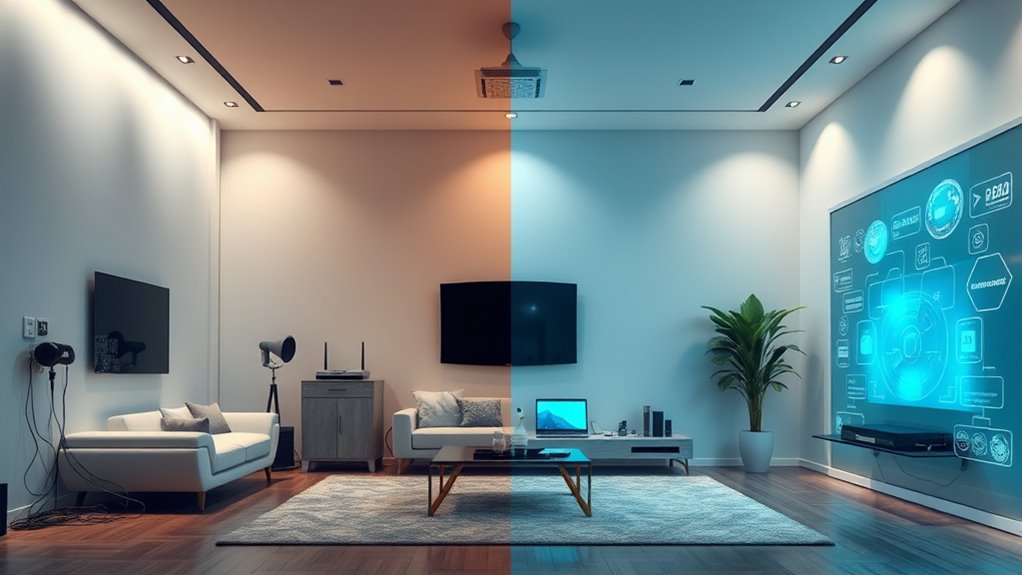
The evolution of smart home standards reflects the rapid growth and increasing complexity of connected devices in our daily lives. As more gadgets—from thermostats to security cameras—enter your home, the need for seamless integration becomes paramount. Voice control has emerged as a cornerstone feature, allowing you to manage devices hands-free and effortlessly. But with this convenience comes a set of interoperability challenges that developers and users alike have had to navigate. Different manufacturers often use incompatible protocols, making it difficult for your smart home system to work smoothly across all devices. This fragmentation can lead to frustration, with some devices not responding as expected or requiring multiple apps and hubs to operate. To address this, standards like Zigbee, Z-Wave, and Wi-Fi have been developed, each aiming to create common language among devices. Yet, these protocols sometimes struggle to communicate with each other, especially when it comes to voice control. For example, your smart speaker might recognize commands perfectly for devices on one protocol but falter with others, forcing you to juggle multiple platforms or manually switch between ecosystems. This interoperability challenge has driven industry efforts toward more unified standards, such as Thread and the upcoming Matter protocol, designed to bridge gaps and promote compatibility. These standards aim to give you a more consistent experience, where your voice commands reliably control all compatible devices regardless of their manufacturer. You want to ask your smart assistant to turn off the lights, lock the door, or adjust the thermostat, and expect it to work seamlessly. Instead, you’ve probably encountered instances where a device doesn’t respond because it’s on a different protocol or incompatible with your system’s voice control framework. The ongoing evolution of these standards reflects the industry’s recognition that user experience hinges on interoperability. As standards continue to mature, they aim to reduce the complexity and frustration caused by device incompatibility and fragmented ecosystems. Additionally, understanding the juice extraction process from oranges underscores the importance of fresh, nutrient-rich inputs to optimize health benefits, much like how standardized protocols aim to optimize device compatibility. For you, this means fewer apps to manage, quicker setup, and more reliable voice control. The goal is a smarter, more connected home where devices communicate effortlessly, and voice commands translate into immediate, accurate actions. Overall, the development of smart home standards is a response to the increasing demand for simplicity and reliability, making your connected life smoother. While challenges remain, especially around voice control and interoperability, the push towards universal standards promises a future where your devices work together harmoniously, giving you true convenience and control.
Frequently Asked Questions
How Do Standards Impact Smart Home Device Interoperability?
Standards directly impact your smart home device interoperability by ensuring compatibility across different brands and protocols. When standards are in place, you experience smoother device compatibility, making it easier to control and automate your devices seamlessly. This improves your overall user experience, reducing frustration and setup time. Without consistent standards, you might face compatibility issues, limiting your ability to integrate new devices into your smart home ecosystem effortlessly.
What Are the Current Security Concerns With Smart Home Protocols?
You face security concerns with smart home protocols like encryption vulnerabilities and privacy risks. Hackers can exploit weak encryption to access your devices or steal personal data. As technology advances, so do their tactics, making it essential to stay vigilant. Ensuring your devices use strong encryption, update firmware regularly, and choose secure protocols helps protect your home. Don’t overlook these risks—they’re the keys to maintaining your privacy and safety.
How Do New Standards Influence Smart Home Device Pricing?
New standards can raise smart home device prices initially, affecting market affordability. As manufacturers incorporate updated protocols, production costs might increase, leading to higher consumer prices. However, these standards also expand consumer choice by promoting more reliable and secure devices, ultimately encouraging competition. Over time, increased adoption and technological advancements tend to lower costs, making smarter homes more accessible and affordable for everyone.
Are There Regional Differences in Smart Home Protocol Adoption?
Sure, because everyone knows that your smart home should reflect your regional preferences and cultural influences, right? You’ll find different protocols dominate based on where you are—like Zigbee in Europe or Z-Wave in North America. Regional differences matter, shaping what’s compatible and what’s not. So, if you’re traveling or moving, don’t be surprised if your smart devices suddenly become wallflowers at the local tech party.
What Future Developments Are Expected in Smart Home Standards?
You can expect future smart home standards to focus on seamless integration, emphasizing voice control and energy management. Manufacturers will develop more unified protocols to guarantee compatibility across devices, making your smart home more intuitive and energy-efficient. Innovations will likely include smarter AI-driven automation and enhanced security features. These advancements aim to simplify your experience, giving you greater control and sustainability in managing your home environment effortlessly.
Conclusion
As you’ve seen, smart home standards have come a long way, evolving from early protocols like X10 to today’s seamless integrations. While it might seem like we’re living in a sci-fi movie, the journey continues—think of it as the flying cars of connectivity. Staying updated guarantees your smart home stays secure and efficient, so you can enjoy the future now. Embrace these changes, and your home will be smarter than ever before.