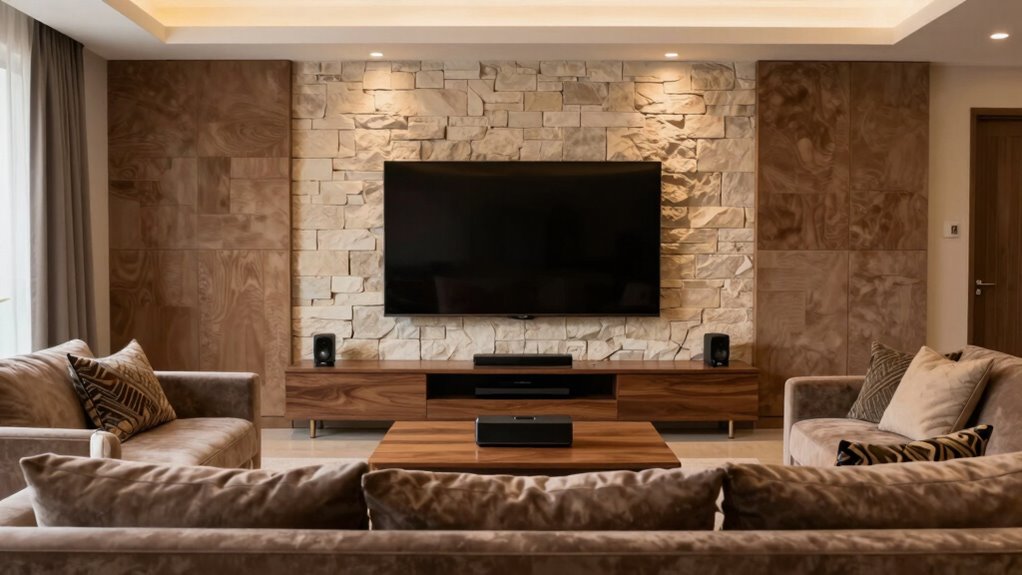

To improve your TV audio, start by focusing on room acoustics instead of just volume. The way your space interacts with sound affects clarity and immersion. Proper speaker placement, soundproofing, and acoustic treatments help control echoes, reduce background noise, and guarantee sound reaches you smoothly. Addressing these factors creates a better listening environment, making loud volume unnecessary. Keep exploring to discover how optimizing your room can transform your TV experience effortlessly.

Get decor and gifts delivered free — and shop member deals
- Fast, free delivery on millions of items
- Access to Prime Big Deal Days deals on October 6–7
- Prime Video, Amazon Music and more included
Key Takeaways
- Optimizing room acoustics enhances sound clarity and immersion without relying solely on increasing volume.
- Proper speaker placement directs sound effectively, reducing muddiness and dead spots.
- Acoustic treatments like panels and rugs absorb excess reflections, improving overall audio quality.
- Soundproofing minimizes external noise and sound leakage, creating a controlled listening environment.
- Understanding sound behavior guides effective adjustments, leading to better audio experiences at moderate volumes.
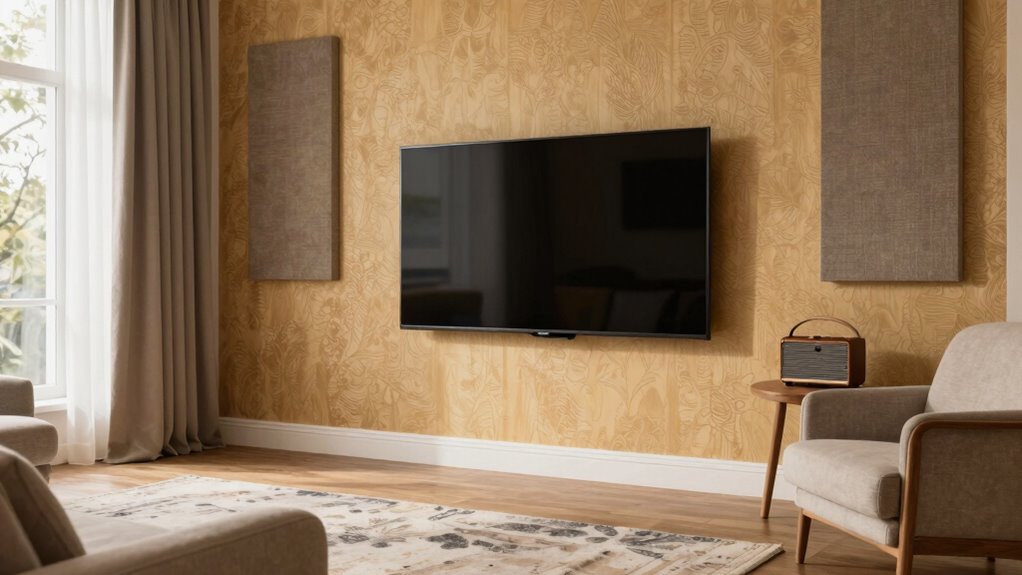
When it comes to improving your TV audio experience, focusing solely on increasing volume isn’t enough; instead, addressing your room’s acoustics can make a significant difference. The way sound interacts with your space impacts clarity, depth, and overall enjoyment more than you might realize. The first step is paying close attention to speaker placement. Properly positioning your speakers ensures that sound reaches you directly and evenly. Instead of placing speakers haphazardly, position them at ear level when seated, and aim them toward your listening area. If you’re using a soundbar, make sure it’s centered and not obstructed by furniture or objects. For surround sound systems, arrange speakers to create a balanced soundfield, with front, side, and rear speakers complementing each other. This setup reduces dead spots and echoes that can muddle dialogue and sound effects. Additionally, accurate speaker placement can help optimize your overall sound quality and minimize the need for excessive volume adjustments. It’s also beneficial to understand how room acoustics influence sound behavior, as this knowledge can guide you in making more effective adjustments.
Along with speaker placement, soundproofing techniques play an essential role in refining your audio environment. If your room echoes excessively or leaks sound to neighboring spaces, it’s time to add some acoustic treatments. Simple measures like adding rugs, heavy curtains, or wall hangings absorb excess sound waves, preventing them from bouncing around and causing reverberation. You can also install acoustic panels or foam tiles on walls and ceilings to control reflections and improve clarity. Creating a sound-absorbing environment with these techniques helps focus the sound, reducing background noise and preventing sound leakage, which can distort audio quality. Understanding how sound behavior interacts with various materials in a room can guide you in choosing the most effective acoustic solutions. Soundproofing isn’t just about blocking noise from outside; it’s about creating an environment where sound waves behave predictably, giving you a crisper, more immersive listening experience.
As an affiliate, we earn on qualifying purchases.
Frequently Asked Questions
How Can I Improve Room Acoustics for Better TV Sound?
To improve your room acoustics for better TV sound, start with acoustic treatment options like adding rugs, curtains, or wall panels to absorb sound reflections. Use soundproofing techniques such as sealing gaps and installing bass traps to reduce unwanted noise and echo. These adjustments help create a clearer sound environment, making your TV audio more immersive without increasing volume. Proper acoustics enhance dialogue clarity and overall listening experience.
What Are Common Room Issues Affecting Audio Quality?
You’ll notice that common room issues like echo, sound reflection, and outside noise affect your audio quality. To fix this, try soundproofing techniques such as sealing gaps and adding rugs or curtains. Wall treatment options like acoustic panels or foam can absorb excess sound and reduce echo, improving clarity. These adjustments help create a balanced environment, making your TV sound clearer and more immersive without increasing volume.
Do Different Room Sizes Require Different Audio Setups?
Just as a symphony needs the right hall, your room size shapes your audio setup. Larger rooms demand soundproofing techniques to prevent echo, while smaller spaces benefit from strategic speaker placement strategies to fill the space without overwhelming it. You should adapt your approach—bigger rooms need more powerful speakers and acoustic treatments, whereas smaller rooms thrive with clever positioning and damping. Tailoring your setup ensures every note reaches your ears with clarity and warmth.
Can Furniture Placement Affect TV Sound Clarity?
Yes, furniture arrangement and wall treatments can considerably affect your TV sound clarity. When you place furniture thoughtfully, it minimizes sound reflections and echoes that can muddle audio. Adding wall treatments, like acoustic panels or curtains, absorbs excess sound waves, improving clarity. Position your furniture to create an even sound environment and consider wall enhancements to optimize your viewing experience, making dialogue clearer and audio more immersive.
What Affordable Solutions Enhance Room Acoustics Effectively?
Did you know that proper acoustic treatment can improve sound clarity by up to 50%? To enhance your room acoustics affordably, consider simple soundproofing techniques like adding thick curtains or rugs, which absorb excess sound. You can also explore budget-friendly acoustic treatment options such as foam panels or DIY diffusers. These solutions reduce echoes and improve sound quality, making your TV audio clearer without breaking the bank.
Conclusion
Imagine trying to tune a guitar string without adjusting its pitch—you might get a loud sound, but it won’t sound right. The same goes for TV audio; if your room’s acoustics aren’t considered, even the loudest volume won’t deliver clear sound. Prioritizing room acoustics is like fine-tuning that guitar. When you optimize your space first, every dialogue and note becomes crisp, making your viewing experience truly resonate.
Halloween Picks
halloween
As an affiliate, we earn on qualifying purchases.