

When selecting an ERV for tight houses, the main challenge is balancing air quality with energy efficiency without sacrificing comfort. The Broan B210E75RS stands out as the overall best choice for its robust performance and quiet operation. For those seeking advanced control features, the Panasonic FV-12ESC1 Intelli-Balance Elite Plus offers excellent flexibility, while the Aprilaire V22BEC excels in large-scale homes with up to 6,000 square feet. The key tradeoffs in this category revolve around installation complexity, energy consumption, and system size. Keep reading to see how these options compare and which makes the most sense for your home.

Get decor and gifts delivered free — and shop member deals
- Fast, free delivery on millions of items
- Access to Prime Big Deal Days deals on October 6–7
- Prime Video, Amazon Music and more included
Complete the kit



Key Takeaways
- Top-performing units balance high energy recovery efficiency with low noise levels, essential for tight, energy-conscious homes.
- Advanced controls and Wi-Fi connectivity are increasingly common, but can add complexity and cost, making them more suitable for tech-savvy buyers.
- Size and airflow capacity are critical—choosing a system too small won’t meet your needs, while too large can waste energy and increase costs.
- Installation ease varies; some models are designed for easy retrofit, while others require professional setup, impacting overall affordability.
- Durability features like freeze protection and dual filtration are valuable, especially in colder climates where moisture and frost are concerns.
| Broan B210E75RS AI 206 CFM Wall or Ceiling Mounted Energy Recovery Ventilator |  | Best Overall ERV for Tight Houses | CFM: 206 | Mounting: Wall or Ceiling | Type: Energy Recovery Ventilator | VIEW LATEST PRICE | See Our Full Breakdown |
| Panasonic FV-12ESC1 Intelli-Balance Elite Plus ERV, 120 CFM |  | Best for Quiet, Customizable Ventilation | Airflow: 30–120 CFM | Motors: Dual brushless ECM | Filters: Dual MERV 13, optional washable MERV 6 | VIEW LATEST PRICE | See Our Full Breakdown |
| Awoco 6” Vent Energy Recovery Ventilator (ERV) System with Control Panel, Various Speeds, 100 CFM |  | Best for Attic Spaces with Adjustable Features | CFM: 100 | Power Source: AC | Special Features: Variable Speeds, Control Panel | VIEW LATEST PRICE | See Our Full Breakdown |
| Aprilaire V22BEC Energy Recovery Ventilator (ERV), 120 CFM for Homes up to 6,000 Sq. Ft. |  | Best for Whole-House Balanced Ventilation | CFM: 120 | Suitable Home Size: Up to 6,000 sq. ft. | VIEW LATEST PRICE | See Our Full Breakdown | |
| VENTS-US Frigate ERV 120s Energy Recovery Ventilator – Whole House Ventilation Fan with Freeze Protection and Dual Air Filtration |  | Best for Cold Climates & Simple Operation | Airflow: up to 162 CFM | Power Consumption: 19 Watts on LOW | Filtration: MERV 6 | VIEW LATEST PRICE | See Our Full Breakdown |
| VENTS-US Frigate ERV 150 EC Ventilation System – 186 CFM Whole House Fresh Air Intake and Humidity Exhaust with EC Motors for Balanced Indoor Comfort |  | Best Overall for Whole-House Balance and Durability | Airflow: 186 CFM | Features: Heat & Humidity Recovery, Electronic Defrost, EC Motors | Construction: Steel casing with anti-corrosion coating | VIEW LATEST PRICE | See Our Full Breakdown |
| Wi-Fi-Enabled Pioneer 50 Single-Room Wall-Mounted Energy Recovery Ventilator |  | Best for Remote Control and Smart Home Integration | Power Supply: 110-240 VAC (50-60 Hz) | Dimensions: 9-3/8″ x 19-5/8″ x 10-1/8″ | Airflow: 11.8 / 23.5 / 29.4 / 35.3 CFM | VIEW LATEST PRICE | See Our Full Breakdown |
| Panasonic FV-11ES1 Intelli-Balance Elite ERV, 110 CFM |  | Best for Flexible, Quiet, and Efficient Ventilation in Small Spaces | Power Source: AC | Room Type: Bathroom | Special Features: Manual, 3 speeds | VIEW LATEST PRICE | See Our Full Breakdown |
| Panasonic WhisperComfort 60 ERV Ventilation Fan | 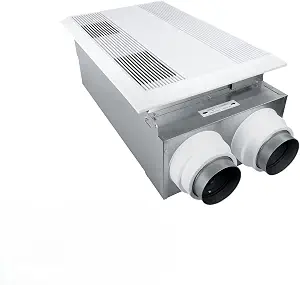 | Best for Balanced, Quiet Continuous Ventilation in Small to Medium Spaces | CFM: 20-60 | Type: Energy Recovery Ventilation (ERV) | Mounting: Ceiling or wall | VIEW LATEST PRICE | See Our Full Breakdown |
| VENTS-US Frigate ERV 150 Ventilation System – 180 CFM Whole House Fresh Air Intake and Humidity Exhaust |  | Best for Cold Climate Performance and Compact Design | CFM: 180 | Sones: 1.9 | Depth: 9.6 inches | VIEW LATEST PRICE | See Our Full Breakdown |
More Details on Our Top Picks
Broan B210E75RS AI 206 CFM Wall or Ceiling Mounted Energy Recovery Ventilator
This model stands out for its high capacity of 206 CFM, making it suitable for tighter homes where effective air exchange is critical. Compared with smaller units like the Panasonic FV-12ESC1, it offers more airflow for larger or more airtight spaces, but it lacks detailed specifications and user feedback, which can make sizing and performance predictions uncertain. Its wall or ceiling mounting options add installation flexibility, especially in homes with limited space. The high-performance ERV core promises superior heat and moisture transfer, helping to maintain comfort and air quality efficiently. However, the limited product details mean you may need to verify compatibility with your home’s ventilation system.
Pros:- High airflow capacity of 206 CFM suitable for tight homes
- Flexible mounting options for wall or ceiling installation
- Superior ERV core for effective heat and moisture recovery
Cons:- Limited product information and user feedback available
- No integrated smart controls or advanced features
Best for: Homeowners with tight, well-sealed houses needing robust ventilation capacity without complex controls
Not ideal for: Dwellings that require detailed control options or prefer integrated smart home connectivity, as this model offers limited customization features
- CFM:206
- Mounting:Wall or Ceiling
- Type:Energy Recovery Ventilator
- Ports:Side Ports
- Core Performance:Superior ERV Core
Our verdict“This ERV offers strong airflow and installation flexibility for tight homes but may require additional research due to limited detailed specs.”
Panasonic FV-12ESC1 Intelli-Balance Elite Plus ERV, 120 CFM
This pick makes the most sense for users prioritizing quiet operation and tailored airflow, thanks to its dual brushless ECM motors. Compared to the Broan model, it offers more control with adjustable CFM from 30 to 120, plus smart features like Wi-Fi control and optional high-efficiency filters. The high-quality MERV 13 filters ensure cleaner indoor air, which is particularly beneficial for allergy-sensitive households. The complexity of installation and control options, however, might be daunting for DIYers or those unfamiliar with smart home setups. This unit’s quieter operation and customization make it well-suited for homes where ventilation needs vary.
Pros:- Dual ECM motors for quiet, energy-efficient operation
- Adjustable airflow from 30 to 120 CFM for tailored ventilation
- High-quality MERV 13 filters for improved indoor air quality
Cons:- Installation may require professional assistance
- Control features could be overwhelming for some users
Best for: Homeowners seeking customizable, quiet ventilation with smart control options
Not ideal for: Individuals preferring simple, plug-and-play systems or with limited technical expertise, as setup can be complex
- Airflow:30–120 CFM
- Motors:Dual brushless ECM
- Filters:Dual MERV 13, optional washable MERV 6
- Installation:Ceiling, wall, or floor mount
- Control options:Wi-Fi, touch screen, timer
Our verdict“Ideal for those who want quiet, customizable ventilation with smart features, though setup might be complex.”
Awoco 6” Vent Energy Recovery Ventilator (ERV) System with Control Panel, Various Speeds, 100 CFM
This unit excels for attic applications where space is limited but effective ventilation is needed, with a straightforward control panel and adjustable speeds. Compared to the Panasonic FV-12ESC1, it offers a dedicated attic mount option and built-in dampers for airflow control, making it easier to fine-tune air exchange in less accessible spaces. While its 100 CFM capacity is sufficient for smaller or moderate-sized attics and adjacent rooms, it may fall short for larger or more airtight areas. The noise level at 50 dB and limited warranty are considerations, but its simple controls and washable filters support easy maintenance.
Pros:- Adjustable speeds and built-in dampers for customization
- Easy-to-use touch screen control panel
- Washable filters simplify maintenance
Cons:- Limited to 100 CFM, not suitable for large areas
- Installation restricted to attic spaces with specific duct sizes
Best for: Homeowners with attic spaces seeking adjustable, efficient ventilation in a straightforward package
Not ideal for: Large homes or spaces requiring higher CFM or more sophisticated controls, as it’s limited to 100 CFM and basic features
- CFM:100
- Power Source:AC
- Special Features:Variable Speeds, Control Panel
- Room Type:Attic
- Noise Level:50 dB
- Wattage:60 watts
Our verdict“Best suited for attic ventilation where moderate airflow and adjustable control are priorities, with some limitations in capacity.”
Aprilaire V22BEC Energy Recovery Ventilator (ERV), 120 CFM for Homes up to 6,000 Sq. Ft.
This unit offers a balanced ventilation approach ideal for large homes up to 6,000 sq. ft., combining straightforward controls with reliable energy recovery. Compared with the more feature-rich Panasonic, it emphasizes simplicity and durability, making it suitable for homeowners who want effective, whole-house ventilation without complex smart controls. Its ability to recover heat and moisture helps reduce HVAC energy costs, but installation may demand expertise in wall or ceiling mounting, and ongoing maintenance is necessary for optimal operation. It’s a dependable choice for those prioritizing reliability and consistency over advanced features.
Pros:- Effective heat and moisture recovery for energy savings
- Suitable for large homes up to 6,000 sq. ft.
- Simple controls for ease of use
Cons:- Installation may be complex for DIYers
- Lacks advanced smart control options
Best for: Large homes requiring balanced, energy-efficient ventilation with simple operation
Not ideal for: Small or retrofit projects where space or detailed control options are a priority, as this unit focuses on straightforward operation
- CFM:120
- Suitable Home Size:Up to 6,000 sq. ft.
Our verdict“A solid choice for large, multi-zone homes needing reliable, balanced ventilation with minimal fuss.”
VENTS-US Frigate ERV 120s Energy Recovery Ventilator – Whole House Ventilation Fan with Freeze Protection and Dual Air Filtration
This model makes a strong case for cold climate homes, with features like freeze protection and dual filtration that ensure reliable operation year-round. Its 162 CFM airflow capacity is suitable for moderate-sized homes or supplemental ventilation, especially when paired with other systems. Compared to the Aprilaire V22BEC, it offers more comprehensive protection against freezing issues, making it a smart choice for chilly environments. The three-speed switch provides basic airflow control, but the filters require regular cleaning, and installation might need professional help. Its corrosion-resistant steel casing ensures durability, making it a practical option for harsh climates.
Pros:- Effective freeze protection for reliable cold-weather operation
- Dual washable filters for easy maintenance
- Corrosion-resistant steel casing enhances durability
Cons:- Limited airflow capacity for larger homes
- Requires professional installation for best results
Best for: Homeowners in cold climates seeking reliable, freeze-protected ventilation with simple controls
Not ideal for: Very large homes or those requiring high airflow, as it maxes out at 162 CFM, and users seeking advanced smart features
- Airflow:up to 162 CFM
- Power Consumption:19 Watts on LOW
- Filtration:MERV 6
- Control:Three-speed switch
- Duct Size:5-inch
- Features:Freeze protection, humidity transfer
Our verdict“This ERV is well-suited for cold climates demanding dependable freeze protection and straightforward operation.”
VENTS-US Frigate ERV 150 EC Ventilation System – 186 CFM Whole House Fresh Air Intake and Humidity Exhaust with EC Motors for Balanced Indoor Comfort
The VENTS-US Frigate ERV 150 EC stands out for its ability to deliver balanced ventilation across an entire house, making it ideal for tight homes where controlling humidity and heat transfer is critical. Unlike smaller or single-room systems like the Panasonic FV-11ES1, this model offers nearly double the airflow capacity, making it better suited for larger or more airtight residences that need comprehensive fresh air exchange. Its heat and humidity recovery features significantly cut energy bills by reclaiming warmth and moisture, while durable steel construction ensures long-term reliability, even in challenging environments. The tradeoff is a more complex installation process that usually requires professional help, and the higher upfront cost may deter budget-conscious buyers. Still, for those prioritizing whole-house comfort and robust performance, this system justifies the investment.Pros:- Provides balanced fresh air intake and exhaust for improved indoor air quality
- Reduces heating and cooling costs through heat and humidity recovery
- Durable steel construction with anti-corrosion coating
Cons:- Complex installation that may require professional assistance
- Higher initial cost compared to simpler ventilators
Best for: Homeowners with tight, energy-efficient houses needing reliable, whole-house ventilation and humidity control
Not ideal for: DIY enthusiasts or homes requiring only basic, budget-friendly ventilation solutions, due to its installation complexity and cost
- Airflow:186 CFM
- Features:Heat & Humidity Recovery, Electronic Defrost, EC Motors
- Construction:Steel casing with anti-corrosion coating
Our verdict“This system is best suited for homeowners seeking a durable, full-house ERV with excellent humidity and heat recovery capabilities.”
Wi-Fi-Enabled Pioneer 50 Single-Room Wall-Mounted Energy Recovery Ventilator
The Pioneer ERV-50 offers high efficiency with 97% heat recovery and smart features like Wi-Fi control, making it ideal for those who want to manage indoor air quality remotely. Compared to the Panasonic FV-11ES1, which is more manual and suited for smaller spaces, the Pioneer excels in providing a seamless, app-based experience and continuous air quality monitoring, perfect for tech-savvy homeowners. Its compact wall-mounted design is suitable for individual rooms rather than whole houses, but this focus allows for optimized performance in specific areas. The main tradeoff is that installation may require wall modifications and a reliable Wi-Fi connection, increasing setup complexity and cost. If you prioritize convenience and smart controls for a single room, this model is a strong pick.Pros:- High heat recovery efficiency of 97%
- Wi-Fi control for easy remote management
- Quiet operation at a maximum of 32.7 dB(A)
- Effective filtration with washable filters and MERV13
Cons:- Installation may require wall modifications
- Higher initial cost compared to basic models
- Dependent on Wi-Fi connectivity for full features
Best for: Homeowners wanting smart, remote-controlled ventilation for individual rooms or small zones
Not ideal for: Large households needing whole-house ventilation, since this unit is designed for single-room use
- Power Supply:110-240 VAC (50-60 Hz)
- Dimensions:9-3/8″ x 19-5/8″ x 10-1/8″
- Airflow:11.8 / 23.5 / 29.4 / 35.3 CFM
- Control Methods:Onboard, Remote, Smartphone app
Our verdict“Ideal for tech-savvy users seeking smart, efficient ventilation in specific rooms, rather than whole-house solutions.”
Panasonic FV-11ES1 Intelli-Balance Elite ERV, 110 CFM
The Panasonic FV-11ES1 is tailored for smaller indoor areas like bathrooms or utility rooms, offering adjustable airflow with three speeds and whisper-quiet operation at 45 dB. Unlike the Pioneer ERV-50, which targets whole rooms, this model provides flexible installation options, including wall, ceiling, or floor mounting, making it more versatile for varied indoor setups. Its smart ECM motors deliver energy efficiency and low noise, but it lacks advanced smart home integration beyond basic controls, and its price can be higher due to these features. For users prioritizing quiet operation, customizable airflow, and easy installation in limited spaces, it makes a strong case.Pros:- Adjustable airflow with multiple speed settings
- Quiet operation with a 45 dB noise level
- Flexible mounting options for various indoor spaces
- Includes high-efficiency MERV 13 filters
Cons:- No comprehensive smart home features
- Higher cost for advanced features
- Requires professional installation for optimal setup
Best for: Homeowners seeking a compact, quiet ERV for specific indoor rooms like bathrooms or laundry areas
Not ideal for: Large homes or whole-house ventilation needs, as its airflow capacity is limited to 110 CFM
- Power Source:AC
- Room Type:Bathroom
- Special Features:Manual, 3 speeds
- Air Flow Capacity:110 cfm
Our verdict“This ERV is best for small spaces where quiet, flexible, and efficient ventilation is needed.”
Panasonic WhisperComfort 60 ERV Ventilation Fan
The Panasonic WhisperComfort 60 provides a balanced approach, delivering 20-60 CFM of fresh air with multi-speed settings, making it suitable for maintaining neutral pressure in small to medium rooms. Compared to the Pioneer ERV-50, which offers smart controls and higher efficiency, the WhisperComfort emphasizes simplicity, quiet operation, and ease of installation for ceiling or wall mounting. Its certified energy recovery and sound performance make it ideal for those who want a straightforward, energy-efficient solution without the need for smart features or extensive customization. The main limitation is its CFM range, which might be insufficient for larger spaces or whole-house applications, and it may require professional installation to ensure proper airflow.Pros:- Provides balanced fresh air and exhaust
- Multi-speed with boost functions
- Easy to install on ceiling or wall surfaces
- Certified for energy recovery and quiet operation
Cons:- Limited to 20-60 CFM range
- May require professional installation for optimal performance
- No advanced smart features or sensors
Best for: Homeowners seeking a straightforward, balanced ventilation solution for small to medium rooms
Not ideal for: Homes requiring whole-house ventilation or larger airflow capacities, as it maxes out at 60 CFM
- CFM:20-60
- Type:Energy Recovery Ventilation (ERV)
- Mounting:Ceiling or wall
- Certification:HVI
Our verdict“This fan suits homeowners wanting a simple, balanced, and quiet ventilation in small to medium rooms.”
VENTS-US Frigate ERV 150 Ventilation System – 180 CFM Whole House Fresh Air Intake and Humidity Exhaust
The VENTS-US Frigate ERV 150 offers a compact, energy-efficient solution with 180 CFM airflow and automatic frost protection, making it well-suited for cold climates where frost buildup can be a concern. Its enthalpy core maximizes heat and humidity recovery, similar to the larger VENTS-US Frigate 150 EC, but with a smaller footprint that’s easier to install in tight spaces. While it provides excellent humidity management and easy maintenance with washable filters, the system’s complexity means professional installation is often recommended. Compared with the larger, more feature-rich system, this model sacrifices some advanced controls for a more streamlined, cold-weather-ready design.Pros:- Energy-efficient heat and humidity recovery
- Compact and corrosion-resistant design
- Includes washable filters for easy maintenance
Cons:- May require professional installation due to complexity
- Limited airflow capacity compared to larger models
Best for: Homeowners in colder climates needing reliable, compact whole-house ventilation with frost protection
Not ideal for: Homes in milder climates or those seeking simple, plug-and-play solutions, due to installation complexity
- CFM:180
- Sones:1.9
- Depth:9.6 inches
- Filters:Washable MERV 6
- Protection:Automatic frost protection
Our verdict“This ERV is ideal for cold-weather homes seeking a compact, reliable, and energy-efficient ventilation system.”

How We Picked
These products were selected based on their performance in tight house conditions, focusing on energy recovery efficiency, noise levels, ease of installation, and control options. We prioritized models with proven reliability, good user reviews, and features that address typical challenges in tight homes—such as frost protection and energy savings. Cost-effectiveness and versatility also played roles, ensuring the list includes options suitable for different budgets and expertise levels. The ranking reflects a balance between overall performance, value, and specific features that benefit tight house owners.Factors to Consider When Choosing Best ERV For Tight Houses
Choosing the best ERV for a tight house requires considering several factors that go beyond basic specifications. Proper sizing ensures you get enough fresh air without excessive energy loss, while installation complexity can impact costs and timeline. Energy efficiency directly affects ongoing operational costs, making it a key consideration. Features like freeze protection and smart controls add convenience and longevity, especially in colder climates. Lastly, understanding your home’s specific needs—size, climate, existing ventilation—will help you select the most suitable system.Proper Sizing and Capacity
An ERV must match your home’s size and ventilation needs. Oversized units waste energy, while undersized systems struggle to maintain air quality. Pay close attention to the CFM ratings and match them to your home’s square footage and occupancy levels. Consider future expansions or modifications to prevent needing an upgrade too soon. Proper sizing not only improves comfort but also reduces operational costs over time.
Energy Efficiency and Operating Costs
Energy efficiency is vital for tight houses, where heat and cooled air are precious. Look for models with high recovery efficiencies—ideally above 70%. Features like variable-speed fans and smart controls can optimize operation, lowering electricity bills. Keep in mind that more efficient units sometimes come with higher upfront costs but can save money long-term. Balance initial investment with ongoing savings for the best value.
Ease of Installation and Maintenance
Some ERVs are designed for straightforward retrofit installation, which can significantly reduce costs and complexity. Others may require professional setup, especially if ducting or electrical work is involved. Maintenance features like accessible filters and frost protection help extend system life and reduce downtime. Avoid overly complicated systems if you’re not comfortable with DIY projects, but recognize that professional installation can pay off for better performance and longevity.
Climate and Frost Protection
In colder climates, frost buildup can damage the ERV or reduce its efficiency. Choose models with integrated freeze protection or dual-core systems that prevent frost from forming. These features are especially important for tight homes in northern regions, where moisture management is critical. Skipping frost protection can lead to costly repairs or system failure, so evaluate your climate before choosing a model.
Control Features and Connectivity
Smart controls, Wi-Fi connectivity, and user-friendly interfaces enhance convenience, allowing you to adjust settings remotely and monitor system health. These features are particularly beneficial for busy homeowners who want reliable ventilation without manual adjustments. However, they can add to the initial cost and complexity. Decide whether advanced controls align with your comfort level and technical comfort zone before opting for higher-end models.
Frequently Asked Questions
How do I determine the right size of ERV for my home?
To select the correct ERV size, measure your home’s square footage and consider the number of occupants. Most systems specify a CFM rating suitable for specific home sizes; match this to your needs to ensure proper ventilation. Oversizing can lead to unnecessary energy use, while undersizing won’t adequately refresh your indoor air. Consulting a professional for precise load calculations can prevent common sizing mistakes and optimize comfort and efficiency.
Are ERVs suitable for very cold climates?
Yes, but choosing an ERV with frost protection features is essential in colder regions. Systems with frost control or dual-core designs prevent moisture buildup and freezing, maintaining reliable operation during winter. Without these features, frost can block airflow or damage the unit, leading to costly repairs. Consider climate-specific models and make sure the system is rated for your area’s temperature extremes.
Can I install an ERV myself, or do I need a professional?
While some models are designed for DIY installation, most homeowners will find professional setup more reliable, especially for ducting and electrical work. Proper installation ensures optimal performance, energy efficiency, and durability. Skipping professional help can lead to issues like air leaks, improper sealing, or inadequate frost protection. Weigh your comfort with technical tasks against potential long-term benefits of expert installation.
How often do filters need to be replaced in an ERV?
Filter replacement frequency depends on usage and environmental conditions, but generally, filters should be checked every 6 to 12 months. In areas with high dust or pollution, more frequent changes may be necessary. Regular maintenance helps preserve indoor air quality and system efficiency. Some models include indicator lights or alerts to remind you when filters need changing, simplifying upkeep.
Is an ERV worth the investment for a tight house?
For tight houses, an ERV can significantly improve indoor air quality while reducing energy loss. Properly selected and maintained, an ERV offers a balance of fresh air and energy conservation, making it a worthwhile investment—especially in colder climates where heat recovery saves money. The upfront cost is outweighed by long-term savings on heating and cooling bills, alongside improved comfort and health benefits.
Conclusion
For most homeowners, the Broan B210E75RS offers the best overall performance, combining efficiency, ease of installation, and quiet operation. Those seeking value without sacrificing quality might prefer the Awoco ERV System, which provides reliable features at a lower price point. For larger homes or serious climate considerations, the Aprilaire V22BEC is ideal, especially if size and capacity matter most. Beginners or homeowners seeking straightforward setup should consider models like the Panasonic FV-11ES1, which balances features with simplicity. Finally, those in colder climates or with specific control needs should prioritize units with frost protection and smart controls, like the Vents-US Frigate ERV 150s. Your choice ultimately depends on your home’s size, climate, and your comfort with installation and maintenance.
As an affiliate, we earn on qualifying purchases.Fall Picks
fall essentials