
Incorporating natural light and indoor plants into your space can notably boost your well-being by improving mood, reducing stress, and enhancing mental clarity. Bright, sunlit environments help regulate your sleep and energy levels, while greenery fosters relaxation and a sense of connection to nature. These biophilic elements create a calming atmosphere that supports physical health and emotional balance. Keep exploring how these simple features can transform your environment for better health and happiness.
Key Takeaways
- Natural light regulates circadian rhythms, improving sleep quality and boosting daytime energy and mood.
- Indoor plants enhance air quality, reduce toxins, and create calming environments that lower stress levels.
- Biophilic design elements promote mental clarity, focus, and recovery from mental fatigue.
- Connection to nature through indoor greenery decreases cortisol levels and fosters a sense of well-being.
- Incorporating natural features in spaces supports physical resilience, immune health, and overall happiness.
Have you ever wondered how the spaces around you influence your mood and health? The answer lies in the power of biophilic design, which integrates elements of nature into your everyday environment. When you bring natural light into your home or workspace, it does more than just illuminate the space; it lifts your spirits and enhances your overall well-being. Natural light regulates your circadian rhythms, helping you sleep better and feel more energized during the day. It also boosts your mood by increasing serotonin levels, reducing feelings of stress and anxiety. Without enough exposure to natural light, you might feel sluggish or down, but incorporating sufficient daylight can make a significant difference.
Natural light boosts mood, regulates sleep, and enhances overall well-being through biophilic design.
Indoor plants are another crucial aspect of biophilic design that directly impacts your health. Adding greenery to your environment isn’t just about aesthetics—it’s about creating a healthier, more calming space. Indoor plants improve air quality by filtering toxins and increasing oxygen levels, which helps you breathe easier and stay alert. They also introduce a sense of tranquility, reducing stress and promoting a more relaxed state of mind. When you care for plants, it can even foster a sense of purpose and mindfulness, helping you stay grounded amid busy routines. The visual connection to nature through greenery can lower your heart rate and decrease cortisol levels, the hormone associated with stress.
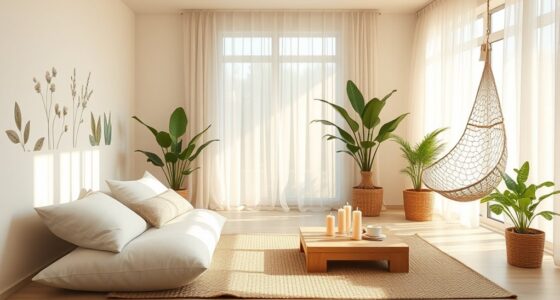
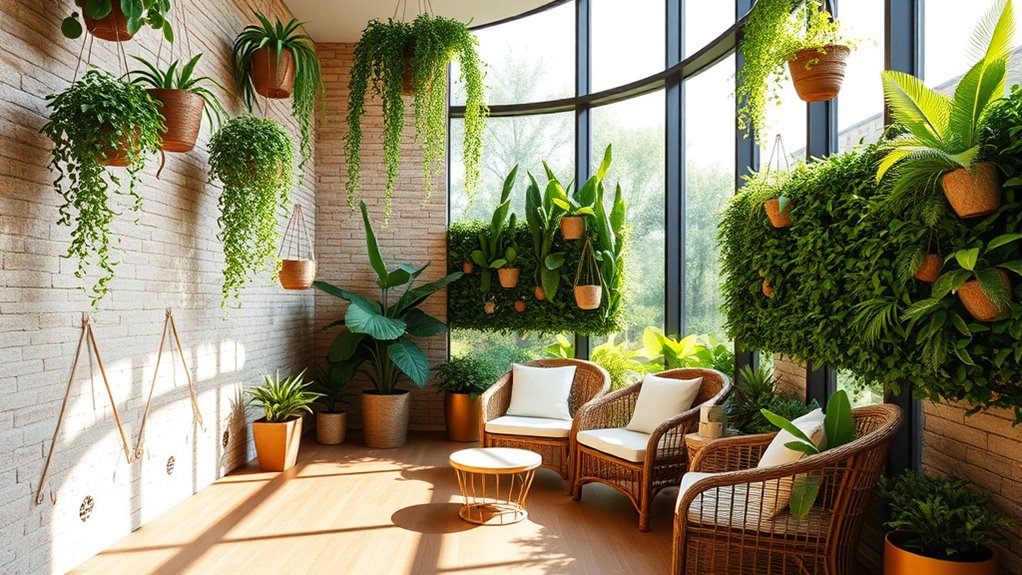
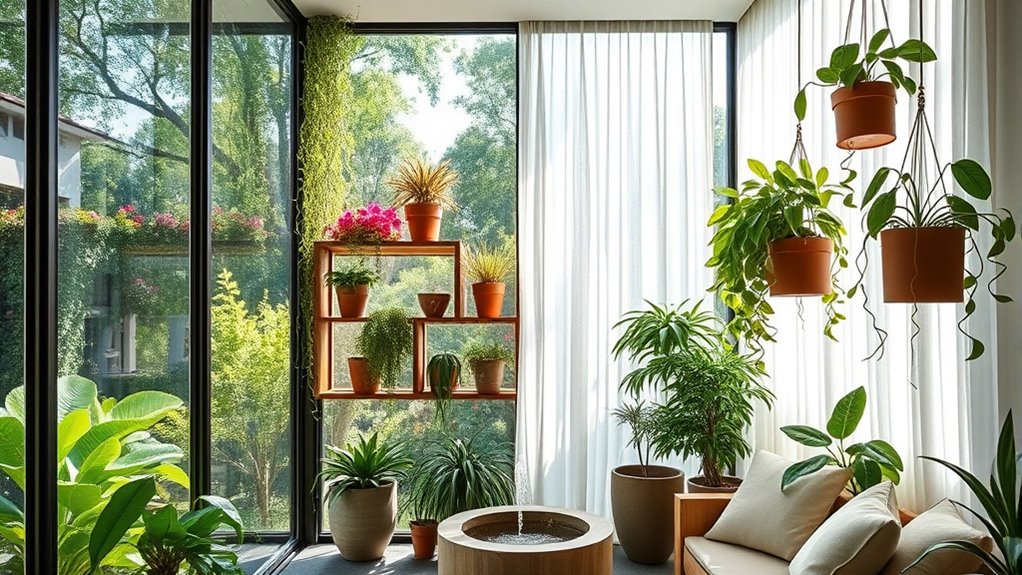
Imagine spending time in a room flooded with natural light, your favorite indoor plants thriving nearby. This setup not only brightens your space but also nurtures your mental and physical health. The interplay of light and greenery creates a calming environment that encourages focus and creativity. It’s no coincidence that workplaces and homes incorporating these elements report higher satisfaction and lower absenteeism. By intentionally designing your environment to include natural light and indoor plants, you actively participate in your well-being. These simple yet powerful features help you recover from mental fatigue, enhance your mood, and even boost your immune system.
Ultimately, the spaces you inhabit shape how you feel and function. When you prioritize natural light and indoor plants, you’re creating a sanctuary that supports your health and happiness. These biophilic elements connect you to nature, fostering a sense of harmony and balance. You don’t need a sprawling garden to experience nature’s benefits; just a well-lit room with some indoor greenery can transform your environment and, consequently, your life. Embracing these natural features in your daily spaces is an accessible, effective way to improve your overall well-being and cultivate a more vibrant, resilient you.
Frequently Asked Questions
How Does Biophilic Design Influence Mental Health?
You’ll find that biophilic design boosts your mental health by reducing stress and enhancing cognition. When you’re surrounded by natural elements like plants, sunlight, and water features, you naturally feel calmer and more focused. These elements help lower stress levels and stimulate your brain, leading to better cognitive performance. Incorporating natural features into your space creates a soothing environment that supports your overall mental well-being and productivity.
What Are Cost-Effective Ways to Incorporate Nature Indoors?
You can easily incorporate nature indoors with DIY plant ideas and budget-friendly greenery, which are proven to boost mood and productivity. For example, adding small potted plants or hanging planters costs less than $20 and can be placed on desks or shelves. These simple, cost-effective solutions make indoor spaces more inviting, promote well-being, and require minimal maintenance—so you get the benefits of nature without breaking the bank.
Can Biophilic Design Improve Productivity in Workplaces?
Yes, biophilic design can boost your productivity at work. You’ll notice improvements when natural lighting is maximized, reducing eye strain and enhancing focus. Acoustic comfort also plays a role, as natural elements like plants and water features help absorb noise, creating a calmer environment. These elements make it easier to concentrate and stay energized, ultimately helping you perform better and feel more satisfied with your workspace.
Are There Specific Plants Best Suited for Indoor Environments?
Yes, certain indoor plants are better suited for indoor environments. When choosing indoor plant selection, opt for low maintenance greenery like snake plants, pothos, and peace lilies. These plants thrive with minimal care, tolerate indoor conditions, and improve air quality. They’re perfect for enhancing your space’s aesthetics and health benefits without requiring extensive upkeep, making them ideal for busy or novice plant owners.
How Long Does It Take to See Health Benefits From Biophilic Design?
Typically, you’ll notice positive progress within a few weeks to a couple of months. The timing of benefits depends on consistent exposure and individual differences. As you incorporate indoor plants and natural elements, you may start feeling more relaxed, focused, and refreshed in just weeks. Over a few months, improvements in mood, stress reduction, and overall health appearance become more apparent, making your space more vibrant and essential.
Conclusion
By embracing biophilic design, you invite nature’s gentle touch into your space, transforming your environment into a sanctuary that nurtures your soul. Like a gust of fresh air, it refreshes your mind and restores your spirit, turning everyday spaces into lush gardens of well-being. When you bring nature indoors, you’re not just decorating—you’re cultivating a haven where health blossoms and stress fades away like morning dew. Let nature’s embrace be your daily remedy.