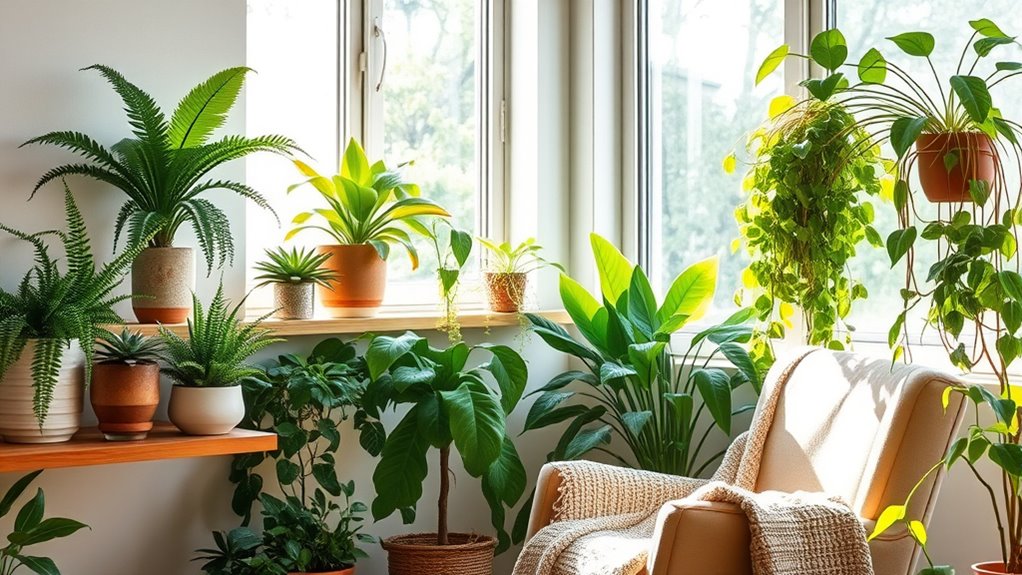

Indoor gardening offers numerous mental health benefits that can help you feel calmer, happier, and more centered. Caring for plants reduces stress, lifts your mood, and creates a soothing environment. The act of nurturing greenery encourages mindfulness and provides a sense of purpose. Plus, having plants around can lower anxiety and boost overall well-being. If you want to discover how plant therapy can transform your mental health, keep exploring the many ways indoor gardening makes a difference.

Get decor and gifts delivered free with Prime
- Fast, free delivery on millions of items
- Prime Video, Amazon Music and more included
- Member-only deals all year
Key Takeaways
- Indoor gardening reduces stress through calming routines like watering and pruning, promoting mindfulness and emotional well-being.
- Caring for plants fosters a sense of purpose and accomplishment, boosting self-esteem and positive mood.
- Greenery indoors enhances serotonin levels, leading to improved mood and emotional stability.
- Connecting with nature through indoor plants creates a soothing environment that alleviates anxiety and feelings of overwhelm.
- Engaging in plant care offers therapeutic activity that supports mental health and provides ongoing mental refreshment.
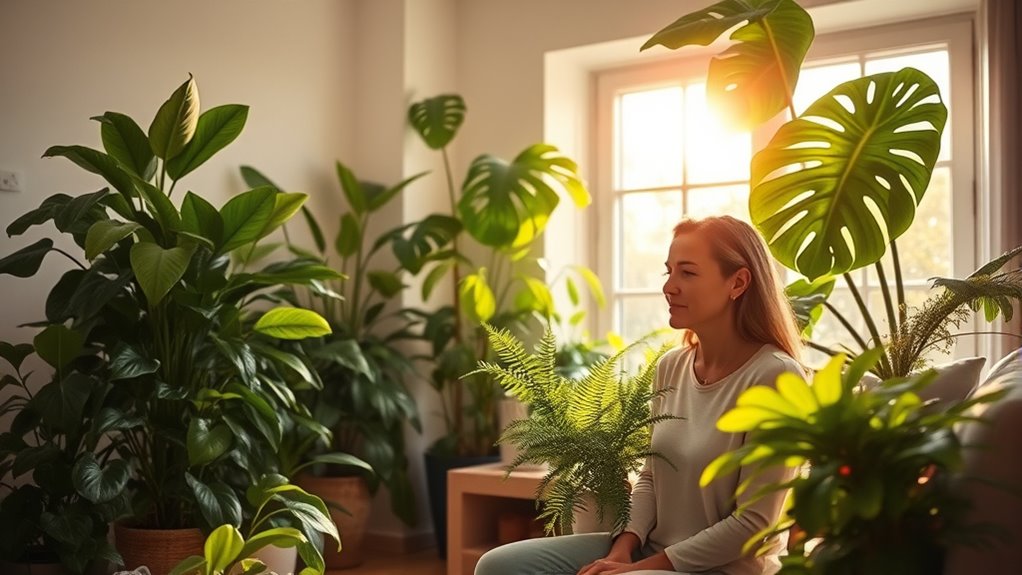
Indoor gardening offers numerous benefits that can enhance your well-being and living space. When you bring plants into your home, you’re not just adding a touch of nature; you’re creating a calming environment that can positively impact your mental health. One of the most immediate advantages is air purification. Plants naturally filter toxins from the air, improving the overall quality of your indoor environment. This leads to a fresher, healthier space where you can breathe easier and feel more energized. As you tend to your indoor garden, you’ll notice that the air feels cleaner, and your environment becomes more inviting. This improved air quality can also contribute to better sleep and increased alertness during the day, further supporting your mental well-being.
Beyond the physical benefits, indoor gardening plays a significant role in stress reduction. Caring for plants provides a soothing, mindful activity that helps you disconnect from daily stresses and focus on the present moment. The simple act of watering, pruning, or watching your plants grow encourages mindfulness, which is known to decrease anxiety and promote relaxation. Each time you observe new leaves sprouting or flowers blooming, it reinforces a sense of accomplishment and hope. This connection to nature, even inside your home, helps you feel grounded and reduces feelings of overwhelm. The repetitive, gentle routines associated with plant care can serve as a calming ritual, giving you a break from screens and hectic schedules.
In addition to these benefits, indoor gardening boosts your mood and emotional health. The presence of greenery has been shown to elevate serotonin levels, which help regulate mood and promote happiness. Growing plants can also foster a sense of purpose and responsibility, especially when you see your efforts result in healthy, thriving plants. This nurturing aspect can be particularly uplifting during stressful times, acting as a natural form of therapy. Moreover, the visual appeal of lush greenery can create a more inviting and tranquil living space, making your home a sanctuary where you feel safe and relaxed.
As an affiliate, we earn on qualifying purchases.
Frequently Asked Questions
How Does Indoor Gardening Improve Mental Health Long-Term?
Indoor gardening boosts your long-term mental health by fostering biophilic design, which connects you with nature indoors. As you care for plants, you’ll notice improvements in emotional well-being, reducing stress and anxiety over time. The act of nurturing plants provides a calming routine, creating a sanctuary in your home. These benefits build resilience and promote sustained emotional health, making indoor gardening a valuable tool for enhancing your overall well-being in the long run.
Are There Specific Plants Best for Reducing Stress Indoors?
Imagine a peaceful oasis in your home, where certain plants act as calming anchors. Succulent varieties like aloe vera and jade are low-maintenance, reducing stress with their soothing presence. Air purifying plants such as snake plants and pothos help clear your environment, calming your mind. These plants create a serene space, easing anxiety and promoting mental clarity, making your indoor garden a natural stress-relief haven.
Can Indoor Gardening Help With Anxiety or Depression Symptoms?
Indoor gardening can definitely help with anxiety and depression symptoms. When you care for plants, their aroma can promote relaxation, and a healthy soil microbiome boosts your mood by supporting plant health. Tending to your indoor garden gives you a sense of achievement and calm. Breathing in plant scents and connecting with nature indoors reduces stress, helping you feel more grounded and uplifted every day.
What Are the Best Indoor Plants for Beginners?
You should start with easy-to-care-for indoor plants like succulents and air purifying plants. Succulents require minimal watering and thrive on neglect, making them perfect for beginners. Air purifying plants, such as pothos or snake plants, improve your space’s air quality and are low-maintenance. These plants boost your mental well-being, and with proper succulent care, you’ll enjoy their beauty and benefits without stress.
How Much Time Should I Dedicate to Indoor Gardening Weekly?
You should dedicate about 30 minutes to an hour weekly for indoor gardening. Focus on establishing a consistent watering schedule, typically once a week, but adjust based on your plant selection and environment. Check your plants regularly for signs of overwatering or underwatering. By staying attentive and maintaining a routine, you’ll enjoy the mental health benefits and the satisfaction of healthy, thriving indoor plants.
Conclusion
By bringing plants into your space, you open the door to a garden of calm and clarity within your mind. Indoor gardening isn’t just about beautifying your home—it’s like planting seeds of peace that grow with each nurturing touch. As you care for your green companions, you’re cultivating a sanctuary for your mental health, transforming your environment into a lush oasis where stress melts away like snow in spring.
Halloween Picks
halloween
As an affiliate, we earn on qualifying purchases.