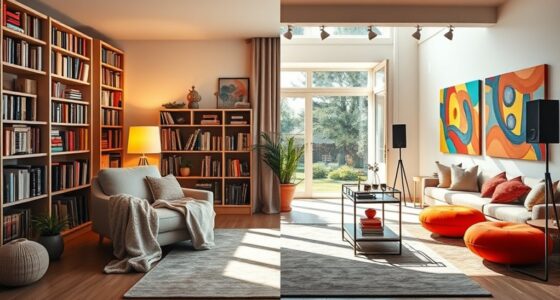
To create a calming space, focus on soft, warm lighting with dimmer switches and natural light filtered through sheer curtains. Choose a soothing color palette with muted blues, greens, or neutrals to promote serenity. Incorporate simple textures and minimal decor to avoid overstimulation, while keeping clutter out of sight. The right lighting, colors, and textures work together to shape a peaceful environment, helping you relax and recharge—discover more ways to bring tranquility into your space.
Key Takeaways
- Use soft, warm lighting with dimmer switches and multiple light sources to create a soothing ambiance.
- Maximize natural light through sheer curtains and window treatments that filter sunlight gently.
- Select calming color palettes like muted blues, greens, and neutrals to promote relaxation.
- Incorporate subtle textures and minimal decor to add depth without overstimulation.
- Maintain a clutter-free space with simple, comfortable furniture to foster a peaceful environment.

Creating a calming space begins with understanding what helps you feel relaxed and at peace. When designing your environment, focus on elements that promote tranquility and comfort. Two of the most impactful aspects are lighting ambiance and color palette. These elements set the tone of your space, influencing your mood and stress levels. Carefully choosing the right lighting and colors can transform a room from cluttered or chaotic to serene and inviting.
Start with lighting ambiance. Soft, diffused light creates a gentle glow that soothes your mind and reduces tension. Avoid harsh, direct lighting that can cause discomfort or overstimulation. Instead, opt for warm-toned bulbs or fixtures that cast a cozy, inviting light. Incorporate multiple sources of light, such as table lamps, floor lamps, or string lights, to allow flexibility and control over the atmosphere. Dimmer switches are a great addition, giving you the ability to adjust brightness according to your mood or activity. Natural light is also a *essential* component; try to maximize its presence during the day by using sheer curtains or blinds that filter sunlight gently into your space. The overall goal is to create an environment where light feels soothing rather than jarring. Additionally, selecting appropriate lighting fixtures can further enhance the calming effect.
Use soft, layered lighting and maximize natural light to create a soothing, flexible environment.
Your color palette is equally *important* in establishing a calming ambiance. Choose colors that evoke peace and relaxation, such as soft neutrals, muted blues, gentle greens, or warm earth tones. Bright or highly saturated colors tend to energize or overstimulate, so keep your palette restrained and harmonious. When selecting colors, consider how they make you feel—colors that remind you of nature or past peaceful experiences tend to foster serenity. Use these shades on walls, furniture, or accessories to unify the space visually. You don’t need to stick to a single hue; instead, aim for a balanced combination that creates a cohesive, tranquil environment. Incorporate textures and patterns subtly to add depth without overwhelming the senses. Keep clutter to a minimum, and choose furniture and decor that reflect simplicity and comfort, reinforcing the calming effect of your color choices.
In essence, creating a calming space involves intentional choices about lighting ambiance and color palette. These elements shape the emotional tone of your environment, helping you unwind and feel more centered. When lighting is soft and adjustable and your colors are soothing and natural, your space becomes a sanctuary that supports your mental and emotional well-being. Remember, designing a calming space is a personalized process—trust your instincts and craft an environment that truly helps you relax and recharge.
Frequently Asked Questions
What Colors Are Most Effective for Reducing Stress?
You should choose calming hues like soft blues, gentle greens, and muted neutrals, as they are proven through color psychology to reduce stress. These colors promote relaxation and create a peaceful atmosphere. Opt for shades that aren’t too bold or bright, as they can be overstimulating. By incorporating these calming hues into your space, you’ll foster tranquility and help ease daily anxiety, making your environment more soothing and inviting.
How Can Soundproofing Enhance a Calming Environment?
Imagine your space as a tranquil lake, undisturbed by outside noise. Soundproofing acts like a gentle shield, enhancing serenity. Acoustic panels absorb unwanted echoes, creating a quiet sanctuary, while sound masking introduces a soothing background hum that masks disruptive sounds. Together, these elements transform your environment into a peaceful retreat, helping you relax and recharge without the chaos of external noise.
Are There Specific Plants That Promote Relaxation?
Yes, you can promote relaxation by adding plants like lavender, jasmine, and snake plants, which are known for their calming effects. Incorporate indoor aromatherapy with essential oils to enhance tranquility, and choose nature-inspired decor like bamboo or moss to create a soothing atmosphere. These elements work together to reduce stress, making your space more peaceful and inviting. Remember, the right plants and decor can truly transform your environment into a calming retreat.
How Does Lighting Influence Stress Levels Indoors?
Lighting greatly influences your stress levels indoors. Natural light boosts your mood and helps regulate your circadian rhythm, making you feel calmer and more energized. On the other hand, dim lighting can create a cozy atmosphere that relaxes your mind after a long day. By balancing natural light during the day and using soft, dim lighting in the evenings, you can effectively reduce stress and enhance your overall well-being.
Can Furniture Placement Impact Mental Well-Being?
Like a painter carefully arranging strokes, your furniture placement impacts mental well-being. Thoughtful arrangement fosters positive spatial flow, reducing clutter and chaos. When you position furniture to create open pathways and cozy corners, you promote calm and focus. Uncluttered, balanced spaces help lower stress levels, making your environment a sanctuary. So, pay attention to how you arrange your furniture—small changes can markedly enhance your overall sense of peace and well-being.
Conclusion
Creating a calming space is like tending a peaceful garden amidst chaos. By choosing soothing colors, soft textures, and gentle lighting, you cultivate a sanctuary where stress can melt away. Remember, your environment is the mirror of your inner calm, so nurture it with intention. When you design with mindfulness, you’re planting seeds of tranquility that bloom into a lifelong retreat, offering you solace whenever life’s storms roll in.