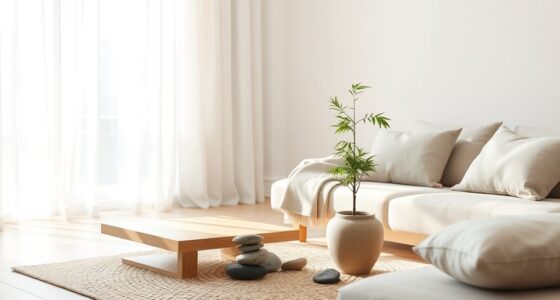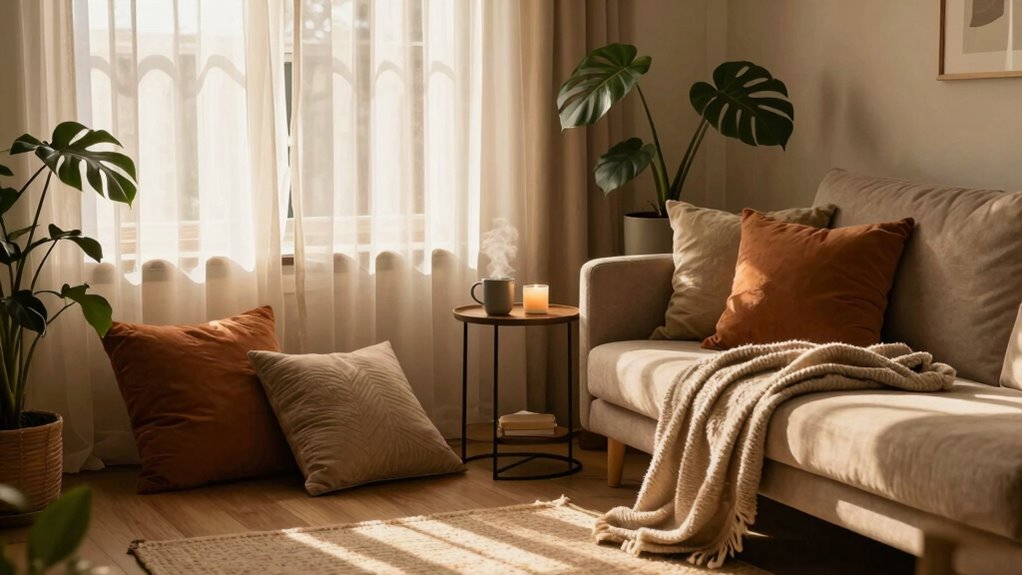

To make your home feel supportive, focus on creating smooth energy flow by decluttering and thoughtfully arranging furniture to guarantee clear pathways and inviting seating areas that face the door. Incorporate natural elements like plants and water features to boost harmony, and use soft, warm lighting to set a welcoming mood. Ergonomically arrange your spaces to support your body’s needs, reducing strain. Keep exploring to discover how combining these tricks can transform your space into a true sanctuary.
Key Takeaways
- Declutter regularly to promote free flow of positive energy (“chi”) throughout your space.
- Arrange furniture to face the door and create clear pathways, enhancing energy movement and accessibility.
- Incorporate natural elements like plants, water features, and stones to foster harmony and connection with nature.
- Use soft, warm lighting to create an inviting atmosphere that nurtures comfort and emotional well-being.
- Design ergonomic spaces with supportive furniture and proper layout to reduce strain and support physical health.
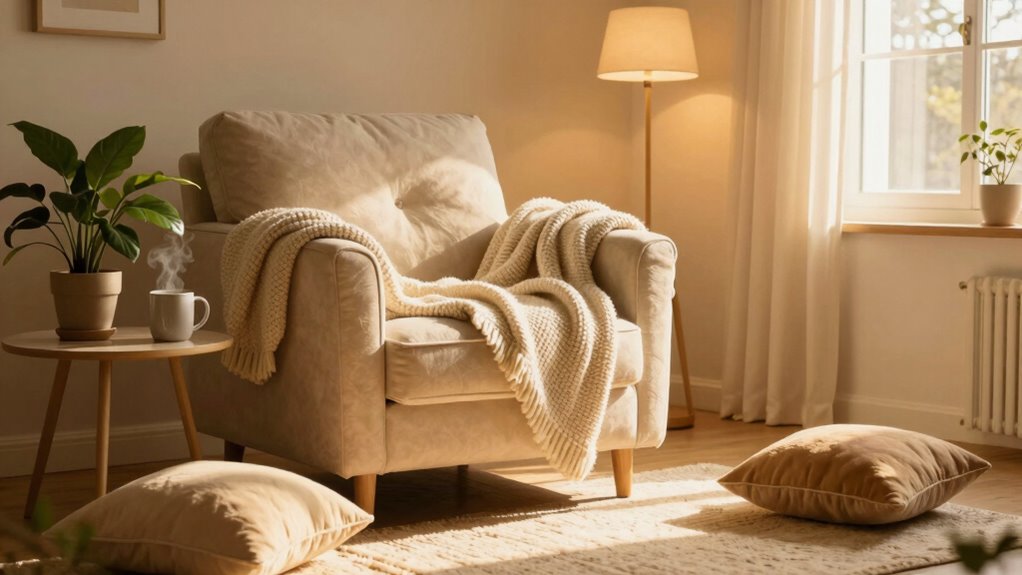
Have you ever wondered how your home can genuinely feel like a safe haven? It’s more than just a cozy space; it’s about creating an environment that supports your well-being physically, emotionally, and energetically. One way to achieve this is by paying attention to feng shui principles. Feng shui emphasizes the flow of energy, or “chi,” within your space. You can start by decluttering your home, allowing energy to circulate freely and reducing feelings of stagnation. Position your furniture thoughtfully, ensuring pathways are clear and that your main sitting areas face the door, which invites positive energy in. Incorporate natural elements like plants, water features, or stones to enhance harmony and balance. Soft, warm lighting can also improve the ambiance, making your home feel inviting rather than restrictive. When you align your space with these principles, you create an environment that nurtures your mind and body, supporting you at a fundamental level. Additionally, paying attention to energy flow in your home can help improve overall harmony and wellbeing. Creating a space aligned with feng shui principles can also promote a sense of peace and clarity in your daily life. Incorporating natural elements not only brings aesthetic beauty but also strengthens your connection to the environment and enhances the flow of positive energy. Including proper lighting can further influence the mood and energy of your space, making it more supportive overall. Moreover, understanding how to optimize your home’s layout and design can significantly impact your daily comfort and energy levels.
In addition to feng shui, ergonomic design plays a crucial role in making your home feel supportive. Ergonomics is all about designing your environment to fit your body’s needs, reducing strain and discomfort. Think about your workspace: your desk should be at the right height, your chair supportive, and your monitor positioned at eye level. This setup minimizes neck and back pain, allowing you to work comfortably for longer periods. Similarly, in other areas of your house, use furniture that promotes good posture—sofa cushions that encourage proper sitting alignment or beds with supportive mattresses. Your kitchen and bathroom fixtures should be accessible, reducing unnecessary movement and strain. When your home’s layout and furnishings support your physical health, you’ll notice a difference in your energy levels and overall comfort. It’s about creating a space that adapts to your body, not the other way around.
Ultimately, making your home feel supportive involves a blend of thoughtful design and mindful arrangement. By integrating feng shui principles, you foster positive energy flow, and through ergonomic design, you support your physical health. Together, these approaches transform your living space into a sanctuary that truly supports you back. You’ll find yourself more relaxed, energized, and centered—ready to face whatever comes your way, knowing that your home is designed to nurture and support your well-being at every turn.

AUVON Lumbar Support Pillow for Office Chair with Patented Bulge for Lower Back Support, Ergonomic Office Home Essentials Improve Posture, Memory Foam Chair Cushion with Straps for Home, Office, Car
- Patented Bulge for Lower Back Support: Provides targeted lumbar relief with ergonomic design
- Ergonomic Zoning for Comfort: Four zones for customized back support
- High-Density Memory Foam: Offers firm, targeted support for lower back
As an affiliate, we earn on qualifying purchases.
As an affiliate, we earn on qualifying purchases.
Frequently Asked Questions
How Do I Choose Supportive Furniture for My Home?
Choose supportive furniture by prioritizing ergonomic design, ensuring pieces promote good posture and comfort. Look for chairs and sofas that provide proper lumbar support and adjustable features. Pay attention to furniture placement so your space encourages movement and reduces strain—avoid clutter and awkward corners. Test items before buying, and select versatile pieces that adapt to your needs. Your home should foster well-being through thoughtful choices that support your body and mind daily.
What Colors Promote a Sense of Support and Comfort?
Think of calming hues like a gentle hug for your mind. Soft blues and muted greens promote a sense of support and comfort through color psychology. These colors help reduce stress and foster relaxation, making your home feel like a sanctuary. Incorporate these shades on walls or accents to create a soothing environment that nurtures your well-being and encourages a feeling of being supported.
How Can Lighting Improve My Home’s Supportive Atmosphere?
Lighting plays a vital role in creating a supportive atmosphere in your home. You can achieve this by using an ambient glow that softly diffuses light, making spaces feel warm and inviting. Incorporate natural illumination during the day by opening curtains and letting sunlight fill your rooms. This combination of ambient glow and natural light enhances comfort, reduces stress, and fosters a nurturing environment where you feel truly supported and relaxed.
Are There Specific Textures That Make Spaces Feel More Supportive?
You’ll find that combining soft, plush textures with rougher, more tactile surfaces creates a welcoming contrast that feels supportive. Textural contrast engages your senses and adds depth, making spaces more comforting. Incorporate cozy blankets alongside textured wall art or rugged wood furniture to stimulate your senses. This mix offers sensory stimulation that grounds you, making your home feel more nurturing and supportive, whether you’re relaxing or working.
How Can I Personalize My Home to Better Support My Well-Being?
You can personalize your home by incorporating mindful decor that resonates with your values and preferences, creating a calming and inspiring environment. Establish personalized routines, like morning meditation or evening journaling, to foster a sense of stability and support. Use comforting textures and meaningful objects to make spaces feel more nurturing. This mindful approach helps your home become a sanctuary that actively supports your well-being and mental health every day.
Conclusion
Your home should be your sanctuary, a sturdy tree rooted in support, offering shade and comfort when you need it. By surrounding yourself with cozy spaces, mindful touches, and personal touches, you create a haven that lifts you up. Think of your home as a gentle, guiding hand—a constant source of strength and reassurance. With a little effort, you’ll turn your space into a nurturing refuge where you can always feel supported and truly at home.