
Whole-house ventilation systems provide an energy-efficient way to improve indoor air quality by continuously exchanging stale indoor air with fresh outdoor air. They use heat recovery technology, such as HRVs or ERVs, to transfer warmth from outgoing to incoming air, reducing energy costs. These systems help control moisture, prevent mold, and create a healthier living space without wasting energy. To discover how these solutions can benefit your home, keep exploring the options available.
Get ready for Prime Big Deal Days — try Prime free
Exclusive member deals on October 6–7, plus fast free delivery. Cancel anytime.
As an affiliate, we earn on qualifying purchases.
Key Takeaways
- Whole-house ventilation systems improve indoor air quality by continuously exchanging stale indoor air with fresh outdoor air.
- Heat recovery ventilators (HRVs) and energy recovery ventilators (ERVs) reduce energy use by transferring heat between outgoing and incoming air.
- These systems balance airflow to prevent over- or under-ventilation, optimizing energy efficiency and indoor comfort.
- Smart controls allow adjustable ventilation rates and humidity management, enhancing system performance and energy savings.
- Long-term benefits include lower energy bills, healthier indoor environments, and protection against moisture-related damage.

Whole-house ventilation systems are essential for maintaining healthy indoor air quality by continuously exchanging stale air with fresh outdoor air. When you install a properly designed system, you not only improve your home’s air freshness but also enjoy significant energy savings. These systems are engineered to optimize airflow, ensuring that your indoor environment remains comfortable while minimizing energy use. This means your heating and cooling systems don’t have to work as hard to maintain a consistent temperature, reducing your utility bills over time.
Whole-house ventilation improves air quality and saves energy by optimizing airflow and reducing HVAC workload.
By actively managing air exchange, whole-house ventilation enhances indoor air quality, removing pollutants, allergens, and excess moisture. This is especially helpful if you live in areas with high pollution levels or if your home is tightly sealed for energy efficiency. Unlike simple exhaust fans that only vent air from specific areas, a whole-house system creates a balanced flow, bringing in fresh air and exhausting stale air uniformly throughout your home. This process keeps indoor air fresh, prevents stuffiness, and reduces the buildup of harmful particles, making your living space healthier and more comfortable.
One of the key benefits of these systems is their ability to deliver energy savings. Because they’re designed to recover heat from outgoing air, they use less energy to condition incoming outdoor air to indoor temperature levels. Heat recovery ventilators (HRVs) and energy recovery ventilators (ERVs)—common types of whole-house systems—capture warmth from stale indoor air and transfer it to incoming fresh air during winter, or vice versa in summer. This efficient transfer reduces the load on your furnace or air conditioner, lowering energy consumption and saving you money on monthly bills.
In addition to energy savings, whole-house ventilation systems are a smart investment for long-term home health. They help control humidity levels, preventing mold growth and structural damage caused by excess moisture. Better air quality also means fewer respiratory issues, allergies, or asthma symptoms for you and your family. When you choose a system with smart controls, you can set the ventilation rates according to your needs, further optimizing energy use and indoor air quality. Proper ventilation control ensures that your system works efficiently without wasting energy or compromising air quality.
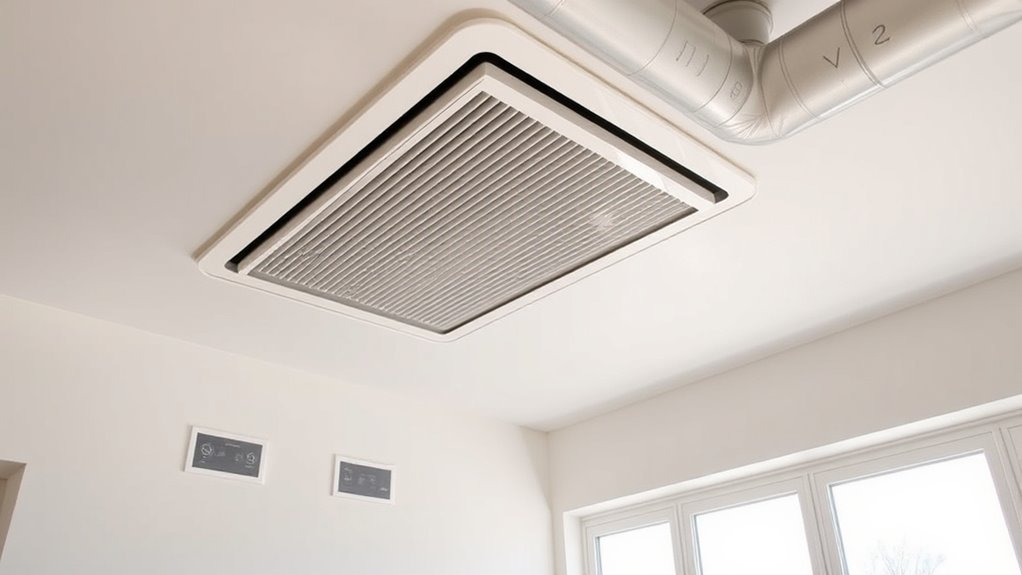
Whole house ventilation system with heat recovery
As an affiliate, we earn on qualifying purchases.
As an affiliate, we earn on qualifying purchases.
Frequently Asked Questions
How Do Whole-House Ventilation Systems Impact Indoor Humidity Levels?
Whole-house ventilation systems help regulate indoor humidity by exchanging stale air for fresh, drier or more humid air as needed. This improves ventilation efficiency and keeps indoor humidity levels balanced, preventing excess moisture that can cause mold or discomfort. You’ll notice a more comfortable environment because these systems reduce humidity fluctuations, ensuring your home stays consistent and healthy. Properly designed systems make controlling indoor humidity straightforward and effective.
Are There Specific Maintenance Requirements for Different Types of Ventilation Systems?
You need to stay on top of your ventilation system’s maintenance, as neglecting it could turn into a wolf in sheep’s clothing. For different systems, like HRVs or ERVs, you’ll typically replace filters regularly and perform system calibration to guarantee efficiency. Check manufacturer guidelines for specific intervals, and don’t forget to keep an eye on filters and sensors—if they’re dirty or out of whack, your system won’t run smoothly.
Can These Systems Be Integrated With Smart Home Automation?
Yes, you can integrate these systems with smart home automation. Many modern ventilation systems feature automation compatibility, allowing you to control air exchange settings through your smart home devices. With smart home integration, you can schedule ventilation, adjust airflow, and monitor air quality remotely. This seamless automation makes maintaining a healthy indoor environment more convenient, energy-efficient, and tailored to your lifestyle.
What Is the Typical Lifespan of a Whole-House Ventilation Unit?
Think of your ventilation system as a trusted companion that lasts 10 to 15 years. You’ll extend its life by regularly replacing filters and performing system upgrades when needed. Keep an eye on performance signs, like strange noises or reduced airflow, to prevent early failure. Proper maintenance guarantees your system continues to provide fresh air and energy efficiency, acting as a reliable guardian of your home’s air quality over time.
How Do Ventilation Systems Affect Allergy and Asthma Sufferers?
Ventilation systems can markedly improve your air quality by reducing airborne allergens, which helps allergy and asthma sufferers breathe easier. They continuously exchange indoor air with fresh outdoor air, removing dust, pollen, and other irritants. By maintaining a steady flow of clean air, these systems lower allergen levels indoors, providing relief and creating a healthier environment for you. Properly maintained ventilation is key to maximizing these benefits.
Conclusion
By choosing a whole-house ventilation system, you prioritize fresh air over energy waste. It’s like opening a window in a sealed home—refreshing your space while saving energy. Instead of letting stale air linger, you actively improve indoor quality without sacrificing efficiency. This balance between comfort and conservation makes your home healthier and more sustainable. Embrace this technology, and you’ll enjoy the benefits of fresh air without the costly energy drain—truly a win-win in today’s eco-conscious world.
Fall Picks
fall essentials
As an affiliate, we earn on qualifying purchases.