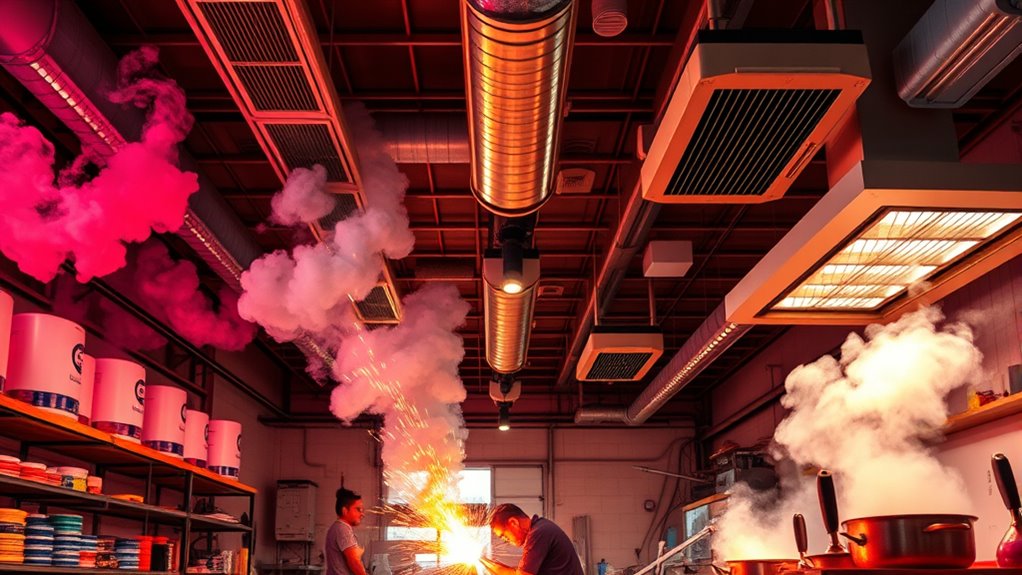

During painting, welding, and cooking, proper ventilation is key to protecting your health. Use exhaust fans, local hoods, or range vents to remove fumes and airborne particles at the source. Open windows and doors to promote cross-ventilation, and keep ventilation systems well-maintained. Effective airflow reduces odors and prevents harmful buildup, ensuring a safer space. If you want to learn more about ideal ventilation practices for these tasks, there’s additional helpful information to explore.

Get decor and gifts delivered free — and shop member deals
- Fast, free delivery on millions of items
- Access to Prime Big Deal Days deals on October 6–7
- Prime Video, Amazon Music and more included
Key Takeaways
- Use local exhaust systems like hoods and fans to capture fumes at the source during painting, welding, and cooking.
- Enhance airflow with open windows and doors for cross-ventilation, reducing airborne contaminants.
- Regularly maintain ventilation equipment, including cleaning filters and ensuring unobstructed vents.
- Implement outdoor venting for range hoods and exhaust systems to effectively remove smoke and fumes.
- Proper ventilation minimizes health risks by controlling airborne pollutants during pollutant-generating tasks.

When you perform tasks that produce pollutants, proper ventilation is indispensable to protect your health and maintain a safe environment. Whether you’re painting, welding, or cooking, controlling airborne contaminants is vital to prevent health issues and ensure safety. One of the most effective ways to do this is through airflow enhancement, which involves designing and maintaining ventilation systems that efficiently remove fumes, dust, and gases from your workspace. By doing so, you help preserve your respiratory health, which can be compromised by prolonged exposure to harmful airborne particles.
In painting, fumes from solvents, paints, and primers can fill the air quickly, especially in enclosed spaces. To maximize airflow, you should use exhaust fans or local ventilation hoods positioned near the source of fumes. These devices draw contaminated air away before it disperses into the room, reducing inhalation risks. Opening windows and doors also helps create cross-ventilation, promoting continuous airflow that pushes pollutants outside. Confirming that your ventilation system is properly maintained, with clean filters and unobstructed vents, boosts airflow efficiency and keeps airborne contaminants at bay. This not only improves your respiratory health but also provides a more comfortable working environment, free from the strong odors and irritants associated with painting activities.
Use exhaust fans and open windows to boost airflow and reduce painting fumes.
Welding produces hazardous fumes and gases such as metal oxides, which can be particularly damaging if inhaled over time. To attain airflow enhancement during welding, you should implement local exhaust ventilation systems like fume extractors or hoods that are directly positioned at the weld site. These systems capture fumes at the source, preventing them from spreading into the workspace. Additionally, increasing general ventilation by using fans or exhaust systems helps dilute residual pollutants, reducing their concentration in the air. Proper airflow management ensures that you’re breathing cleaner air, lowering the risk of respiratory problems like bronchitis or occupational asthma. Wearing personal protective equipment remains essential, but effective ventilation greatly reduces the burden on your respiratory system.
Cooking, especially frying or grilling, generates smoke, grease particles, and volatile organic compounds that can linger in your kitchen. To improve airflow, use range hoods that vent directly outdoors or enhance natural ventilation by opening windows and installing exhaust fans. Confirming that your ventilation system is appropriately rated for your cooking habits maximizes airflow efficiency, pulling airborne pollutants away from your breathing zone. Regularly cleaning range hoods and filters maintains ideal airflow, preventing grease buildup that can block vents. Good airflow management not only limits exposure to indoor air pollutants but also helps keep your kitchen air fresh and safe for everyone.
In all these activities, prioritizing airflow enhancement makes a notable difference in maintaining respiratory health and creating a safer environment. Proper ventilation doesn’t just remove pollutants—it actively protects you from the health hazards associated with indoor air pollution, helping you breathe easier during your tasks. Additionally, understanding the importance of airflow enhancement can guide you in selecting the right equipment and setup to optimize air quality in your workspace.
As an affiliate, we earn on qualifying purchases.
Frequently Asked Questions
How Often Should Ventilation Systems Be Inspected During These Tasks?
You should inspect your ventilation systems at least every three to six months, depending on the intensity of the tasks. Regular inspection frequency helps identify issues early and guarantees effective air quality. Incorporate maintenance scheduling into your routine to keep systems functioning properly. Prompt inspections allow you to address problems before they compromise safety or efficiency, especially during high-pollution activities like painting, welding, or cooking.
Are There Specific Ventilation Needs for Different Types of Paints or Fumes?
You should tailor your ventilation needs based on the specific paint or fumes involved, as different types emit varying levels of hazardous substances. For example, oil-based paints produce more fumes than water-based ones, requiring stricter ventilation standards. Always check the manufacturer’s guidelines and OSHA standards to guarantee proper air exchange. Effective ventilation minimizes health risks, so don’t underestimate the importance of adjusting your system to the fumes you’re dealing with.
Can Natural Ventilation Replace Mechanical Systems for Safety?
Natural airflow and passive ventilation can’t fully replace mechanical systems for safety during polluting tasks. While they help reduce fumes and improve air quality, they often lack the control and efficiency needed in hazardous situations. Mechanical systems ensure consistent, targeted ventilation, essential for protecting your health. Relying solely on passive methods may leave you exposed to harmful fumes, so it’s best to combine both for maximum safety.
What Are the Health Signs Indicating Inadequate Ventilation?
Think of your body as a delicate garden, and poor ventilation as weeds choking its growth. If you notice symptoms like headaches, dizziness, or eye irritation, it’s a clear sign ventilation effectiveness is lacking. You should stay alert to symptom awareness, as these signs warn you that your environment isn’t clearing out pollutants properly. Addressing these signs promptly helps protect your health and keeps your workspace safe.
How Does Room Size Affect Ventilation Requirements During These Tasks?
You need to take into account room volume and airflow rate to ensure adequate ventilation during polluting tasks. Larger rooms with greater volume require higher airflow rates to effectively dilute fumes and pollutants. If your space is small, lower airflow might suffice, but for bigger areas, increase the airflow to maintain safe air quality. Properly calculating the ventilation based on room size helps protect your health and prevents pollutant buildup.
Conclusion
To protect yourself during painting, welding, or cooking, proper ventilation is vital. Did you know that inadequate ventilation can increase indoor air pollution levels by up to 60%? This highlights just how essential it is to guarantee good airflow when working with pollutants. By opening windows, using exhaust fans, or wearing appropriate gear, you markedly reduce health risks. Prioritize ventilation to keep your environment safer and breathe easier during these common, yet hazardous, tasks.
Fall Picks
fall essentials
As an affiliate, we earn on qualifying purchases.