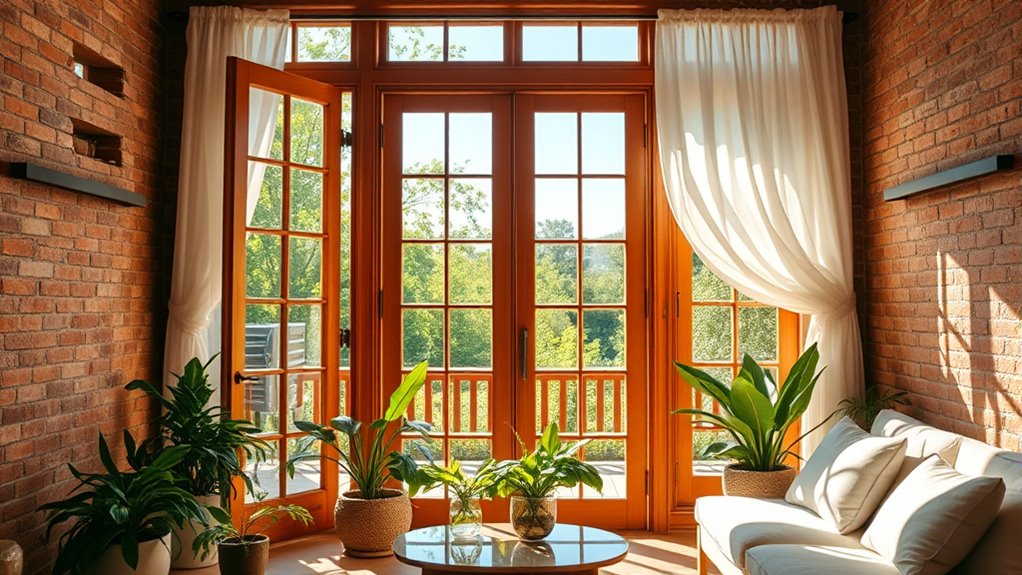

Opening windows and doors strategically allows natural forces like wind and temperature differences to create airflow that brings in fresh air and pushes out stale indoor air. Good placement of openings and thoughtful design guarantee you get ideal ventilation without drafts or discomfort. This approach can reduce your reliance on mechanical cooling, cut energy costs, and improve indoor air quality. To discover how to maximize these benefits and design effective ventilation, explore the key principles behind natural airflow.

Get decor and gifts delivered free with Prime
- Fast, free delivery on millions of items
- Prime Video, Amazon Music and more included
- Member-only deals all year
Key Takeaways
- Opening windows and doors facilitates airflow driven by wind and temperature differences, bringing in fresh air and removing stale indoor air.
- Proper placement of openings ensures effective cross-ventilation, enhancing indoor air quality and comfort.
- Strategic timing of opening windows maximizes natural airflow and cooling benefits during warmer periods.
- Designing openings to prevent hot air trapping and drafts improves overall ventilation efficiency.
- Combining window and door placement with building features like vents and shading devices optimizes natural ventilation performance.

Have you ever wondered how buildings stay fresh without relying on air conditioning? The secret often lies in the clever use of natural ventilation, a method that harnesses the power of open windows and doors to bring in fresh air and remove stale indoor air. This approach isn’t just about comfort; it’s about optimizing airflow efficiency through thoughtful building design. When you consider how a space is constructed, it’s clear that good airflow isn’t accidental but a result of strategic planning. Architects and designers focus on positioning openings, such as windows and vents, to create a natural flow of air that moves effortlessly through the building. This deliberate planning ensures that fresh air circulates smoothly, reducing the need for mechanical cooling systems and lowering energy costs.
Building design plays a vital role in maximizing natural ventilation. Features like high ceilings, strategically placed windows, and cross-ventilation pathways are all intentional choices that enhance airflow efficiency. For instance, placing windows on opposite sides of a room or building allows the wind to pass through freely, pulling in fresh air from one side and pushing out stale air on the other. This natural flow relies on pressure differences created by wind and temperature variations, so understanding local climate patterns is essential. When you’re involved in designing or selecting a building, paying attention to these elements can make a significant difference in maintaining a healthy, comfortable environment without the need for artificial cooling.
Furthermore, building design isn’t just about opening windows; it’s about creating a balanced environment where airflow is optimized without causing discomfort or drafts. Properly designed openings can prevent hot air from becoming trapped inside and can facilitate cooling during warmer months. In addition, features like vents, atriums, and adjustable shading devices work together to regulate airflow and temperature. When you incorporate these elements thoughtfully, you’re not only improving airflow efficiency but also promoting sustainability and energy savings. It’s about making the most of natural forces—wind, temperature, and pressure—to create a space that feels fresh and inviting all year round.
Ultimately, embracing natural ventilation through intelligent building design means you’re leveraging nature’s own mechanisms for climate control. By opening windows at the right times and positioning them strategically, you allow air to flow naturally, reducing reliance on air conditioning and fostering a healthier indoor environment. The key is understanding how airflow efficiency works and integrating that knowledge into your building’s architecture. When done correctly, natural ventilation becomes an elegant, cost-effective solution that keeps buildings comfortable, fresh, and eco-friendly without sacrificing style or functionality. Additionally, understanding building airflow principles can significantly enhance the effectiveness of natural ventilation strategies.
As an affiliate, we earn on qualifying purchases.
Frequently Asked Questions
How Do I Optimize Cross-Ventilation in My Home?
To optimize cross-ventilation, you should strategically open windows and doors on opposite sides of your home to maximize indoor airflow and boost ventilation efficiency. Keep windows at different heights if possible, and avoid obstructing airflow with furniture or curtains. Use fans to help direct air, especially during less breezy days. Regularly clean screens and vents to guarantee unobstructed airflow, creating a fresher, healthier indoor environment.
What Are the Best Times of Day for Natural Ventilation?
You should ventilate early in the morning or late in the evening when outdoor temperatures are cooler. Timing considerations include avoiding the heat of midday or windy, stormy periods. Seasonal adjustments are important—spring and fall often offer ideal conditions, while summer might require shorter, strategic openings to prevent heat buildup, and winter needs careful timing to balance fresh air with indoor warmth.
How Does Outdoor Pollution Affect Indoor Air Quality?
Outdoor pollution is like a shadow that can seep inside your home. When outdoor air quality drops, pollutants from sources like vehicle emissions or industrial activities can enter through open windows and doors, affecting indoor air quality. To keep your indoor environment safe, make certain proper outdoor air filtration and minimize open windows during high pollution times. This helps reduce the impact of outdoor pollutants on your indoor air.
Can Natural Ventilation Help Reduce Energy Costs?
Yes, natural ventilation can help reduce energy costs by improving energy efficiency in your home. When you open windows and doors, you let in fresh air, which cools your space naturally, decreasing the need for air conditioning or heating. This cost savings not only lowers your utility bills but also promotes a healthier environment. Embracing natural ventilation is an easy way to enhance comfort while making your household more energy-efficient.
What Are Safety Precautions When Opening Windows and Doors?
Opening windows and doors can feel like releasing a storm, so you need to stay vigilant. Always lock windows securely to prevent intruders, and install child safety locks to keep little ones safe. Keep furniture or objects nearby that children could use to climb and fall. Regularly check window screens for damage, and never leave windows wide open if you’re not around. These precautions help you enjoy fresh air safely.
Conclusion
So, next time you open those windows and doors, remember you’re channeling ancient wisdom—like the aerostatic engineers of yore—bringing fresh air into your space. It’s a simple, effective way to keep your home lively and healthy, without waiting for some modern gadget to do the job. Embrace natural ventilation, and let your space breathe freely, just like it did centuries ago, before the tech age turned everything into a digital fortress.
Fall Picks
fall essentials
As an affiliate, we earn on qualifying purchases.