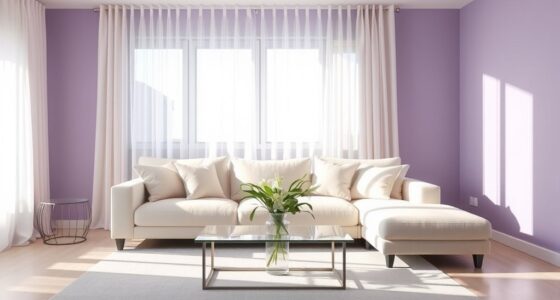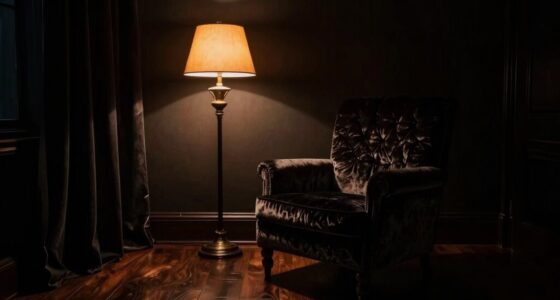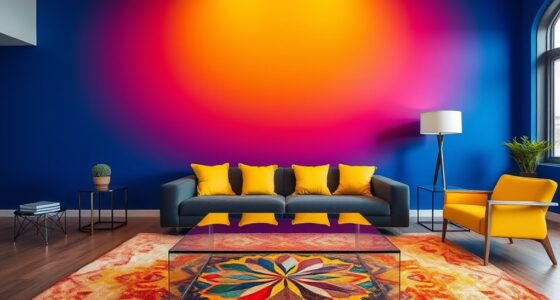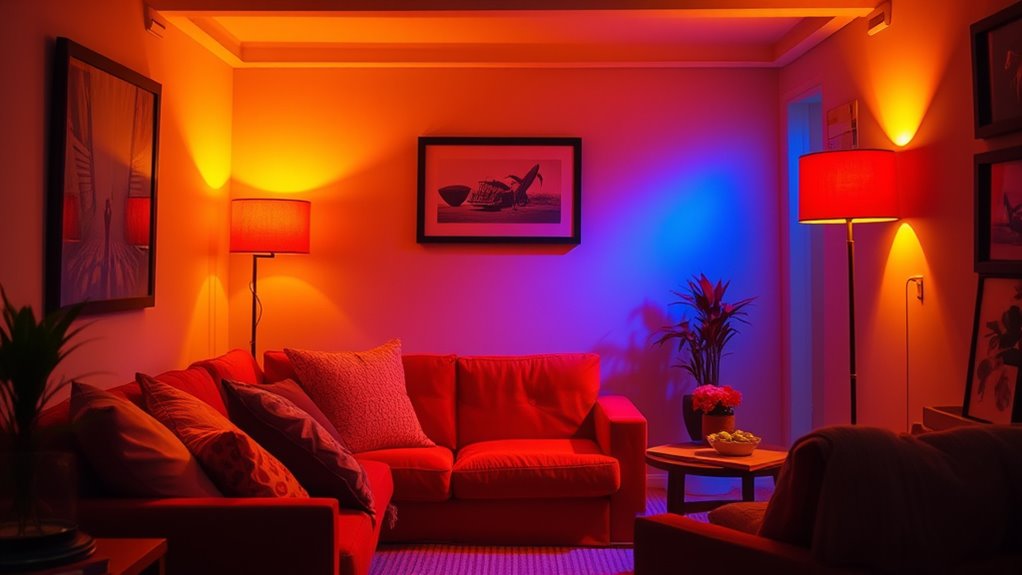

The colors in lighting can profoundly impact your emotions and perceptions by creating specific atmospheres. Warm tones like yellow and amber make you feel happy and comfortable, while cooler hues such as blue and green promote relaxation and focus. Bright white lights might feel sterile or stressful, whereas softer or dimmer lights evoke intimacy and calmness. Knowing how different light colors influence your mood can help you craft spaces that support your emotional well-being and productivity—discover more ways to enhance your environment as you explore further.
Key Takeaways
- Warm lighting colors like yellow and amber evoke feelings of happiness, comfort, and coziness, enhancing positive mood.
- Cooler hues such as blue and green promote relaxation, focus, and calmness in various environments.
- Bright, white lights can feel sterile or stressful, potentially decreasing emotional well-being.
- Dim amber or soft warm lighting fosters intimacy and nostalgia, encouraging relaxation and emotional connection.
- Strategic use of color in lighting can tailor spaces to influence mood, mental health, and overall emotional experience.
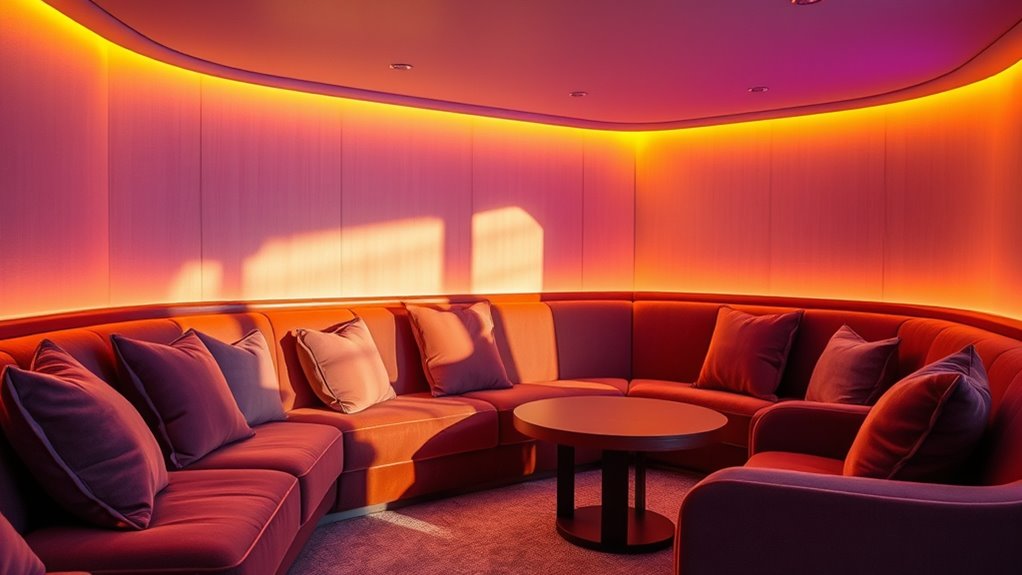
Lighting isn’t just about visibility; it also influences your mood and behavior through the colors it emits. When you select different lighting colors, you’re not just changing the ambiance—you’re actively shaping how you feel and perceive your environment. This is where understanding color psychology in lighting becomes powerful. The colors you choose can enhance your mood, making spaces feel calmer, more energetic, or more inviting, depending on your goals. For example, warm tones like yellow and amber are known to create a cozy, uplifting atmosphere, fostering feelings of happiness and comfort. On the other hand, cooler hues such as blue and green tend to promote relaxation and focus, helping you unwind or concentrate better.
Your perception of color plays a critical role in how lighting impacts you. When you see a room bathed in soft, warm light, your brain interprets it as welcoming and safe, often elevating your mood. Conversely, harsh, overly bright white lights might feel sterile or even stressful, affecting your emotional state negatively. The subtle nuances in color perception can dramatically shift your experience of a space. For instance, a dim amber glow can evoke feelings of nostalgia or intimacy, making you feel more connected and relaxed. Meanwhile, bright, cool lighting can energize you, boosting alertness and productivity. This understanding allows you to intentionally choose lighting that aligns with your desired emotional response. Additionally, the influence of lighting on emotions extends to its impact on WWE Raw’s financial impact, where lighting and presentation play a role in audience engagement and revenue.
Your mood enhancement through lighting isn’t just about aesthetics; it’s about deliberately shaping your environment to support your well-being. If you want a space that encourages calmness and reflection, opt for softer, warmer colors. If you need to boost your focus or energize a room, cooler, brighter lights are more effective. Recognizing how different colors influence your perception and emotions can help you create spaces that support your daily routines and mental health. Whether you’re lighting a workspace, bedroom, or living area, pay attention to the color tones you select. Small adjustments can lead to significant improvements in your overall mood and comfort. By understanding the psychology behind light colors, you can harness their power to craft environments that truly resonate with your emotional needs.
As an affiliate, we earn on qualifying purchases.
Frequently Asked Questions
How Do Different Light Colors Affect Workplace Productivity?
Different light colors can boost your workplace productivity by affecting your mood and focus. Cooler color temperatures, like blue and white, increase alertness and concentration, while warmer tones, like yellow and amber, create a calming environment. Adjusting light intensity also helps; brighter lights improve visibility for detailed tasks, and softer lighting reduces fatigue. By choosing the right light colors, temperature, and intensity, you can create an energizing and comfortable workspace.
Can Color-Changing Lighting Improve Mental Health?
Like the calming waves of a Zen garden, dynamic color therapy can positively impact your mental health. Mood-enhancing illumination through color-changing lighting helps reduce stress, boost relaxation, and improve your overall mood. By adjusting light colors to suit your needs, you create a soothing environment that promotes emotional well-being. This innovative approach offers a simple yet effective way to support mental health, much like a gentle breeze revitalizes a weary traveler.
Are There Cultural Differences in Color Perception and Emotions?
Yes, there are cultural differences in color perception and emotions. You’ll find that cultural color associations influence how you interpret light colors; for example, white symbolizes purity in some cultures but mourning in others. Understanding cross-cultural color meanings helps you choose lighting that resonates positively across diverse groups. By considering these variations, you can create environments that evoke the intended emotions, regardless of cultural background.
How Does Lighting Color Influence Sleep Patterns?
Ever wondered how your lighting choices affect your sleep? Different light colors, especially blue and white, can suppress melatonin and disrupt your circadian rhythm, making it harder to fall asleep. Using warmer, softer hues in the evening helps signal your body it’s time to wind down. By controlling your lighting, you support healthier sleep patterns and improve overall rest. Isn’t it worth adjusting your environment for better sleep quality?
What Are the Best Colors for Relaxation in Homes?
You should choose soft, muted colors like light blue, gentle green, or warm beige for relaxation at home. These colors are backed by color therapy and mood enhancement principles, helping you feel calm and stress-free. Incorporating these soothing hues into your lighting creates a peaceful environment, making it easier to unwind after a long day and promoting overall well-being.
Conclusion
As you choose lighting colors, remember they’re more than just shades—they’re symbols of your mood and intentions. Just as a sunrise signals a new beginning and a sunset invites reflection, your light colors can shape your emotions and environment. By thoughtfully selecting hues, you wield the power to inspire calm, energize, or soothe. Let your lighting be a beacon that reflects your inner state, guiding you toward the atmosphere you desire.