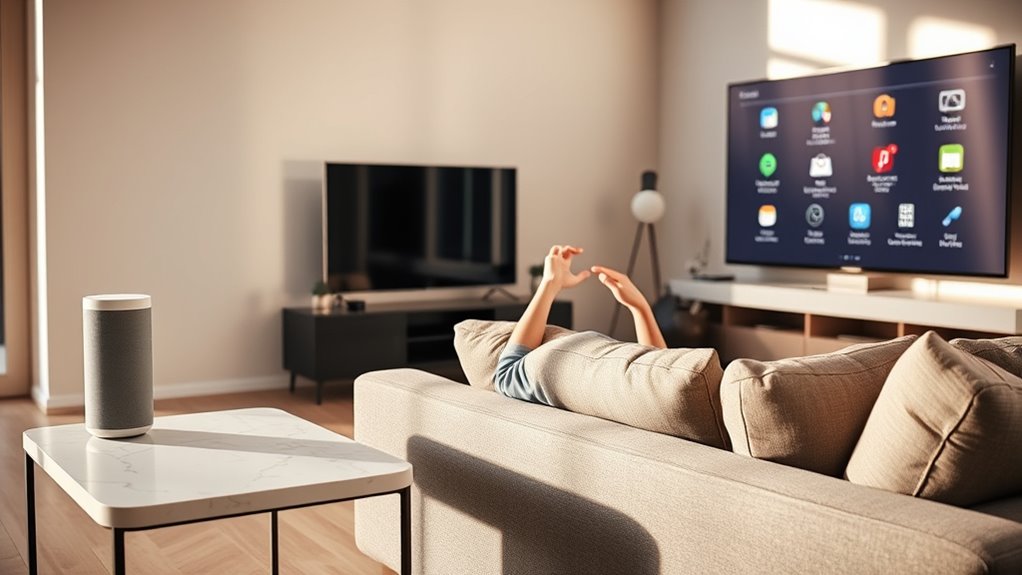

Voice-first home control offers a convenient way to manage your devices hands-free, making everyday tasks easier and faster. It enhances accessibility by allowing those with mobility or vision challenges to operate lights, thermostats, and locks effortlessly. With voice commands, you can multitask and stay connected without interrupting your daily routine. As you explore further, you’ll discover ways to optimize privacy and customize your voice-controlled home for maximum benefits.
Key Takeaways
- Voice-first control enables hands-free operation, improving accessibility for users with mobility or visual impairments.
- It simplifies daily routines by allowing quick, natural commands to manage lighting, temperature, and entertainment.
- Smart speakers serve as intuitive hubs, making device control more convenient and reducing physical interaction.
- Customizable voice recognition enhances privacy and ensures only authorized users can control specific home systems.
- Automations and routines streamline home management, saving time and reducing effort for all users.
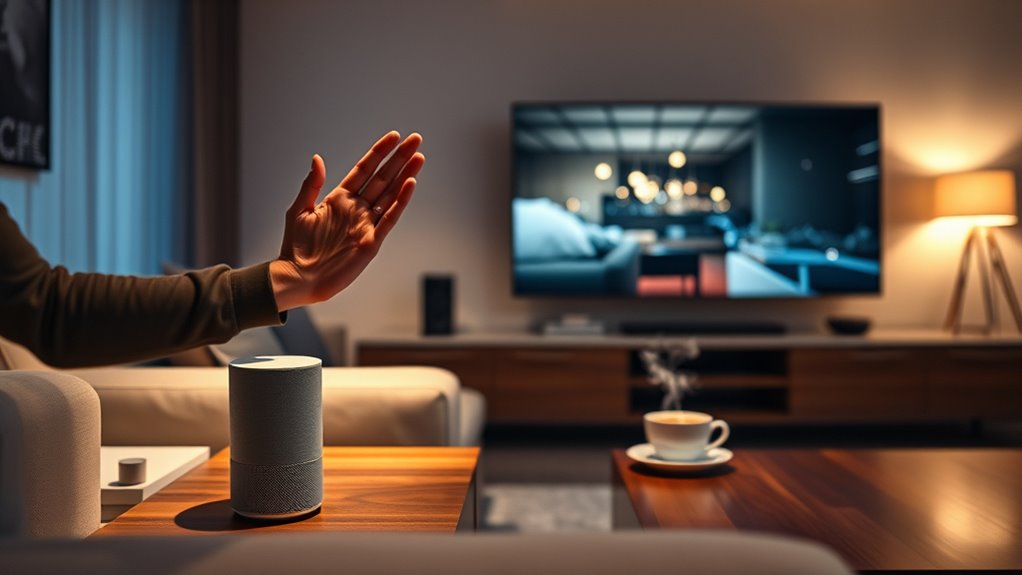
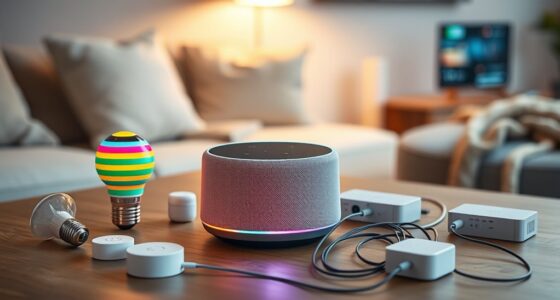
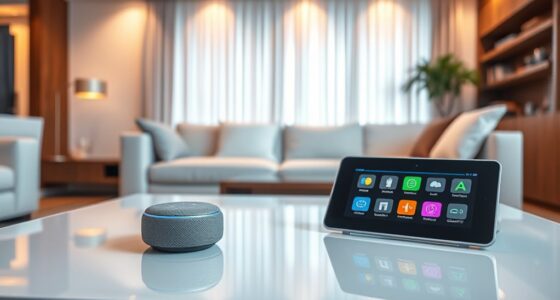
Voice-first home control is transforming the way you manage your living space by allowing you to operate devices and systems hands-free. With just your voice, you can turn on lights, adjust the thermostat, play music, or even lock the doors, making daily routines more seamless and efficient. This technology leverages smart speaker integration, where devices like Amazon Echo or Google Nest serve as central hubs that respond to your commands. These smart speakers listen for voice prompts and execute commands almost instantly, giving you a sense of control without needing to reach for a remote or smartphone.
Voice-first home control lets you manage devices hands-free with just your voice, making daily routines more seamless and efficient.
However, with the convenience of voice-first control comes concerns about privacy. These smart speakers are always listening for their wake words, which means sensitive conversations could potentially be heard or recorded unintentionally. Manufacturers have implemented various privacy features, such as mute buttons and the ability to review and delete voice recordings, but it’s natural to worry about data security. You might wonder who has access to your voice data or how it’s stored and used. It’s important to understand that privacy concerns are valid, and you should be mindful of the information you share through voice commands, especially in private areas or during personal conversations.
Despite these concerns, many users find the benefits outweigh the risks. Voice commands enable you to multitask more efficiently, especially when your hands are busy or you’re away from a control panel. For example, you can ask your smart speaker to dim the lights before movie night or set a reminder to water the plants. Over time, these integrations become intuitive parts of your daily routine, saving you time and effort. You can also customize voice recognition features to ensure the system responds only to your voice, adding an extra layer of privacy and security.
To maximize both convenience and privacy, it’s wise to set up your voice-first system thoughtfully. Regularly review your device’s privacy settings, delete unwanted recordings, and turn off listening features when you don’t need them. Educate yourself on how your devices handle data and choose products with transparent privacy policies. Additionally, understanding creative practice can help you develop better habits for managing your smart home environment by fostering thoughtful and intentional use of technology. By doing so, you can enjoy the convenience of smart speaker integration while maintaining control over your personal information. Ultimately, voice-first home control makes your living environment more accessible and responsive, enabling you to focus on what matters most—without sacrificing your privacy or peace of mind.
![Motorized Blinds with Remote, [Free Solar Panels] Cordless Smart Blinds with Valance Cover, Blackout Electric Blinds with Remote Control, Automatic Roller Shades for Windows White 34" W x 72" H](https://m.media-amazon.com/images/I/51WCkC-w6DL._SL500_.jpg)
Motorized Blinds with Remote, [Free Solar Panels] Cordless Smart Blinds with Valance Cover, Blackout Electric Blinds with Remote Control, Automatic Roller Shades for Windows White 34" W x 72" H
Upgrade Motor: Equipped with a more silent motor, the average decibel during operation will not exceed 35, which...
As an affiliate, we earn on qualifying purchases.
Frequently Asked Questions
How Secure Are Voice-Activated Home Controls From Hacking?
Voice-activated home controls are fairly secure, but you should stay cautious about privacy concerns. Many devices use encryption protocols to protect your data, making it harder for hackers to access your system. However, vulnerabilities still exist if updates aren’t installed or if you use weak passwords. To keep your home safe, regularly update your devices and be mindful of privacy settings, ensuring your voice controls remain secure from hacking attempts.
Can Voice Commands Be Customized for Individual Preferences?
Absolutely, you can customize voice commands for your preferences, making your smart home feel like it was built just for you. With personalization options and user-specific settings, you can tailor commands to suit your routines and voice. This flexibility guarantees your experience is seamless and efficient. Think of it as having a home that adapts effortlessly to your lifestyle, giving you control and convenience at your fingertips.
What Are the Costs Associated With Installing Voice-First Home Systems?
The installation costs for voice-first home systems vary depending on the setup, but you can expect to pay between $200 and $1,500 for equipment and professional installation. Maintenance expenses are generally low, mainly involving software updates and occasional troubleshooting. Keep in mind that some devices may require subscription services, which add to ongoing costs. Budget accordingly to make sure your system stays reliable and up-to-date for maximum convenience.
How Do Voice Assistants Handle Multiple Users With Different Voices?
Imagine a world where your voice assistant recognizes you effortlessly. It uses advanced voice recognition to differentiate multiple users, creating personalized experiences through user profiles. When you speak, it instantly identifies your voice, ensuring your commands stay private and tailored. This seamless technology makes managing your home simple, giving each person their own space and control, all while enjoying the convenience of a truly intelligent, multi-user environment.
Are Voice Controls Compatible With All Smart Home Devices?
Most voice controls are compatible with many smart home devices thanks to broad device compatibility and advanced voice recognition technology. However, not all devices may work seamlessly, especially older or less common ones. To guarantee smooth operation, check if your devices support the voice assistant’s standards or protocols. Upgrading to compatible devices or using smart hubs can improve device compatibility, making voice recognition more effective across your entire smart home.

Lefant LiDAR Robot Vacuum and Mop, Smart Mapping and Obstacle Avoidance, Tangle-Free Pet Hair, 2.4G/5G WiFi App Control, Slim Design for Wider Coverage, Carpet Detection, M330 Pro
【dToF Navigation & Multi-Floor Mapping】With advanced dToF navigation, the Lefant M330 Pro lidar robot vacuum efficiently scans up...
As an affiliate, we earn on qualifying purchases.
Conclusion
Embracing voice-first home control is like revealing a secret garden where convenience blooms at your command. It turns your home into a symphony of seamless interactions, where your voice acts as the conductor. With each command, you’re painting a brighter, more accessible future—transforming everyday routines into effortless melodies. As you step into this new world, remember: your voice is the key, guiding you through a universe where comfort and innovation dance hand in hand.

Tikom Robot Vacuum and Mop, 6000Pa Robotic Vacuum Cleaner with Self-Emptying Base, 90 Days Capacity, LiDAR Navigation, Home Mapping, Ideal for Pet Hair, Hard Floors, Carpet (L8000 Plus)
90-Day Hands-Free Cleaning: The 3L self-emptying dustbag holds weeks of debris, eliminating the need for frequent emptying. Enjoy...
As an affiliate, we earn on qualifying purchases.

QUOYA QL600 Smart Electric Curtain Track, Motorized motor, Adjustable track length, compatible with Alexa, google, Siri, Apple Watch
【NEWEST DESIGN】QL600 has our latest upgraded ceiling bracket design. It now has an easy clip on system and...
As an affiliate, we earn on qualifying purchases.