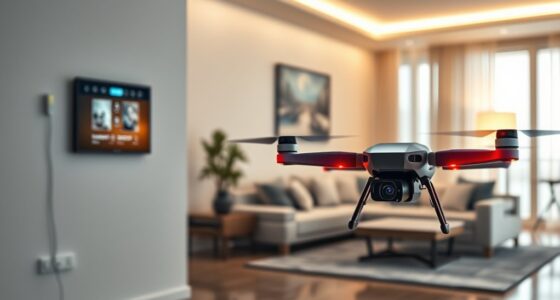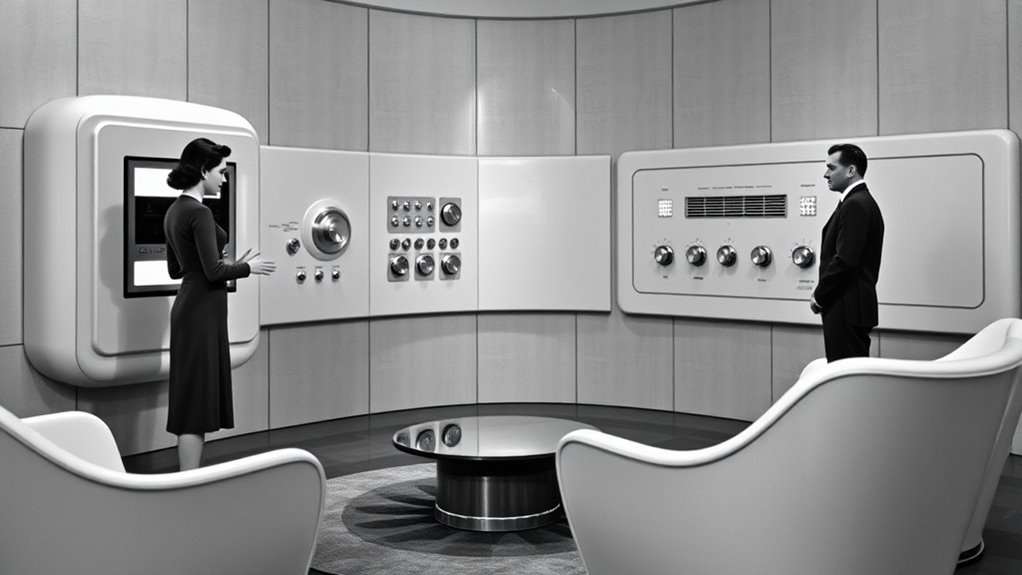

In 1939, Popular Mechanics envisioned a future where your home would be filled with intelligent, interconnected appliances that automate chores, enhance safety, and respond to your needs. They predicted homes would have control panels or voice-activated systems to manage devices remotely, making life easier and safer. Their ideas laid the groundwork for today’s smart homes, inspiring innovations like voice assistants and automated energy systems. Keep exploring, and you’ll discover how close their predictions are to today’s technology.
Key Takeaways
- In 1939, Popular Mechanics envisioned homes with interconnected appliances that could communicate and perform tasks automatically.
- The magazine predicted centralized control systems and voice-activated devices to manage household functions.
- Automation was aimed at enhancing safety, energy efficiency, and reducing mundane chores.
- Predicted appliances could learn habits, anticipate needs, and be remotely controlled, foreshadowing modern smart home technology.
- Their visionary ideas inspired future innovations like smart thermostats, voice assistants, and integrated home automation systems.
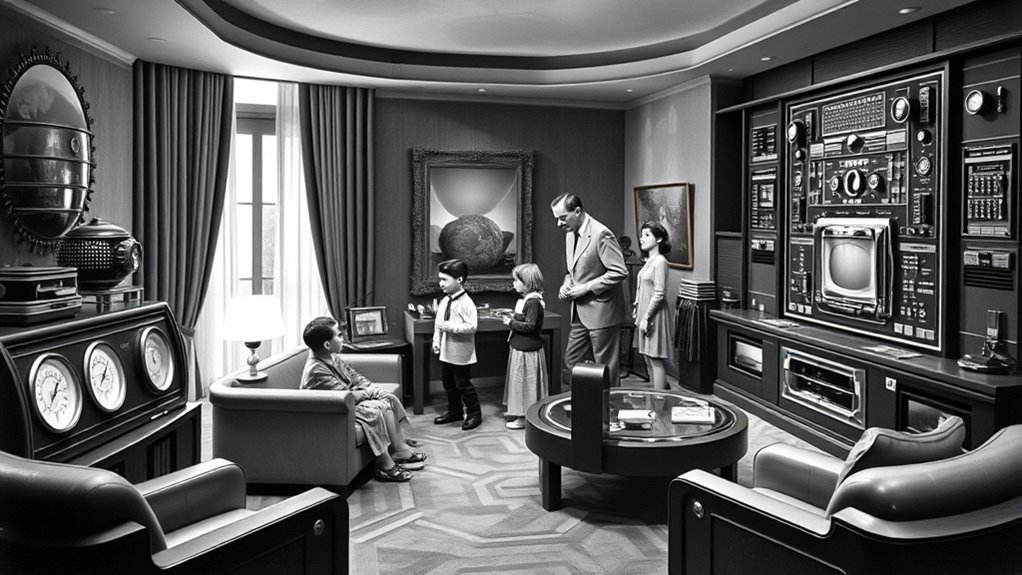
Have you ever wondered how Popular Mechanics has shaped our understanding of technology and innovation? Back in 1939, the magazine offered a glimpse into a future where home automation and futuristic appliances would revolutionize everyday life. The vision was clear: homes would become smarter, more efficient, and more comfortable through the integration of advanced technology. You can imagine flipping through its pages and seeing sketches of kitchens with appliances that seemed straight out of a science fiction story. These ideas weren’t just fanciful daydreams; they reflected a genuine curiosity about what the future could hold. The magazine predicted that, someday soon, ordinary households would have appliances that could communicate, anticipate needs, and perform tasks automatically, transforming the way you live.
The concept of home automation was central to this vision. Popular Mechanics painted a picture of homes where devices would be interconnected, allowing you to control lighting, heating, and appliances with minimal effort. You’d have a central control panel or even a voice-activated system that would turn on the oven, adjust the thermostat, or start the washing machine—all without leaving your chair. The magazine’s writers envisioned a future where these futuristic appliances would make mundane chores easier, freeing up your time for more meaningful pursuits. They imagined appliances that not only performed tasks but also learned from your habits, becoming smarter and more efficient over time. This foresight laid the groundwork for many modern smart home innovations.
Furthermore, the integration of early automation systems would have required advancements in data processing speeds, enabling devices to respond quickly and accurately to user commands.
Futuristic appliances, in their view, wouldn’t just be about convenience—they’d also be about safety and energy efficiency. For example, they envisioned refrigerators that could monitor their contents and order groceries automatically or ovens that could be programmed remotely. These appliances would be controlled by early forms of automation, making household management more streamlined. Popular Mechanics wasn’t merely speculating; it was inspiring engineers and inventors to turn those ideas into reality. Their forward-looking perspective helped shape the trajectory of home technology, showing that the future of everyday appliances would be integrated, responsive, and intelligent.
Looking back, it’s fascinating to see how much of that 1939 vision has become reality. Today, you live in a world filled with smart thermostats, voice-activated assistants, and appliances that connect to the internet. Popular Mechanics’ early predictions didn’t just imagine a better home—they helped inspire the innovations that now make your daily life more convenient, safer, and energy-efficient. Their vision of home automation and futuristic appliances was ambitious but ultimately prophetic, guiding us toward a smarter, more connected future.

Linkind Matter Smart Plug, Work with Apple Home, Alexa, Siri, Google Home
- Easy Setup with Matter: Control via major smart home platforms
- Offline Device Communication: Works without internet on LAN
- Remote Control Access: Control devices remotely via app
As an affiliate, we earn on qualifying purchases.
As an affiliate, we earn on qualifying purchases.
Frequently Asked Questions
How Accurate Were Popular Mechanics’ Predictions About Smart Homes?
You might find that Popular Mechanics’ predictions about smart homes were somewhat optimistic but largely inaccurate. They envisioned futuristic appliances and total automation, yet technological skepticism persisted, limiting real-world adoption. While some innovations like remote controls and early automation appeared, the fully integrated, voice-activated smart homes they imagined haven’t materialized. Instead, modern smart homes evolved more gradually, blending new tech with ongoing skepticism about privacy and reliability.
Did Any 1939 Predictions About Smart Homes Come True?
Yes, some 1939 predictions about smart homes did come true. You now enjoy automated appliances that simplify daily chores, and voice control technology allows you to operate devices hands-free. These innovations reflect the early vision of a connected, intelligent home. While not as advanced as imagined, today’s smart homes embody the idea of seamless automation and voice-command features that Popular Mechanics envisioned decades ago.
What Technological Limitations Hindered Early Smart Home Ideas?
Like a fragile chain, early smart home ideas faced wireless limitations that kept signals from flowing freely, hampering communication between devices. Automation constraints acted as invisible walls, preventing seamless control and integration. These technological hurdles meant that even with big dreams, the hardware and connectivity issues held back the full realization of smart homes, leaving the vision trapped in imagination rather than everyday reality.
How Did 1939 Visions Influence Future Home Automation Developments?
Your fascination with futuristic concepts was shaped by 1939 visions that fueled technological optimism, inspiring future home automation developments. These ideas encouraged inventors and engineers to pursue smarter, more integrated living spaces. While technology was limited then, the optimistic outlook pushed boundaries, leading to innovations like IoT devices and smart assistants today. So, those early visions laid a foundation for the seamless, connected homes you now enjoy.
Were There Cultural or Societal Concerns About Smart Homes in 1939?
You might be surprised to learn that in 1939, many people harbored technological skepticism about smart homes, fearing they’d complicate daily life rather than simplify it. Society’s social acceptance was limited, as concerns about privacy and dependence on machines loomed large. This coincidence shows how early visions of automation sparked both wonder and wariness, reflecting a cautious attitude that still influences how we approach home technology today.
Conclusion
So, as you imagine today’s smart homes, remember that Popular Mechanics’ 1939 vision was like planting a tiny seed that grew into a towering tree. Though their ideas seemed futuristic then, they’ve become your everyday reality. It’s amazing how dreams shape tomorrow’s world, turning science fiction into fact. Keep dreaming big—your imagination is the wind that propels innovation, transforming visions into the homes of the future, just waiting for you to make them real.