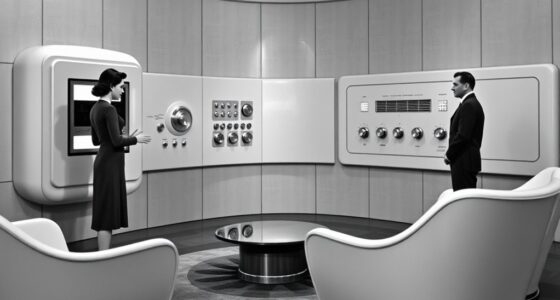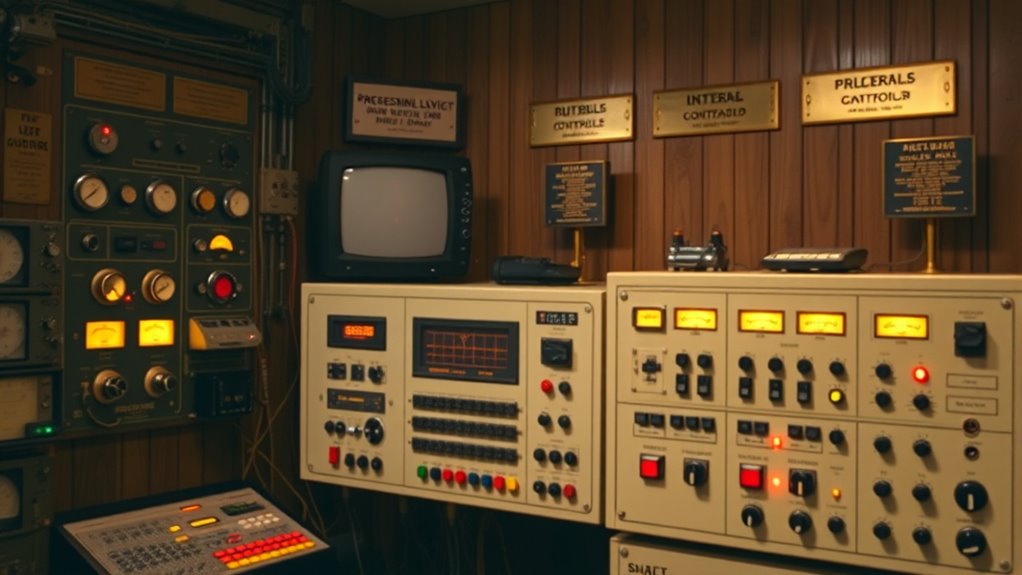
In the 1970s, programmable logic controllers (PLCs) became the central brains of early smart homes. They integrated security systems, lighting, and climate controls, automating tasks that once required manual effort. These controllers handled complex logic reliably and adapted to new needs, paving the way for the modern smart home. If you’re curious about how these systems evolved and shaped today’s technology, there’s more to uncover about their groundbreaking role.
Key Takeaways
- PLCs were among the first automation controllers integrated into 1970s smart home systems.
- They automated security, lighting, and door controls, replacing manual switches with programmable responses.
- PLCs provided reliable, continuous operation, enabling homes to automatically respond to threats or movement.
- Their programmable nature allowed customization for various home automation tasks and security features.
- The use of PLCs in homes laid the foundation for modern smart home devices and interconnected automation systems.
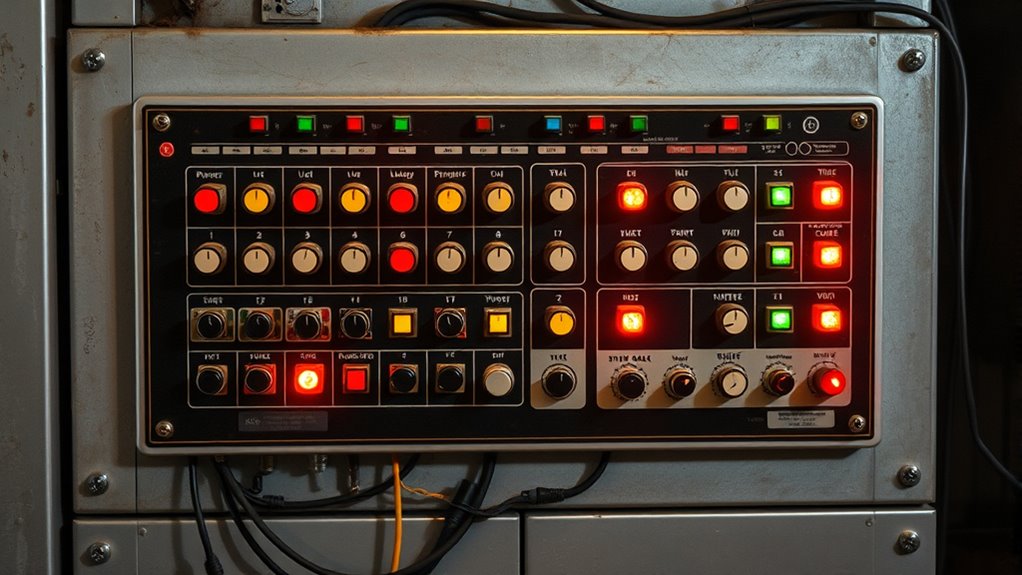
Have you ever wondered how modern factories automate complex processes seamlessly? It all comes down to industrial automation, where programmable logic controllers (PLCs) act as the core brains behind these systems. In the 1970s, PLCs revolutionized manufacturing by providing a reliable, flexible way to control machinery and processes. But their influence wasn’t limited to factories. Surprisingly, they also played a pivotal role in early smart home technology, especially in home security systems. While today’s smart homes are packed with internet-connected devices, back then, PLCs were the foundation that made automated control possible.
Imagine a home where security was more than just locks and alarms. In the 1970s, some forward-thinking homeowners and developers began integrating PLCs into their security setups. These controllers could be programmed to monitor sensors, activate alarms, and even control lighting or door locks—all automatically. Instead of relying on manual switches, the system responded instantly to movement or unauthorized access, making homes safer and more responsive. This was a significant leap from traditional home security, which depended heavily on manual intervention or simple alarm systems. PLCs provided a level of automation that was both sophisticated and reliable, setting the stage for future smart home innovations.
In the 1970s, PLCs automated home security with sensors, alarms, and automatic controls, enhancing safety and responsiveness.
In essence, PLCs serve as the backbone of industrial automation, enabling machines to perform tasks with minimal human oversight. They’re designed to withstand harsh environments, handle complex logic, and be easily reprogrammed to adapt to new processes. In the context of home security, their robustness meant that early automated systems could run continuously, reliably monitoring and reacting to threats. This early adoption of PLC technology meant that homeowners could enjoy a level of automation that increased security and convenience. Even though these systems weren’t as interconnected as today’s smart devices, they demonstrated the potential of programmable controllers to make homes safer and more efficient.
Today, the concept originated in the industrial world but laid the groundwork for modern home automation. The idea that a central controller could manage multiple functions—be it machinery, security, or lighting—started with these early PLCs. Their legacy persists in today’s smart home devices, which continue to rely on programmable logic and automation principles. The 1970s marked a pivotal moment, where programmable controllers proved they could handle complex tasks, transforming both factories and homes into smarter, safer spaces. So, when you think about the origins of smart home technology or automation, remember that PLCs were the pioneering controllers that made it all possible.

Introduction to Programmable Logic Controllers, 3rd Edition
Used Book in Good Condition
As an affiliate, we earn on qualifying purchases.
As an affiliate, we earn on qualifying purchases.
Frequently Asked Questions
How Did PLCS Influence Modern Home Automation Systems?
You see, PLCs revolutionized modern home automation by enabling smart home integration and improving user interfaces. They introduced automation capabilities that allow you to control lighting, climate, and security seamlessly. Today’s smart systems build on PLC concepts, offering intuitive interfaces and centralized control. This evolution makes managing your home easier, more efficient, and customizable, all thanks to the foundational principles established by early programmable controllers.
What Were the Main Challenges in Implementing PLCS in Homes?
Did you know that 65% of early home automation projects faced significant cost barriers? You’d find that the main challenges in implementing PLCs in homes were technical limitations like complex programming and integration issues, which made adoption difficult. These hurdles increased costs and slowed progress, discouraging widespread use. Overcoming these barriers required advances in technology and reduced costs, paving the way for modern smart home systems.
How Did PLC Technology Evolve During the 1970S?
During the 1970s, PLC technology evolved rapidly as you saw improvements in industrial automation. You experienced more reliable and flexible systems that replaced legacy systems, making automation more accessible. Innovations included miniaturization, increased programming capabilities, and better integration with other equipment. This evolution helped you shift from simple relay-based controls to sophisticated digital systems, laying the foundation for modern smart home automation and industrial processes.
Were There Any Safety Concerns With Early PLCS?
You might think early PLCs were perfectly safe, but they had serious safety concerns. Fault tolerance was limited, meaning a small glitch could cause major malfunctions. This jeopardized user safety, risking equipment damage or personal injury. As technology evolved, engineers worked tirelessly to improve fault tolerance and safety features, but in their early days, these controllers weren’t as reliable as today’s standards, making safety a critical issue.
How Did PLCS Compare to Other Automation Methods of That Era?
You’ll find that PLCs outperformed other automation methods of their era by offering easier retrofits and greater cost efficiency. Unlike relay-based systems, PLCs can be reprogrammed quickly, reducing downtime and expenses. They also streamline upgrades, making automation more accessible and flexible. This adaptability made PLCs a smarter choice for industrial and home automation, revolutionizing the way systems were designed and maintained in the 1970s.

PGST Home Security Systems for House, Wireless Home Security Alarm System, Door/Window Sensor Motion Sensors with App Alert, WiFi+GSM 4G Home Alarm System No Subscription(103-F)
【WIFI 4G GSM AlARM SYSTEM】Wherever you are, you can change the security mode and manage your devices on…
As an affiliate, we earn on qualifying purchases.
As an affiliate, we earn on qualifying purchases.
Conclusion
As you reflect on the roots of smart homes, it’s clear that Programmable Logic Controllers gently paved the way for today’s convenience. Their quiet innovation laid a subtle foundation, whispering of a future where technology seamlessly blends into daily life. Though their role was modest, it’s undeniable they helped shape smarter, more comfortable living spaces. Embrace these humble beginnings, appreciating how such gentle advancements quietly transformed our homes into smarter, more welcoming places.
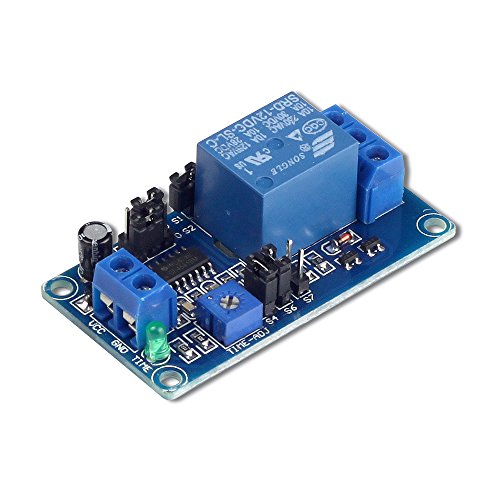
UCTRONICS DC 12V Time Delay Relay Module for Smart Home, Tachograph, GPS, PLC Control, Industrial Control, Electronic Experiment, Arduino Robot
IMPORTANT NOTE: Please remove the jumper cap of S5 when controlling AC current or DC current voltages other…
As an affiliate, we earn on qualifying purchases.
As an affiliate, we earn on qualifying purchases.

Professional PLC Developer and Training Starter Kit for Engineers, Programmable Ladder Logic Controller, Software & Power Supply
12 DC Inputs – 8 Relay Outputs – 5 Amps
As an affiliate, we earn on qualifying purchases.
As an affiliate, we earn on qualifying purchases.