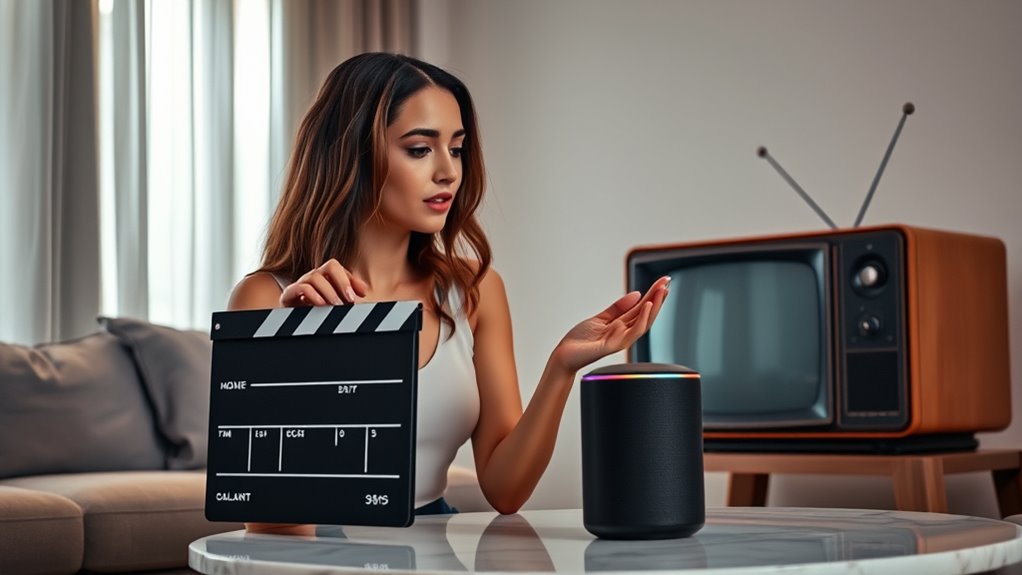

Voice assistants have come a long way, starting from simple devices like Clapper that responded to claps, to today’s advanced systems like Alexa that understand natural speech and connect with smart home gadgets. Improvements in hardware, such as better microphones and faster processors, boost accuracy and responsiveness. Privacy concerns have also led to innovations like on-device processing. As technology keeps evolving, smarter, more personalized assistants are on the horizon—discover how these changes shape your everyday life.
Key Takeaways
- Early voice assistants like Clapper used simple microphones and basic algorithms for rudimentary voice recognition.
- Hardware innovations, including advanced microphones and processors, significantly improved recognition accuracy and responsiveness.
- Transition from simple command systems to intelligent, personalized assistants like Alexa enhanced user interaction.
- Privacy concerns emerged with voice data collection, prompting development of on-device processing and security measures.
- Future advancements focus on smarter, more secure, and context-aware voice assistants integrated seamlessly into daily life.
Have you ever wondered how voice assistants like Siri, Alexa, or Google Assistant understand and respond to your commands? It’s a fascinating blend of technology and innovation that’s transformed how we interact with devices daily. At the core of this evolution are significant advancements in hardware innovations, which have made these assistants more accurate, responsive, and integrated into our lives. Early voice recognition systems relied on simple microphones and basic algorithms, but now, sophisticated microphones and powerful processors enable seamless interaction. These hardware improvements allow voice assistants to pick up speech clearly even in noisy environments, recognize different voices, and process complex commands swiftly. As a result, your experience feels more natural and intuitive, creating a sense of conversation rather than merely issuing commands.
Advances in hardware enable voice assistants to understand speech clearly and respond naturally in noisy environments.
However, this rapid evolution also brings up important privacy concerns. With devices constantly listening for wake words, many users worry about how much data is being collected and stored. Companies gather voice data to improve their systems, but this raises questions about who has access to your conversations and how securely that data is stored. You might be uneasy knowing that your voice recordings could potentially be shared or hacked, exposing personal information. Privacy concerns have prompted manufacturers to develop better security measures, like local processing of commands or anonymized data transmission, but the debate about surveillance and data misuse continues. It’s essential you stay informed about what permissions your devices ask for and consider adjusting privacy settings to limit data sharing.
Despite these concerns, hardware innovations continue to shape the future of voice assistants. Engineers are working on more energy-efficient chips that can process commands directly on the device, reducing reliance on cloud servers and enhancing privacy. Better microphones and noise-canceling technology improve accuracy, even in challenging environments. *furthermore*, integration with smart home devices has become more seamless, allowing voice assistants to control lights, thermostats, and security systems effortlessly. These hardware breakthroughs not only make your interactions smoother but also open doors for new functionalities and smarter automation. As the technology evolves, you can expect voice assistants to become more personalized, secure, and capable of understanding context more deeply.
In the end, the journey from clapper devices to sophisticated AI assistants like Alexa reflects a combination of relentless hardware innovations and ongoing privacy considerations. While the convenience is undeniable, staying aware of privacy issues helps you use these tools responsibly. With each new advancement, voice assistants are becoming more than just gadgets—they’re shaping the future of human-computer interaction, making everyday tasks easier and more connected than ever before.

Third Reality Voice/Music Assistant Dev Edition – Preloaded with Home Assistant Voice Assistant and Music Assistant, Dual Digital Mics, 3W Speaker, 2.4G WiFi only, Open Source
- Preloaded with Home Assistant: Voice and music workflows ready to use
- Dual Digital Microphones: Capture voice commands accurately
- Built-in 3W Speaker: Direct audio playback without external speakers
As an affiliate, we earn on qualifying purchases.
As an affiliate, we earn on qualifying purchases.
Frequently Asked Questions
How Do Voice Assistants Learn From User Interactions?
You help voice assistants learn from your interactions by speaking naturally and using everyday language. These assistants use machine learning algorithms to analyze your commands and responses, improving their understanding over time. As you interact more, they get better at recognizing your voice, preferences, and patterns, allowing them to provide more accurate and personalized assistance. Your ongoing conversations directly contribute to refining their natural language processing capabilities.
What Are the Privacy Concerns With Voice Assistants?
Did you know that 91% of Americans use voice assistants? Privacy concerns include data breaches and unauthorized recordings. You might worry about your conversations being stored or shared without your consent. To protect yourself, make sure your device uses data encryption and always review your privacy settings. Always give user consent for data collection and stay informed about how your voice data is used and stored.
Can Voice Assistants Understand Multiple Languages Simultaneously?
Yes, many voice assistants now support multilingual capabilities, allowing you to communicate in multiple languages. They can understand and process your speech even when you switch languages mid-conversation, thanks to advanced multilingual support and seamless language switching features. This makes interacting more natural and convenient, especially if you speak more than one language regularly. Just make certain your device’s settings are configured for the languages you want to use.
How Do Voice Assistants Improve Their Accuracy Over Time?
Did you know that voice assistants improve accuracy by up to 30% annually? They do this through ongoing voice recognition enhancements and machine learning. As you use them, they analyze your speech patterns, adapt to your accent, and learn new words. This continuous process helps them understand you better over time, making your interactions smoother and more precise. You’ll notice how they become smarter and more responsive with every use.
What Are the Future Advancements Expected in Voice Assistant Technology?
You can expect future voice assistant technology to focus on smarter home integration and more personalized experiences. They’ll become better at understanding context, emotions, and preferences, making interactions seamless and tailored to your needs. Advancements may include improved natural language processing, enhanced privacy features, and smarter device coordination. These improvements will help your voice assistant anticipate your requests, creating a more intuitive, efficient, and personalized smart home environment.
Conclusion
As you’ve seen, voice assistants have evolved from simple clappers to sophisticated Alexa devices. Like a trusty sidekick, they’ve become an essential part of daily life, making tasks easier and more connected. This journey shows how technology continually improves, turning our voices into powerful tools. So, next time you ask Alexa for help, remember you’re talking to a marvel that’s come a long way—like a rocket soaring from humble beginnings to the stars.