Sous-vide cooking uses precise temperature control to guarantee your meals are cooked perfectly every time. By immersing food in a water bath maintained at a specific temperature, you can achieve consistent doneness and tender textures without overcooking. This method seals in flavors and keeps moisture intact, making dishes more flavorful and reliable. If you keep exploring, you’ll discover how science makes your cooking both easier and more high-quality.

Get decor and gifts delivered free — and shop member deals
- Fast, free delivery on millions of items
- Access to Prime Big Deal Days deals on October 6–7
- Prime Video, Amazon Music and more included
Key Takeaways
- Sous-vide involves precise temperature control, ensuring consistent doneness and texture throughout the meal.
- It maintains food moisture and enhances flavors by cooking in sealed bags at target temperatures.
- The method prevents overcooking and undercooking by gently bringing food to the desired temperature.
- Uniform heat distribution eliminates hot spots, resulting in evenly cooked dishes every time.
- Controlled temperatures break down connective tissues, tenderizing tougher cuts and improving overall texture.
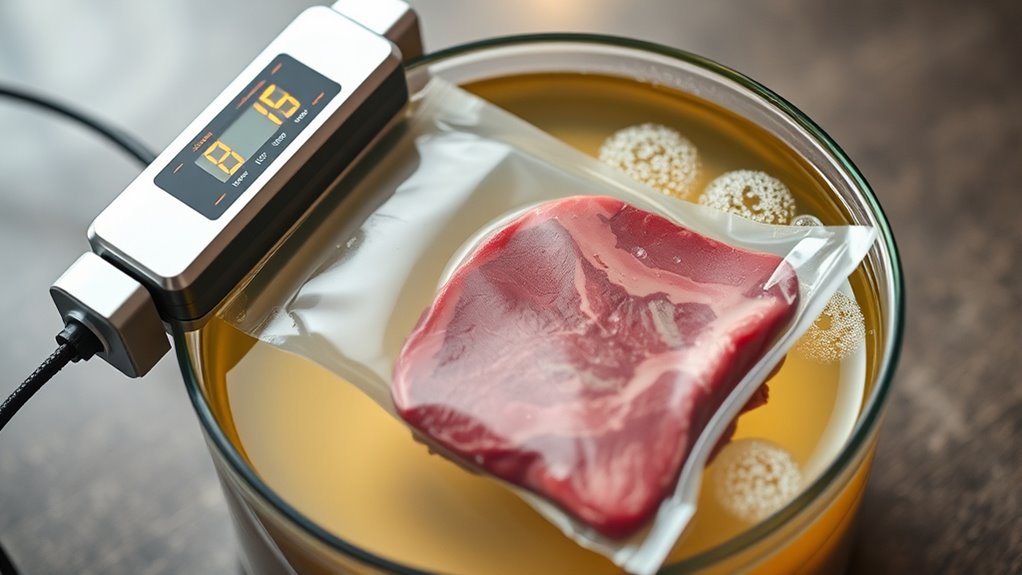
Have you ever wondered how chefs achieve perfectly cooked meats and tender vegetables every time? The secret lies in precision cooking, a technique that involves controlling temperature with remarkable accuracy. When you use sous-vide, you’re fundamentally immersing food in a water bath maintained at a precise temperature. This method ensures that your meal is cooked evenly from edge to edge, eliminating the guesswork and potential for overcooking. The key benefit here is achieving uniform textures throughout your dish, whether you’re preparing a juicy steak or delicate greens. Unlike traditional cooking methods, where heat may fluctuate and create uneven results, sous-vide delivers consistent, reliable outcomes every time.
By setting the water bath to a specific temperature, you allow your food to gently reach that exact point and stay there. This precision cooking process prevents the common problems of overcooked edges or undercooked centers. For instance, a steak cooked sous-vide at 130°F (54°C) will come out perfectly medium-rare, with the interior and exterior matching in doneness. You don’t need to worry about the steak being undercooked in the middle or overcooked on the outside, as the temperature control ensures a uniform result. This level of control is especially beneficial when preparing multiple portions, as each piece will cook uniformly without the need for constant monitoring.
Setting the water bath precisely ensures perfectly cooked, uniform results every time.
Another advantage of precision cooking with sous-vide is that it allows you to retain moisture and enhance flavors. As the food cooks in a sealed bag, it’s protected from evaporation and loss of juices, resulting in tender, succulent dishes. The gentle, consistent heat also breaks down connective tissues in tougher cuts of meat, transforming them into melt-in-your-mouth experiences. Vegetables, too, benefit from this method—becoming tender without losing their vibrant color or texture. You can even add herbs and seasonings to the bag, infusing your dish with flavor during the cooking process. Additionally, referencing archives can help you stay updated on the latest techniques and innovations in precision cooking.
Using sous-vide may seem like a modern, high-tech approach, but once you understand its principles, it becomes an accessible and reliable way to elevate your culinary skills. It’s all about precision cooking—delivering perfectly cooked, tender, and flavorful meals with minimal effort. Whether you’re preparing a fancy dinner or simply wanting consistent results for weeknight meals, sous-vide makes it easier to achieve restaurant-quality dishes at home. The beauty of this technique lies in its ability to produce uniform textures across all your ingredients, giving you peace of mind and exceptional results every time.
As an affiliate, we earn on qualifying purchases.
Frequently Asked Questions
How Safe Is Sous-Vide Cooking Regarding Bacterial Growth?
Sous-vide cooking is quite safe when you follow proper procedures, as it effectively controls temperature to meet bacterial safety and pasteurization standards. You need to cook food at precise, regulated temperatures for the right amount of time to eliminate harmful bacteria. If you maintain consistent temperature control and handle food hygiene properly, you can enjoy sous-vide meals with confidence, knowing they meet safety standards and reduce the risk of foodborne illness.
Can I Cook Multiple Dishes Simultaneously in a Sous-Vide Bath?
Yes, you can cook multiple dishes simultaneously in a sous-vide bath. To do batch cooking effectively, guarantee you use proper temperature zoning by setting different water temperatures for each dish if needed. Keep the water circulating well to maintain consistent heat. Avoid overcrowding, which can hinder heat transfer. With careful planning, sous-vide allows you to prepare various dishes at once, saving time and keeping everything perfectly cooked.
What Are the Best Types of Vacuum Bags for Sous-Vide?
You should choose vacuum bag materials like BPA-free, food-grade polyethylene or nylon for sous-vide. These materials are durable, heat-safe, and prevent leaks. For sealant options, use reliable vacuum sealers with strong seals or double-bag for extra security. These choices guarantee your food stays fresh and safe during cooking. Always opt for high-quality bags designed specifically for sous-vide to get the best results and avoid contamination.
How Do I Prevent Overcooking With Precise Temperature Control?
Did you know that even a 1°C change can considerably affect your dish? To prevent overcooking, focus on maintaining temperature accuracy with your sous-vide device. Use a reliable thermometer and set the precise temperature intended for your recipe. This ensures cooking consistency, so your food reaches perfect doneness without overdoing it. Regularly monitor your device and avoid sudden temperature fluctuations for consistently great results.
Is Sous-Vide Suitable for Large-Scale Commercial Kitchens?
Yes, sous-vide suits large-scale commercial kitchens. You can efficiently scale recipes, ensuring consistent quality across multiple dishes. However, you’ll need specialized equipment like multiple immersion circulators and large vacuum sealers to handle increased volume. Proper planning and investment in commercial-grade equipment are essential to maintain precise temperature control and meet high demand. With the right setup, sous-vide becomes a reliable, efficient method for large-scale cooking.
Conclusion
Once you master sous-vide, you’ll unleash culinary powers you never knew you had. Imagine turning even the toughest cuts into tender, juicy masterpieces with just the flick of a switch. This isn’t just cooking; it’s a flavor revolution that transforms your kitchen into a gourmet haven. Get ready to impress everyone with your perfect, restaurant-quality meals every single time. Once you go sous-vide, ordinary cooking will seem like child’s play — your taste buds will thank you!
Halloween Picks
halloween
As an affiliate, we earn on qualifying purchases.