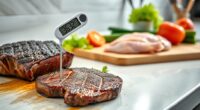
In cooking, heat transfer happens mainly through conduction, convection, and radiation, each playing a key role. Conduction occurs when heat moves directly from the hot pan to your food, while convection involves hot liquids or air circulating to distribute heat evenly. Radiation heats food directly from infrared waves, often during grilling or broiling. Understanding how these methods work helps you control texture, flavor, and appearance. Keep exploring to discover how mastering these transfer methods can elevate your culinary skills.
Key Takeaways
- Heat transfer in cooking occurs mainly through conduction, convection, and radiation, each affecting food differently.
- Conduction involves direct transfer of heat through cookware materials, influencing cooking speed and evenness.
- Convection transfers heat via moving fluids or air, essential in boiling, simmering, and oven baking.
- Radiation heats food surfaces directly through infrared waves, ideal for broiling, searing, or crisping.
- Mastering these methods allows for precise control over cooking temperature, texture, and flavor.
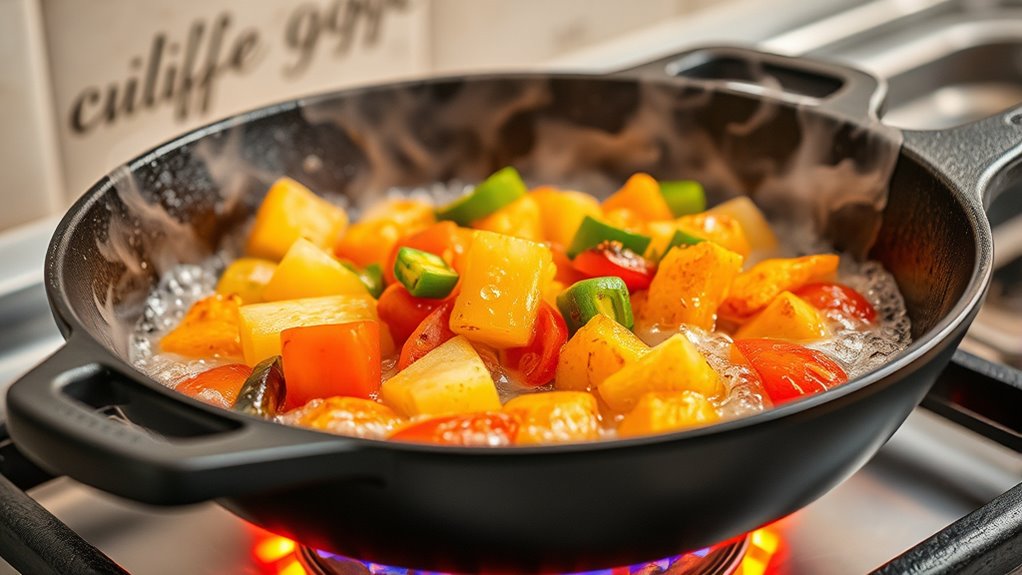
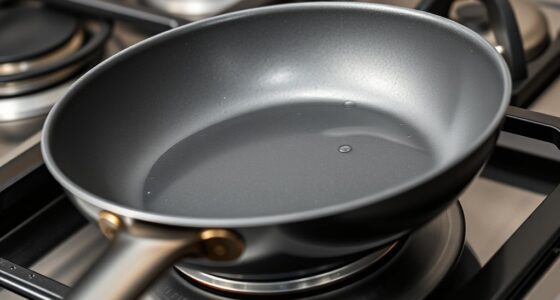
Understanding how heat moves is essential to mastering the art of cooking. When you’re working in the kitchen, the way heat transfers from your heat source to your food directly influences how it cooks, tastes, and looks. One of the first factors to consider is your pan material, which plays a crucial role in how efficiently heat is conducted. Different materials—such as cast iron, aluminum, stainless steel, or non-stick coatings—each have unique properties that affect heat conduction. For example, cast iron heats slowly but retains heat well, making it ideal for steady, even cooking. Aluminum, on the other hand, heats quickly and distributes heat evenly, which helps prevent hot spots. Choosing the right pan material depends on the type of cooking temperature you need; delicate sauces benefit from even, gentle heat, while searing meats requires a pan that can reach and maintain high temperatures efficiently.
Cooking temperatures are equally important because they determine which heat transfer method dominates during your cooking process. When you set a low temperature, conduction becomes the primary mode of heat transfer. This means heat moves directly through the pan material to the food, cooking it gently and evenly. If you crank up the heat, convection takes over, especially in liquids and air, as hot molecules move around and transfer energy to the food faster. This is why boiling or simmering involves active movement of water or broth, creating a more uniform heat distribution throughout the dish. Radiation, another form of heat transfer, also plays a role, especially when using an open flame or broiler. Infrared radiation travels through the air and directly heats the surface of your food, giving it that charred or crisp exterior. Additionally, understanding the different methods of heat transfer helps in selecting the appropriate cooking technique for each dish.
Understanding these factors allows you to better control your cooking process. For instance, if you’re sautéing vegetables, using a pan with good heat conduction and maintaining medium-high heat ensures quick, even cooking without burning. When baking or roasting, setting the oven to a precise temperature allows heat to transfer through convection and radiation, cooking your food evenly from all sides. Adjusting your pan material and cooking temperature based on what you’re preparing helps you optimize heat transfer and achieve perfect results. Ultimately, knowing how heat moves and how your equipment influences it empowers you to make smarter choices in the kitchen, turning simple ingredients into culinary masterpieces.
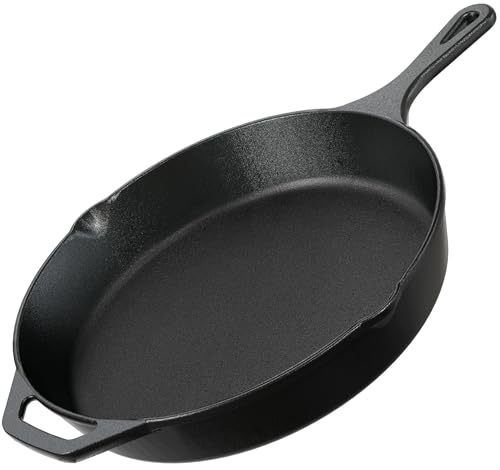
Utopia Kitchen Premium Cast Iron Skillets 12 Inch, Chef's Pan, PFAS-Free, Pre-Seasoned Frying Pan, Stovetop, Oven, Campfire and Grill Large Skillet, Even Heat Distribution Cast Iron Pan – Black
- Exceptional Heat Retention: Provides even heat distribution for perfect cooking
- Versatile Cooking Use: Suitable for stovetop, campfire, grill, and oven
- Pre-Seasoned Ready to Use: Pre-seasoned with vegetable oil for immediate cooking
As an affiliate, we earn on qualifying purchases.
As an affiliate, we earn on qualifying purchases.
Frequently Asked Questions
How Does Altitude Affect Heat Transfer During Cooking?
At higher altitudes, your cooking is affected because the boiling point drops, requiring altitude adjustments. You’ll notice water boils at a lower temperature, so heat transfer during boiling slows down. To compensate, you might need to increase cooking time or pressure. This change influences conduction and convection, making it essential to adapt recipes for consistent results. Understanding these effects helps you cook more effectively at different elevations.
Can Specific Cookware Materials Alter Heat Transfer Efficiency?
Yes, specific cookware materials can markedly alter heat transfer efficiency. For example, copper and aluminum, known for high heat conductivity, heat quickly and evenly, reducing hot spots. Cast iron, with lower heat conductivity, heats slowly but retains warmth longer. You can enhance cooking performance by choosing cookware material that matches your cooking style. Select high-conductivity materials for precise control, and opt for slower-heating options when needed to improve your culinary results.
What Role Does Humidity Play in Convection Cooking?
Humidity impact in convection cooking is significant because it influences moisture transfer inside your oven. When humidity is high, moisture stays in the air, helping food stay tender and preventing it from drying out. Conversely, low humidity speeds moisture loss, which can lead to tougher textures. By controlling humidity, you can optimize moisture transfer, ensuring even cooking, better flavor, and improved texture in your dishes.
How Do Different Spices Influence Heat Absorption?
Spices are like tiny heat maestros, guiding how quickly heat is absorbed. Different spices influence heat absorption by either enhancing or inhibiting spice heat transfer. For instance, cinnamon and turmeric boost absorption, making dishes more flavorful and evenly cooked. Conversely, spices with high oil content may insulate, reducing absorption. By choosing spices wisely, you enhance absorption, ensuring your cooking process is both efficient and delicious.
Are There Health Impacts Related to Radiation Cooking Methods?
Radiation cooking methods, like food irradiation, are generally safe when proper radiation safety measures are followed. These techniques help extend shelf life and kill harmful bacteria without markedly affecting nutritional value. However, you should be aware of potential concerns about radiation exposure if safety protocols aren’t maintained. Overall, food irradiation is approved by health authorities and considered safe, but it’s important to trust reputable sources and proper handling.
Conclusion
So, next time you marvel at perfectly cooked dishes, remember it’s just good old heat transfer doing all the work—conduction, convection, and radiation. Without these sneaky mechanisms, your culinary masterpieces would remain raw or burnt, and you’d be stuck with takeout. So, give a little thanks to physics for making your kitchen adventures possible. After all, who knew that science’s invisible hand was the real chef behind that delicious meal?