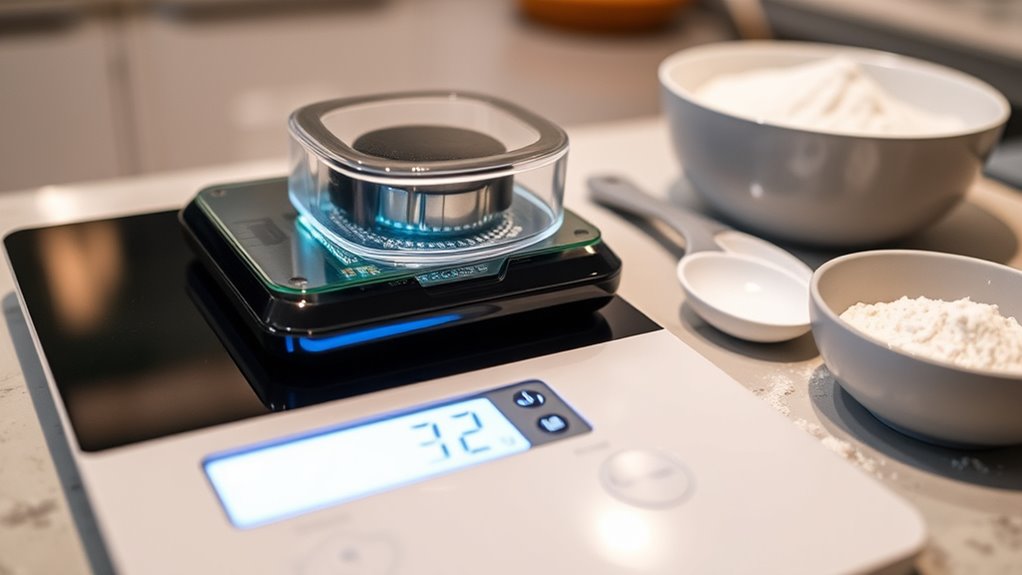
Smart scales and ingredient sensors help you achieve precise measurements, ensuring your baked goods turn out perfect every time. Regular calibration and proper maintenance are key to maintaining their accuracy and consistency. Environmental factors like temperature and surface stability can influence results, so using stable settings is important. By keeping your tools properly calibrated, you can enhance your baking precision and reduce waste. Keep exploring to discover how to make the most of your smart baking tools.
Key Takeaways
- Proper calibration of smart scales ensures accurate ingredient measurements, crucial for precise baking results.
- Using known weights and following manufacturer instructions maintains measurement accuracy over time.
- Environmental factors like temperature and surface stability can affect scale readings, so consistent conditions are essential.
- Regular verification and maintenance prevent sensor drift, ensuring ongoing reliability and precision.
- Accurate measurements from calibrated scales enhance recipe consistency, reducing waste and improving baking quality.
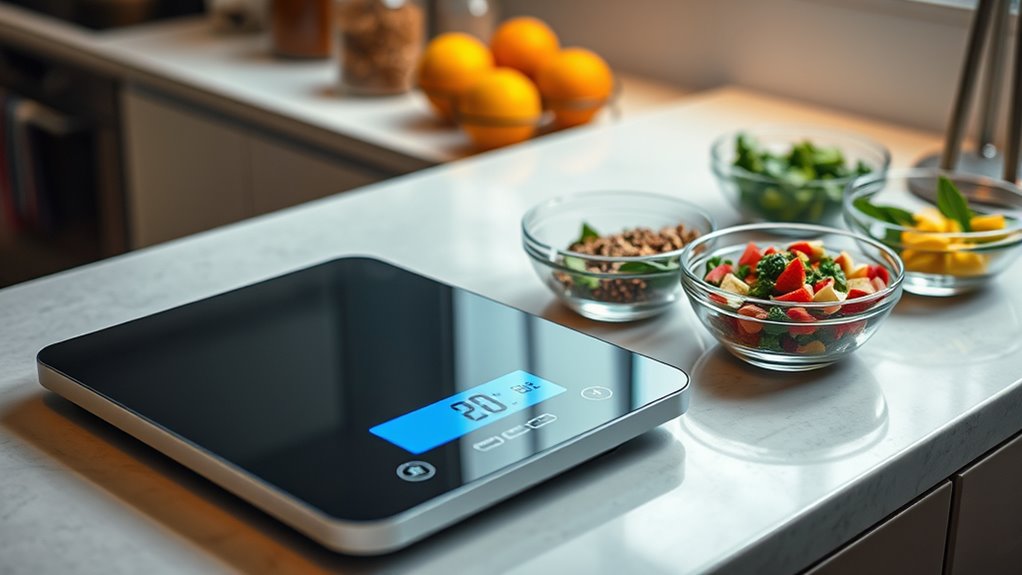
Smart scales and ingredient sensors are revolutionizing how home cooks and professional chefs measure and prepare ingredients. These devices offer unmatched accuracy, helping you achieve perfect results every time. To maintain this level of precision, understanding calibration techniques is essential. Proper sensor calibration ensures your smart scale provides accurate readings, which is especially crucial in baking where precise measurements matter. When you first set up your device, follow the manufacturer’s instructions to calibrate it correctly. Many scales come with calibration weights or require you to place a known weight on the platform to set a zero point. Doing this regularly is vital because sensors can drift over time, leading to inaccurate measurements. Sensor calibration involves adjusting the device’s internal settings so that it accurately reflects real-world weights, ensuring consistency across multiple uses. Some advanced models automatically calibrate themselves during startup, but it’s still wise to periodically verify calibration with standard weights. This way, you catch any discrepancies early and prevent errors in your recipes.
You should also be aware of environmental factors that can influence calibration accuracy. For example, changes in temperature, humidity, or even the surface you’re placing the scale on can affect readings. Always use your scale on a flat, stable surface, and avoid placing it near drafts or direct sunlight. Regularly checking and recalibrating your device helps maintain precision, especially if you notice inconsistent measurements or if the scale has been moved. When performing sensor calibration, keep in mind that different scales might have specific procedures, so consulting the user manual is always a good idea. Some scales allow you to calibrate with different weights or even via app integration, making the process more straightforward. Investing a few minutes in calibration techniques can considerably improve your cooking accuracy, reducing waste and ensuring your baked goods turn out just right.
Additionally, regular maintenance of your smart scale can help uphold its accuracy and extend its lifespan. Using well-calibrated smart scales and ingredient sensors elevates your baking from good to exceptional. You’ll gain confidence knowing that every gram you measure is precise, leading to better textures, flavors, and overall results. Remember, calibration isn’t a one-time task; it’s an ongoing process that keeps your tools performing at their best. By making sensor calibration a routine part of your kitchen maintenance, you’ll consistently trust your measurements and avoid the frustration of failed recipes or inconsistent outcomes. Whether you’re weighing delicate spices or large quantities of flour, proper calibration techniques ensure that your smart scale remains a reliable partner in your culinary journey. Ultimately, precision achieved through careful calibration makes all the difference, turning simple ingredients into extraordinary dishes.

Etekcity Smart Food Kitchen Scale with Nutritional Calculator, Free App with 19 Nutrients Tracking, Calorie, Marco, Digital grams and ounces for weight loss, Premium Stainless Steel, 11lb
𝗬𝗼𝘂𝗿 𝗛𝗲𝗮𝗹𝘁𝗵 𝗘𝘅𝗽𝗲𝗿𝘁: Easily track your intake of up to 19 nutrients, monitor trends, create daily, weekly and…
As an affiliate, we earn on qualifying purchases.
As an affiliate, we earn on qualifying purchases.
Frequently Asked Questions
How Do Smart Scales Connect to Other Kitchen Devices?
Smart scales connect to other kitchen devices through wireless connectivity, such as Wi-Fi or Bluetooth. You simply enable device synchronization on your smart scale and pair it with your compatible appliances or apps. This allows real-time data sharing, making your baking process seamless. You can control, monitor, and adjust measurements easily, guaranteeing precision in your recipes. Just guarantee your devices are within range for smooth wireless communication.
Are Ingredient Sensors Compatible With All Types of Baking Ingredients?
Like a key opening a lock, ingredient sensors fit many baking ingredients, but not all. You’ll find ingredient compatibility varies, with some sensors struggling with powders or liquids, revealing their limitations. While they excel with common ingredients like flour and sugar, complex or sticky elements may not be accurately measured. Always check sensor specifications to understand their limits, ensuring your baking precision isn’t compromised by compatibility issues.
What Maintenance Is Required for Smart Scales and Sensors?
You need to regularly perform calibration routines on your smart scales and sensors to guarantee accuracy. Keep an eye on battery management by charging or replacing batteries as needed, so your devices stay functional. Clean the sensors and scales gently with a soft, damp cloth to prevent dust or residue buildup. Doing these simple maintenance steps helps maintain precise measurements, ensuring your baking results stay consistent and perfect.
Can These Devices Be Used for Non-Baking Culinary Applications?
Yes, you can use these devices for non-baking culinary applications. They’re great for alternative cooking techniques like precise portioning, sous-vide, or meal prep. Plus, many smart scales offer nutritional analysis features, helping you track calorie intake or dietary goals. This versatility allows you to expand your culinary skills beyond baking, making your cooking more accurate, nutritious, and enjoyable across various cuisines and methods.
How Secure Is the Data Stored on Smart Scales and Sensors?
You might think your smart scale’s data is as secure as a secret recipe, but it’s not quite that simple. While many devices use data encryption and cloud storage to protect your info, no system is foolproof. Hackers could still find a way in, so always stay cautious. Your culinary secrets are stored online, but remember, even the best encryption can have its vulnerabilities.

HOTO Smart Food Scale, Kitchen Scale, Food Scales Digital Weight Grams and Oz, Coffee Scale, Kitchen Scale with 0.1g High Precise Sensor, Measures in 4 Units (g/ml/oz/lb: oz),Batteries Not Included
【COOL TOOL】Life's a toolbox, and everyone needs the right tools. When she/he gets a cool one, she/he will…
As an affiliate, we earn on qualifying purchases.
As an affiliate, we earn on qualifying purchases.
Conclusion
With smart scales and ingredient sensors, you’re revealing baking precision that’s almost supernatural. No more guesswork or messy mistakes—just perfect results every time. These tools turn ordinary bakers into culinary geniuses, transforming your kitchen into a science lab of flavor. Embrace this technology, and watch your baking skills elevate to legendary status. Trust me, once you experience this level of accuracy, you’ll wonder how you ever baked without it. Prepare to impress everyone with your unbeatable, flawless creations!

Fuzion Calibration Weights 210g, M1 Class 9 PCS Stainless Steel Scale Calibration Weight Kit, 1g 2g 5g 10g 20g 50g 100g Calibration Weight with Storage Box, Tweezers for Digital Scale, Gram Scale
9 PCS CALIBRATION WEIGHTS: This calibration weight set contains 9 pieces of different weights 𝗧𝗼𝘁𝗮𝗹 210g(includes 1x1g, 2x2g,…
As an affiliate, we earn on qualifying purchases.
As an affiliate, we earn on qualifying purchases.

Dual Platform Food Kitchen Scale with 0.01g/0.001oz High Precision, 15kg/33lb Bakery Scale, Dual Accuracy Kitchen Scale for Sourdough Bread, Baking and Cooking with 7 Unit Tare and Totalizer
PRECISION RECIPES: The ApeWeghr Dual Platform Food Scale offers precision weighing with two different weighing capacities designed to…
As an affiliate, we earn on qualifying purchases.
As an affiliate, we earn on qualifying purchases.