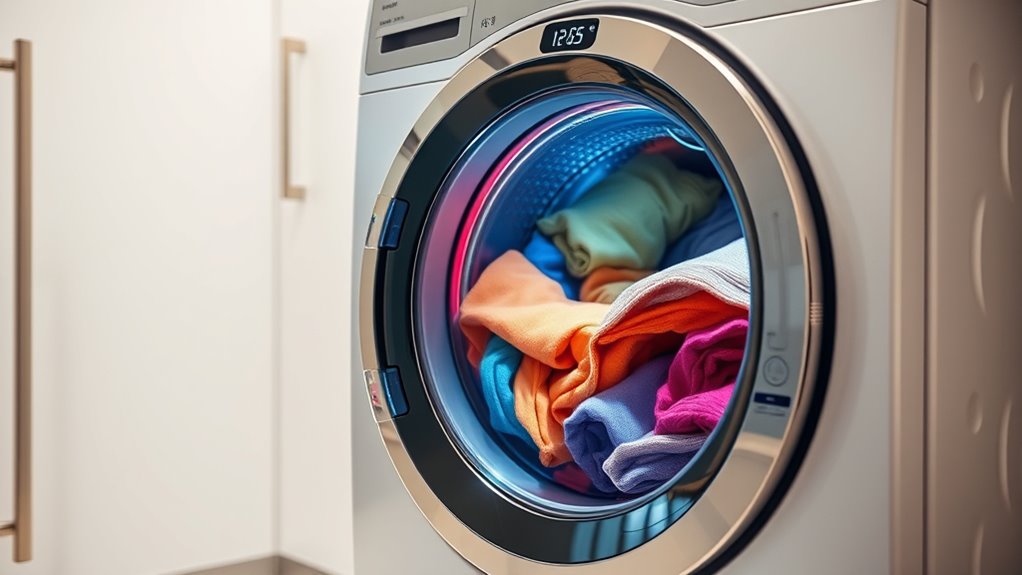

Modern washers save water by using advanced features like load-sensing technology, which adjusts water levels based on load size, and optimized wash cycles that reduce water use without sacrificing cleaning power. The IWF rating measures how efficiently they use water per cubic foot, with lower numbers indicating better performance. IMEF gauges energy efficiency, balancing water heating and motor energy. To maximize savings, smarter appliances combine these features—keep exploring to learn more about making your laundry eco-friendly.

Get decor and gifts delivered free — and shop member deals
- Fast, free delivery on millions of items
- Access to Prime Big Deal Days deals on October 6–7
- Prime Video, Amazon Music and more included
Key Takeaways
- Modern washers use load-sensing technology to automatically adjust water levels based on load size, reducing water usage.
- IWF measures water used per cycle per cubic foot; lower IWF indicates higher water efficiency.
- Optimized wash cycles and sensors tailor water consumption to soil level and load type, minimizing waste.
- IMEF evaluates energy use related to water heating and spinning, promoting energy-efficient washing.
- Choosing appliances with low IWF and high IMEF ensures effective cleaning with less water and energy consumption.
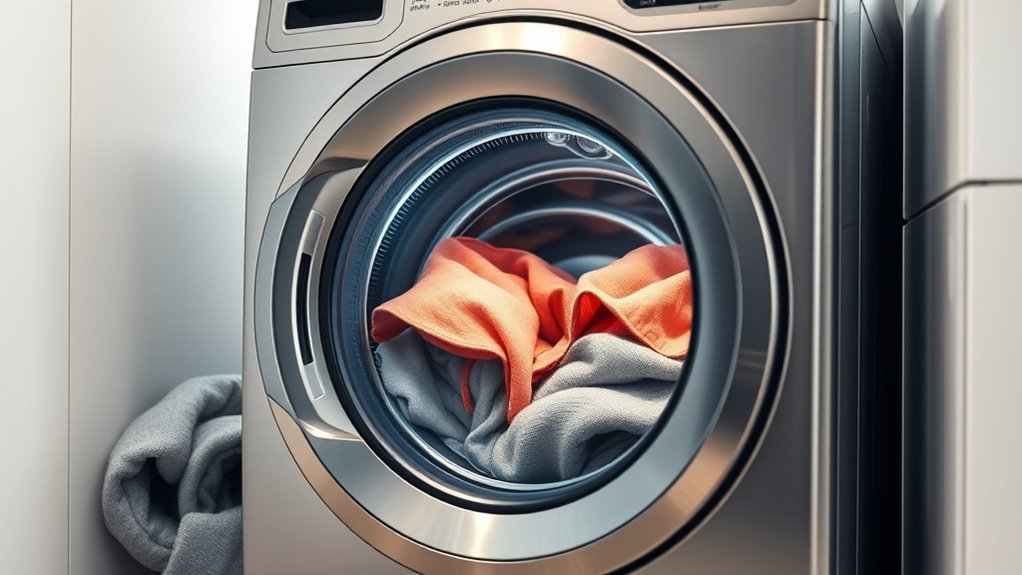
As concerns about water preservation grow, modern clothes washers are designed to use considerably less water without sacrificing cleaning power. This advancement helps you save both water and energy, making your laundry routine more environmentally friendly and cost-effective. Two key measures—Integrated Water Factor (IWF) and Modified Energy Factor (MEF)—play essential roles in how these washers achieve such efficiency. Understanding these metrics can help you choose appliances that prioritize water conservation and energy efficiency, ensuring you get the best performance with minimal impact.
The IWF measures the amount of water a washer uses per cycle, expressed in gallons per cubic foot of capacity. A lower IWF indicates a more water-efficient machine. Modern washers incorporate features like load-sensing technology, which automatically adjusts water levels based on the load size. This prevents overuse of water and ensures that you’re not wasting resources on small loads. Some washers also utilize optimized wash cycles that require less water while still delivering thorough cleaning. By focusing on reducing water consumption, these appliances contribute substantially to water preservation efforts, especially in areas facing water scarcity.
Modern washers use load-sensing technology to minimize water use and promote water conservation efforts.
On the other hand, the IMEF—or the Integrated Modified Energy Factor—assesses a washer’s energy efficiency by considering how much energy it consumes per cubic foot of capacity, factoring in water heating, washing, and spinning. A higher IMEF indicates a more energy-efficient model. Modern washers are designed to maximize energy efficiency through features like high-speed spin cycles, which extract more water from clothes, reducing drying time and energy use. Additionally, many models use advanced motor technology and optimized wash actions to clean effectively while consuming less electricity. Together with water-saving features, these innovations help you lower your overall utility bills and reduce your environmental footprint.
When choosing a new clothes washer, pay attention to both the IWF and IMEF ratings. Machines with low IWF and high IMEF scores are ideal for maximizing water preservation and energy efficiency. These models often come with smart sensors and eco-friendly wash cycles that adapt to load size and soil level, ensuring optimal use of resources. It’s not just about saving water or energy in isolation; it’s about balancing both to create a more sustainable laundry routine. By understanding how IWF and IMEF work together, you can make informed decisions that align with your eco-conscious values while maintaining effective cleaning performance. Additionally, advancements in sensor technology continue to further optimize water and energy use, making modern washers even more efficient.
Frequently Asked Questions
How Do I Measure the IWF and IMEF of My Washer?
To measure the IWF and IMEF of your washer, check the manufacturer’s specifications or user manual, which often list these efficiency metrics. You can also find this info on Energy Star labels or product listings online. If you want precise data, you might need to conduct a water measurement test by recording the water used during a typical cycle and comparing it to industry standards.
Do Energy-Efficient Washers Always Use Less Water?
Think of your washer as a diligent gardener. While it often uses less water, it doesn’t always do so unless well-maintained. Energy-efficient washers generally conserve water, but neglecting washer maintenance can cause them to use more. To optimize water savings, follow water conservation tips, like running full loads and choosing eco-friendly cycles. Remember, a well-cared-for washer is like a thriving garden, thriving on proper care and attention.
Can Older Washing Machines Be Upgraded for Better Water Efficiency?
Yes, you can upgrade your older washing machine with retrofit options and water-saving features. Installing flow restrictors or low-flow hoses helps reduce water use, while adding an external water monitor can optimize efficiency. Some models also allow for internal upgrades, such as replacing valves or sensors. These improvements can boost water efficiency, save you money, and help conserve resources without needing to buy a new washer.
How Does Load Size Affect Water Usage in Washers?
You’ll notice that load size directly impacts water usage in your washer. When you fill it up to your machine’s load capacity, it uses more water during each wash cycle. To save water, always select the appropriate wash cycle for your load size and avoid overloading. Smaller loads use less water, but make sure not to underload, which can also waste resources. Properly managing load size optimizes efficiency and conserves water.
Are There Specific Brands Known for the Lowest Water Consumption?
You’ll be amazed at how brands like Whirlpool, Electrolux, and Samsung stand out for their ultra-low water consumption, making them some of the most water-efficient options. Their reputation for innovation and positive consumer reviews highlight their commitment to saving water without sacrificing performance. These brands often feature advanced IWF and IMEF ratings, ensuring you get a washer that’s eco-friendly and reliable—perfect for reducing your water footprint effortlessly.
Conclusion
So, next time you do laundry, consider how IWF and IMEF are changing the game. These metrics reveal that newer washers truly use less water without sacrificing cleaning power. It’s tempting to think bigger machines always mean more water waste, but the data suggests otherwise. By understanding these standards, you can make smarter choices and help conserve water. Isn’t it fascinating how technology proves some long-held theories wrong?
Fall Picks
fall essentials
As an affiliate, we earn on qualifying purchases.