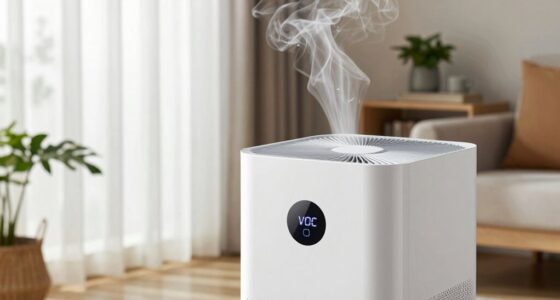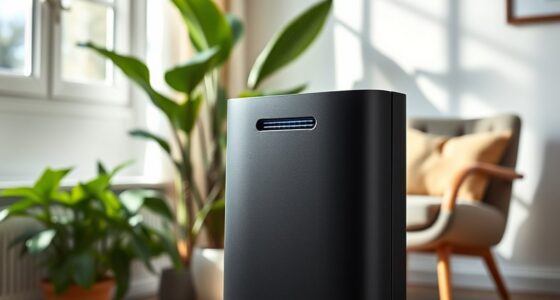
When comparing HEPA versus “HEPA-like” filters, it’s important to know that genuine HEPA filters meet strict standards and remove over 99.97% of tiny particles, helping reduce allergens effectively. “HEPA-like” or “HEPA-type” labels often mislead because they use less dense materials and lack verifiable certification, meaning they usually don’t perform as well. To maximize allergy relief, you’ll want to choose filters with verified HEPA certification—learn more to make smarter choices.

Get decor and gifts delivered free — and shop member deals
- Fast, free delivery on millions of items
- Access to Prime Big Deal Days deals on October 6–7
- Prime Video, Amazon Music and more included
Key Takeaways
- Genuine HEPA filters meet strict standards and capture ≥99.97% of 0.3-micron particles, unlike “HEPA-like” filters with unverified claims.
- “HEPA-like” labels are often marketing terms using less dense synthetic fibers, resulting in lower allergen removal.
- Certified HEPA filters display verified certifications and higher CADR scores, ensuring real-world filtration effectiveness.
- Relying solely on the “HEPA” label can be misleading; always check for official certifications and performance ratings.
- Understanding the difference helps improve allergy relief by choosing filters proven to efficiently trap airborne allergens.
Have you ever wondered whether a HEPA filter is worth the investment compared to a HEPA-like filter? It’s a common question, especially when you’re trying to improve indoor air quality and reduce allergy symptoms. The truth is, understanding the differences in air purifier ratings and filter material differences can help you make smarter choices. Many products market themselves with a HEPA label, but not all filters labeled as “HEPA” meet the same standards. Knowing what sets genuine HEPA filters apart from HEPA-like filters is essential for allergy sufferers who want effective protection.
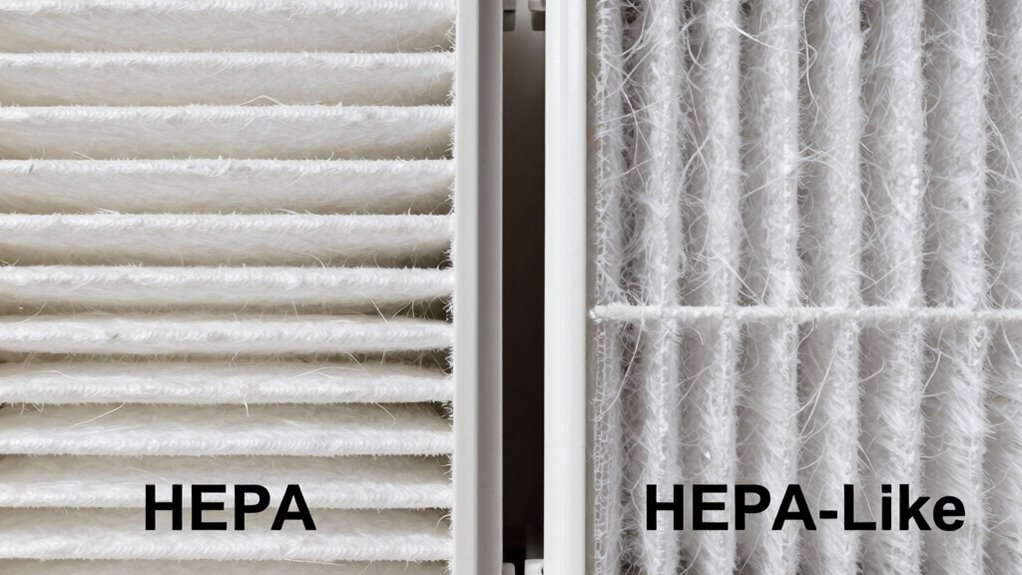
HEPA filters are designed to capture at least 99.97% of airborne particles as small as 0.3 microns. This high efficiency is verified through rigorous testing and standardized air purifier ratings, giving you confidence that the filter will trap dust mites, pollen, pet dander, and even some bacteria. In contrast, HEPA-like filters often claim similar benefits but usually don’t meet these strict criteria. They might use a different filter material that’s less effective at trapping tiny particles, which can lead to decreased air purifier performance and less allergy relief.
Filter material differences are at the core of these distinctions. Genuine HEPA filters are made from dense fibers arranged in a specific way that maximizes particle retention. Typically, they’re composed of randomly arranged glass fibers, which create a maze that traps particles through a combination of interception, impaction, and diffusion. HEPA-like filters, on the other hand, may use synthetic or less dense fibers, which may not provide the same level of filtration. Some HEPA-like filters might claim to be “HEPA-type” or “HEPA-like,” but these terms aren’t regulated, so they often serve as marketing tricks rather than a guarantee of quality.
Additionally, understanding the filter standards and certifications can help you distinguish authentic HEPA filters from less effective options. Look for units with verified HEPA certification and high CADR (Clean Air Delivery Rate) scores that reflect real-world performance. Ratings help you determine whether a filter truly meets industry standards or if it’s simply riding on the popularity of the HEPA label. When you’re shopping, don’t just rely on labels—check for certification from reputable organizations and reviews that specify the filter’s ability to reduce airborne allergens effectively.
Frequently Asked Questions
How Can Consumers Identify Authentic HEPA Filters?
To identify authentic HEPA filters, you should check the filter certification on the label. Genuine HEPA filters will clearly state they meet the HEPA standard, usually capturing 99.97% of particles 0.3 microns in size. Be wary of label deception—some products claim to be HEPA but lack proper certification. Always buy from reputable sources and verify the certification to guarantee you’re getting a true HEPA filter that effectively improves air quality.
Do Hepa-Like Filters Meet Any Safety Standards?
HEPA-like filters don’t typically meet strict regulatory standards or carry official certification labels like true HEPA filters do. While they may seem similar, they often don’t filter out tiny particles effectively. Always check for certification labels from recognized agencies, such as the U.S. Department of Energy, to guarantee your filter meets safety standards. Relying on certified filters helps protect your allergies and respiratory health.
Are Hepa-Like Filters Effective Against All Allergens?
HEPA-like filters aren’t effective against all allergens because their filter efficiency and allergen coverage are usually lower than true HEPA filters. You might notice some improvement, but these filters often miss smaller particles like pollen or pet dander. If you want thorough allergy relief, look for filters with verified high efficiency and broad allergen coverage, ensuring you’re capturing the widest range of airborne irritants.
What Are the Long-Term Costs of HEPA Vs HEPA-Like Filters?
You’ll find that HEPA filters have higher initial costs but tend to last longer, reducing maintenance expenses over time. HEPA-like filters usually cost less upfront but may need frequent replacements, increasing long-term costs. Consider the cost implications of regular filter changes and maintenance when choosing, as investing in a true HEPA filter could save you money and effort in the long run, especially if allergies are a concern.
Can Hepa-Like Filters Be Used in Medical or Industrial Settings?
Did you know that only HEPA filters meet strict medical certifications and industrial compliance standards? HEPA-like filters can’t reliably be used in medical or industrial settings because they often lack the necessary filtration efficiency and certification. Using them risks contamination and non-compliance issues, so always verify that filters are properly certified for medical or industrial use to guarantee safety and effectiveness in critical environments.
Conclusion
Don’t let fake “HEPA-like” labels sabotage your allergy plans! If you fall for this sneaky trick, you could be exposing yourself to a mountain of allergens and ruining your health. Trust me, a simple label can mean the difference between clear breathing and a nightmare of sneezing fits. Don’t gamble with your well-being—stick to real HEPA filters and stay allergy-free. Your lungs will thank you for it!
Evergreen bestsellers Picks
bestsellers
As an affiliate, we earn on qualifying purchases.