Salt-based water softeners remove calcium and magnesium minerals through ion exchange, replacing them with sodium and preventing scale buildup on your pipes and appliances. Salt-free systems don’t remove minerals; instead, they change how minerals behave, often by transforming them into inert crystals that won’t stick or cause build-up. The main difference is that salt-based systems actively remove minerals, while salt-free options focus on preventing mineral adhesion—explore further to see which suits your needs best.

Get decor and gifts delivered free with Prime
- Fast, free delivery on millions of items
- Prime Video, Amazon Music and more included
- Member-only deals all year
Key Takeaways
- Salt-based softeners remove calcium and magnesium ions via ion exchange, replacing them with sodium ions.
- Salt-free conditioners do not remove minerals but transform them into inert crystals to prevent buildup.
- Salt-based systems require ongoing salt addition and regeneration cycles; salt-free systems need minimal maintenance.
- Salt-based softeners effectively eliminate scale, while salt-free systems prevent mineral adhesion without removing minerals.
- Choice depends on whether complete mineral removal or low-maintenance, chemical-free treatment aligns with your needs.
Have you ever noticed how hard water leaves soap scum on your shower or makes your clothes feel stiff? That’s because your water contains minerals like calcium and magnesium, which cause mineral buildup on surfaces and in your appliances. These minerals don’t just sit idly; they actively interfere with soap’s ability to lather and clean effectively. To combat this, many people turn to water softeners. But understanding the difference between salt-based and salt-free systems is key to choosing the right solution for your home.
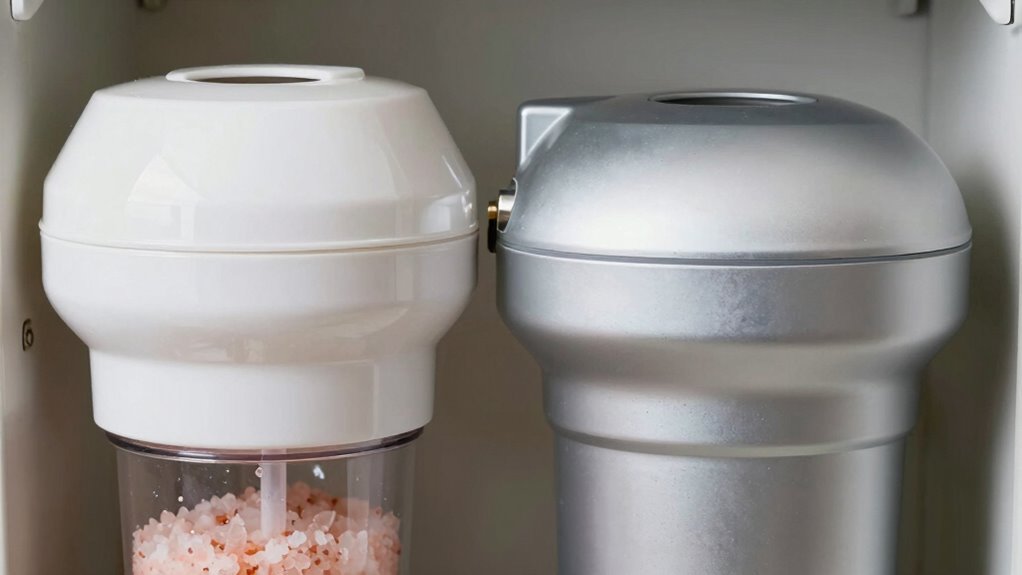
Salt-based water softeners work through a process called ion exchange. When hard water flows through the system’s resin tank, calcium and magnesium ions are swapped out for sodium ions. This exchange reduces mineral content in your water, eliminating the primary cause of mineral buildup. As a result, soap lathers better, appliances last longer, and your skin feels softer. The ion exchange process is highly effective at “softening” water by removing these minerals, which are the main culprits behind scale formation and clogged pipes. However, it’s important to note that salt-based systems add sodium to your water, which might not be suitable for everyone, especially those on low-sodium diets.
On the other hand, salt-free water conditioners don’t rely on ion exchange. Instead, they use a process called template-assisted crystallization or other physical methods to alter how minerals behave. These systems don’t remove calcium and magnesium; instead, they transform these minerals into microscopic, stable crystals that won’t adhere to surfaces. Think of it as turning the minerals into tiny, inert particles that won’t cause mineral buildup or scale formation. This means your water remains “hard,” but the minerals no longer cling to surfaces or create soap scum. Salt-free systems are often marketed as “descalers” and are generally easier to maintain since they don’t require salt or regeneration cycles.
In the end, your choice depends on what you want to achieve. If you prefer removing minerals altogether and don’t mind the ongoing salt purchase, a salt-based system is highly effective. If you want a low-maintenance, chemical-free option that simply prevents scale and mineral buildup, a salt-free system may suit you better. Both types modify the way minerals interact with your home’s surfaces, but only salt-based systems truly remove the minerals through ion exchange. Understanding these differences helps you make an informed decision, ensuring your water is as gentle and effective as you need it to be.
As an affiliate, we earn on qualifying purchases.
Frequently Asked Questions
Do Salt-Free Water Softeners Remove Minerals Like Calcium and Magnesium?
Salt-free water softeners don’t remove minerals like calcium and magnesium; instead, they use a process called template-assisted crystallization to change these minerals into harmless crystals. This prevents scaling buildup in your pipes and appliances without removing the minerals themselves. So, if you’re looking for mineral removal, salt-free systems focus on scaling prevention rather than reducing mineral content, helping keep your plumbing cleaner while maintaining essential minerals in your water.
Are Salt-Based Softeners Safe for Septic Systems?
Salt-based softeners are generally septic-safe if maintained properly, but you should verify for septic compatibility first. They use salt to regenerate resin beads, so there’s a risk of salt leakage if not managed correctly. Excessive salt can harm your septic system’s bacteria, leading to system failure. Regular maintenance helps prevent salt leakage and ensures your septic system stays healthy while softening water effectively.
How Often Do Salt-Based Softeners Require Salt Refilling?
You need to refill the salt in your softener about every 4 to 6 weeks, depending on your water usage and the hardness level. Regular salt refill frequency is vital for maintaining ideal softening performance. Follow your maintenance schedule closely—check the salt level weekly and add more as needed. This routine ensures your system keeps functioning efficiently and prevents issues caused by low salt levels.
Can Salt-Free Systems Completely Prevent Limescale Buildup?
You might think salt-free systems can fully prevent limescale buildup, but they don’t. Instead, they reduce mineral deposition, slowing down the process but not stopping it entirely. Imagine a constant battle against mineral deposits—salt-free systems help, but don’t guarantee complete limescale prevention. If your goal is pristine pipes and appliances, consider how much you’re willing to rely on a system that only slows, rather than stops, mineral buildup altogether.
What Is the Environmental Impact of Salt-Based Water Softeners?
Salt-based water softeners can have significant environmental concerns. They use salt, which leads to chemical runoff into nearby soil and waterways, potentially harming plants and aquatic life. This runoff can contribute to increased salinity levels in the environment, disrupting ecosystems. If you’re eco-conscious, you might want to contemplate alternative solutions, as these systems can negatively impact the environment through the ongoing release of chemicals.
Conclusion
Choosing between salt and salt-free water softeners depends on your needs, but did you know that over 85% of homes in the U.S. have hard water? Salt-based systems effectively remove minerals, but salt-free options can protect your plumbing without adding sodium. Consider your water quality and health goals before deciding. Whichever you pick, understanding these differences helps you make smarter choices for your home and family’s water quality.
Halloween Picks
halloween
As an affiliate, we earn on qualifying purchases.