In 2026, a wellness room is more than just a quiet space; it’s a high-tech haven designed to support your mental, physical, and emotional health. Equipped with immersive soundscapes, personalized guided meditation, and sustainable design elements, it helps you disconnect from stress and recharge efficiently. These spaces promote holistic well-being through calming lights, comfy furniture, and innovative tech. If you want to discover how these spaces are reshaping daily life, keep exploring what’s happening in wellness rooms today.
Key Takeaways
- A multifunctional space designed for relaxation, mental health support, and physical rejuvenation using advanced technology and thoughtful design.
- Incorporates immersive soundscapes, virtual reality, and personalized digital guidance to reduce stress quickly and effectively.
- Features calming lighting, soothing aromas, ergonomic furniture, and compact exercise equipment for holistic well-being.
- Emphasizes sustainable practices and biodiversity to create healthier, eco-friendly environments that promote overall wellness.
- Serves as a cultural tool to prioritize mental health, reduce burnout, and foster a holistic approach to self-care in workplaces and public spaces.
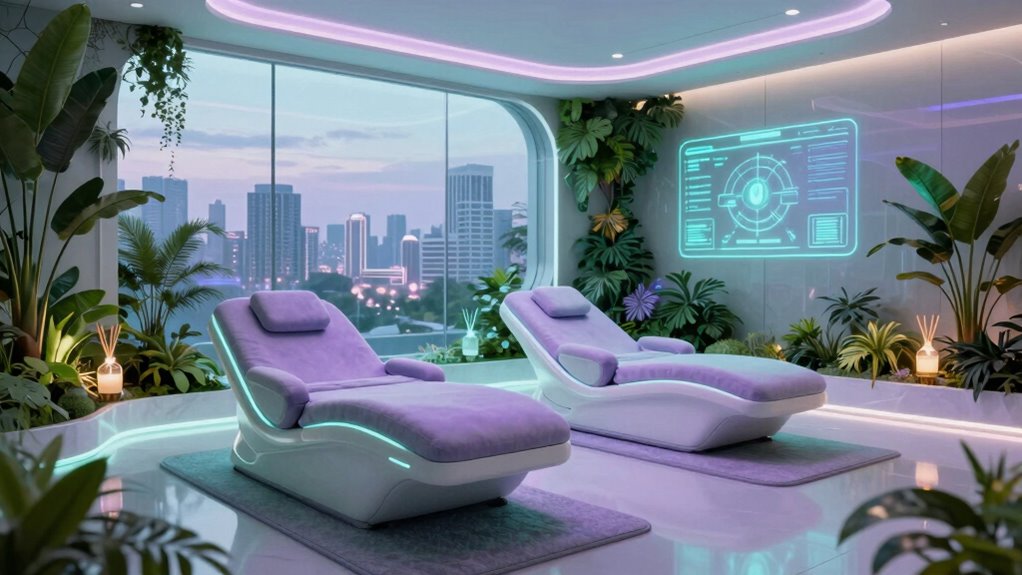
By 2026, wellness rooms have become essential spaces in workplaces and public facilities, offering a dedicated environment for relaxation, mental health support, and physical rejuvenation. These rooms aren’t just quiet corners; they’re thoughtfully designed hubs that promote overall well-being. You’ll find them equipped with features aimed at fostering corporate relaxation, helping employees and visitors reset amidst busy schedules. The focus has shifted from simple rest areas to multifunctional spaces that support mental clarity and physical health, integrating the latest in mindfulness technology to enhance your experience.
By 2026, wellness rooms are vital spaces promoting relaxation, mental health, and physical renewal with innovative mindfulness technology.
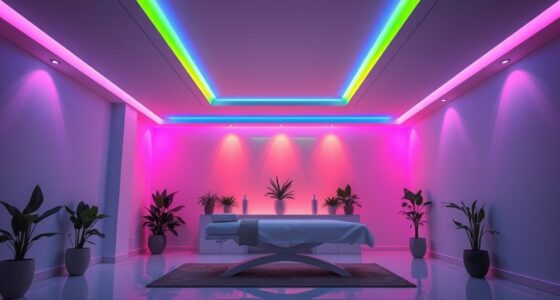
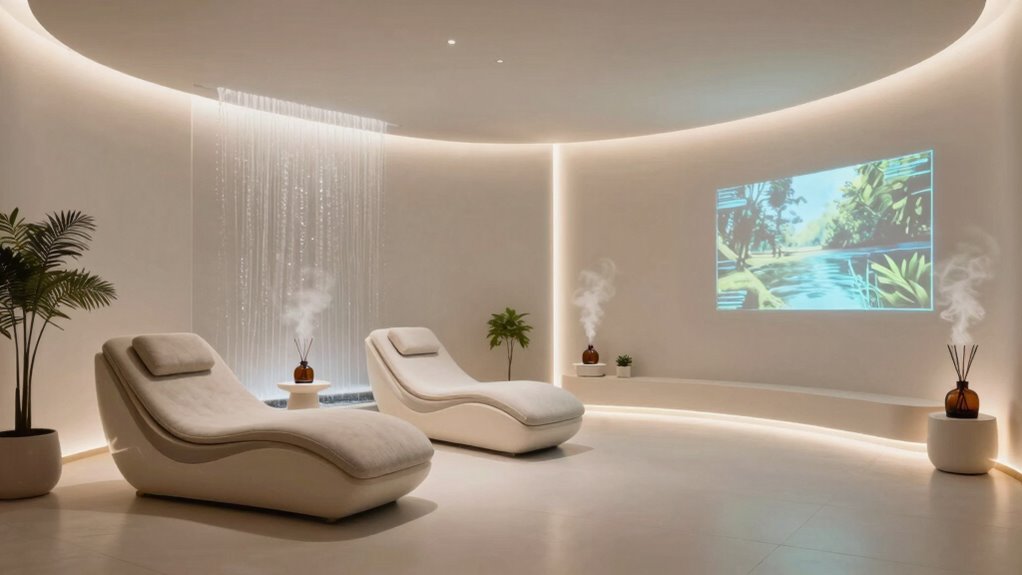
In these wellness rooms, mindfulness technology plays a critical role. You might encounter immersive soundscapes, guided meditation apps, or virtual reality environments that help you disconnect from stressors quickly. These tools aren’t optional luxuries—they’re integrated into the space to make mental health support accessible and effective. As you step inside, you notice calming lighting, soothing aromas, and comfortable seating designed for both relaxation and reflection. The technology adapts to your needs, offering personalized meditation sessions or breathing exercises that you can do quietly at your own pace. The goal is to promote corporate relaxation that’s both immediate and sustainable, allowing you to return to your tasks feeling refreshed and focused.
These wellness rooms are also designed with physical rejuvenation in mind. You might find ergonomic furniture, massage chairs, or even compact exercise equipment tailored for quick physical breaks. The emphasis is on creating a holistic environment that addresses both mind and body. As you engage with these spaces, you realize how seamlessly technology and design blend to support your health goals. Many rooms include digital interfaces that guide you through relaxation techniques or track your progress over time, making self-care a measurable and approachable activity. Additionally, the integration of latest in mindfulness technology emphasizes the importance of ongoing innovation in self-care solutions. Incorporating wellness technology into these spaces further enhances their effectiveness and appeal, especially considering how technological advancements have transformed health and wellness practices. Such advancements are driven by a growing understanding of the importance of biodiversity and sustainable living practices, which influence the development of healthier, more natural environments in wellness spaces.
More workplaces are recognizing that mental health is just as important as productivity. By incorporating corporate relaxation strategies and mindfulness technology, these wellness rooms foster a culture of well-being. They serve as a proactive way to combat burnout, reduce stress, and boost morale. As you move through these spaces, it’s clear that the concept of wellness in 2026 has evolved into a thorough, tech-enabled approach to self-care. You’re encouraged to take time for yourself without leaving your environment, and that shift is transforming how organizations view employee and visitor health. In this way, wellness rooms are no longer optional—they’ve become an indispensable part of daily life in modern spaces.
immersive soundscape relaxation headphones
As an affiliate, we earn on qualifying purchases.
As an affiliate, we earn on qualifying purchases.
Frequently Asked Questions
Are Wellness Rooms Available in All Workplaces by 2026?
By 2026, wellness rooms are becoming common in workplaces, but not yet universal. You’ll find them more often in companies prioritizing employee mental health and workplace productivity. These spaces give you a quiet area to recharge, helping reduce stress and boost focus. As organizations recognize the importance of mental well-being, more workplaces are investing in wellness rooms, making it easier for you to maintain balance and stay productive throughout your workday.
Do Wellness Rooms Require Special Booking or Reservations?
Wellness rooms typically require reservations, aligning with corporate policies designed to guarantee fair access and maintain employee privacy. You’ll often need to book ahead through an internal system, respecting others’ privacy and making certain the space is available when needed. These policies help balance personal wellness needs with workplace efficiency, making sure everyone can benefit without disrupting daily operations or compromising confidentiality.
What Amenities Are Typically Included in a Wellness Room?
In a wellness room, you’ll typically find amenities like calming lighting, comfortable seating, and soundproofing. You can practice mindfulness techniques, such as meditation or deep breathing, to relax and refocus. Aromatherapy options, like essential oils or diffusers, help create a soothing atmosphere. These spaces are designed to promote mental clarity and stress relief, giving you a peaceful retreat during busy days.
Are Wellness Rooms Accessible to People With Disabilities?
Yes, wellness rooms are accessible to people with disabilities. You’ll find them designed with accessible features like ramps, wide doorways, and adjustable furniture to accommodate various needs. Inclusive design principles guarantee everyone can comfortably use the space, whether for relaxation, meditation, or quick breaks. By prioritizing accessibility, wellness rooms promote health and well-being for all employees, fostering an inclusive environment where everyone feels valued and supported.
How Do Wellness Rooms Differ From Traditional Break Rooms?
Wellness rooms differ from traditional break rooms by focusing on your mental and physical well-being. You can practice mindfulness, meditate, or do breathing exercises there, helping reduce stress. Aromatherapy benefits are often incorporated, creating a calming environment. Unlike break rooms, which mainly offer snacks and seating, wellness rooms are dedicated spaces for relaxation and self-care, encouraging you to recharge more holistically and improve overall mental health during your workday.
personalized guided meditation app
As an affiliate, we earn on qualifying purchases.
As an affiliate, we earn on qualifying purchases.
Conclusion
By 2026, a wellness room isn’t just a quiet space—it’s your personal sanctuary for recharging, finding calm amidst chaos, and embracing your well-being. Think of it as a cozy nook where you can pause, breathe, and reset, all without missing a beat. It’s not about escaping life, but gently weaving moments of peace into your busy day. So, next time you see one, remember it’s your little haven for feeling better, inside and out.
ergonomic meditation chair
As an affiliate, we earn on qualifying purchases.
As an affiliate, we earn on qualifying purchases.
virtual reality meditation headset
As an affiliate, we earn on qualifying purchases.
As an affiliate, we earn on qualifying purchases.