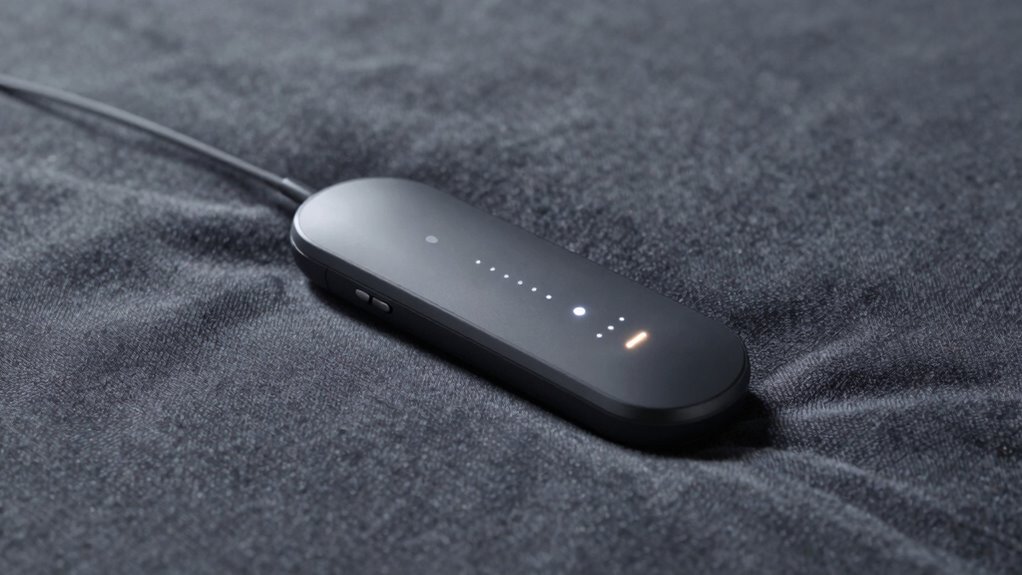

Under-mattress sleep tracking measures your sleep by detecting movements, heart rate, and breathing patterns through embedded pressure sensors and other components. It passively monitors your sleep cycles, including light sleep, deep sleep, and REM, without needing to wear devices or use cameras. The technology also considers environmental factors like temperature and airflow to improve accuracy. If you want to discover how this smart system helps you understand your sleep better, keep exploring.
Key Takeaways
- Monitors physiological signals like heart rate and breathing patterns without wearing devices.
- Detects and differentiates various bed movements, including turning and getting out of bed.
- Analyzes sleep cycle stages such as light sleep, deep sleep, and REM sleep.
- Tracks sleep duration, quality, and disruptions like sleep apnea or restless sleep.
- Incorporates environmental factors to improve accuracy and assess their impact on sleep.
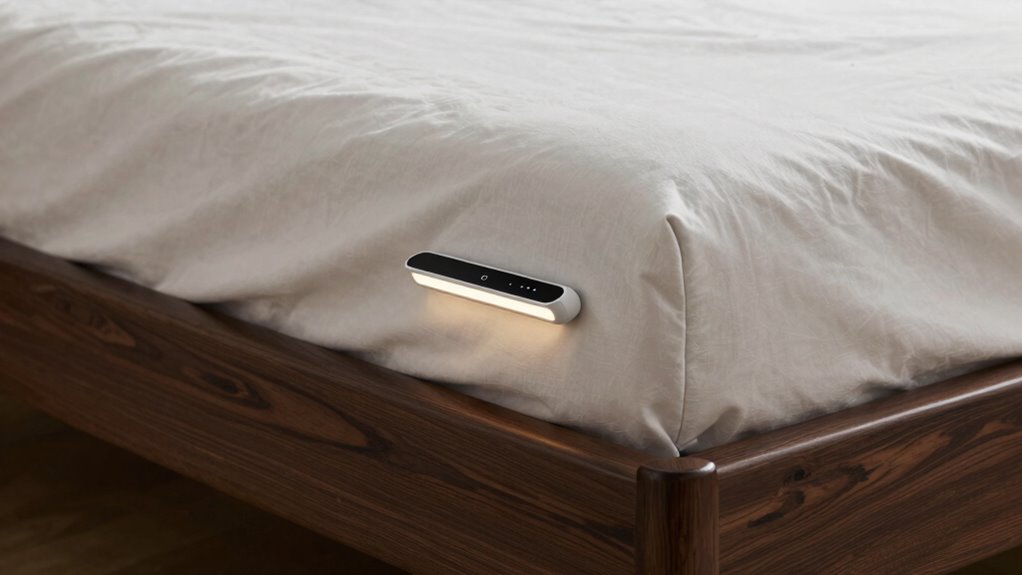
If you’re looking for a discreet way to monitor your sleep, under-mattress sleep tracking offers an innovative solution. These systems rely on mattress sensor technology that’s embedded beneath your mattress, providing you with detailed insights without the need for wearable devices or intrusive cameras. When you set up an under-mattress tracker, it continuously collects data on your movements, heart rate, and breathing patterns while you sleep. This information is then analyzed to give you a thorough picture of your sleep quality and habits.
One of the key features of under-mattress sleep tracking is sleep cycle analysis. By monitoring subtle changes in your movement and physiological signals, these systems can determine when you’re in light sleep, deep sleep, or REM sleep. This helps you understand not just how long you sleep, but how well your sleep cycles are progressing throughout the night. If you notice frequent interruptions or short periods of deep sleep, you can take steps to improve your sleep environment or routines. Sleep cycle analysis also enables features like smart alarms that wake you up during a lighter sleep phase, leaving you feeling more refreshed.
Mattress sensor technology is at the heart of these devices. They use pressure sensors and other embedded components to detect even small movements and physiological signals. Unlike wearable devices, which can sometimes be uncomfortable or cause sleep disruption, under-mattress sensors operate passively and quietly. They pick up data through the mattress fabric, so you don’t need to wear anything or change your habits. This makes it easier to maintain consistent sleep tracking over time. Additionally, mattress sensor technology can distinguish between different types of movements, such as turning over or getting out of bed, offering a more nuanced view of your sleep patterns. Incorporating sleep environment factors such as temperature and airflow can further enhance the accuracy of these systems. Understanding how sleep environment impacts your sleep can help you create a more optimal and restful setting. Moreover, advances in sensor accuracy continue to improve the reliability of these devices, making them an increasingly valuable tool for sleep health. The integration of sensor data analysis with other health metrics can also provide a more comprehensive overview of your overall well-being.
The data collected by under-mattress sleep trackers isn’t just about sleep duration; it’s about understanding the quality and efficiency of your sleep. By analyzing your sleep cycles, heart rate variability, and breathing patterns, these systems can identify potential disruptions or issues like sleep apnea or restless sleep. Over time, this information helps you pinpoint habits or environmental factors affecting your sleep, guiding you toward healthier routines.

Withings Sleep – Sleep Tracking Pad Under The Mattress With Sleep Cycle Analysis
- Sleep Pattern Monitoring: Detects snoring and analyzes sleep
- Innovative Under-Mattress Sensor: World's first under-mattress sleep sensor
- Sleep Improvement Insights: Provides advice to enhance sleep quality
As an affiliate, we earn on qualifying purchases.
As an affiliate, we earn on qualifying purchases.
Frequently Asked Questions
Does Under-Mattress Tracking Work With All Mattress Types?
Under-mattress tracking generally works with most mattress types, but mattress compatibility can vary depending on the sensor design. Some sensors might have limitations with thicker or plush mattresses, affecting accuracy. If you have a memory foam or adjustable bed, check the product’s specifications to guarantee it’s compatible. Sensor limitations could mean less reliable data on softer or uneven surfaces. Always verify compatibility before purchasing for the best results.
Can It Detect Sleep Position Changes Throughout the Night?
Sure, your under-mattress tracker keeps tabs on your sleep posture and detects movement—like a sneaky night-time spy. It’s smart enough to spot when you switch positions or roll over, so you can’t hide your midnight dance moves. Thanks to sensitive movement detection, it logs every subtle shift, ensuring you get a detailed report of your nocturnal gymnastics. Sleep tracking just got a lot more interesting—and slightly voyeuristic.
How Accurate Are Under-Mattress Sleep Trackers Compared to Other Methods?
Under-mattress sleep trackers are generally quite accurate for monitoring your sleep cycle and heart rate, often comparable to wrist-worn devices. They excel at detecting sleep stages and variations in heart rate, giving you detailed insights. However, their accuracy can vary depending on the model and setup. You might find them more reliable for long-term trends than pinpointing exact moments, but overall, they provide a solid overview of your sleep quality.
Do Under-Mattress Devices Record Ambient Room Temperature?
Ever wonder if under-mattress devices record ambient room temperature? They generally don’t directly monitor temperature, but they can pick up changes influenced by ambient humidity and mattress material. For instance, a humid room or a memory foam mattress can affect sensor readings, making it seem like temperature shifts. While they focus on sleep patterns, understanding how room conditions impact your sleep environment can help optimize your overall rest.
Is There Any Health Risk From Using Under-Mattress Sleep Trackers?
There’s generally no significant health risk from using under-mattress sleep trackers, but you should consider privacy concerns and data security. These devices collect sensitive sleep data, which might be vulnerable if not properly protected. To stay safe, choose reputable brands that prioritize encryption and privacy policies. Regularly update your device’s software and be cautious about sharing your sleep information to minimize potential privacy risks.
Conclusion
So, next time you slip into bed, remember that under-mattress sleep trackers are like silent guardians, quietly listening to your body’s whispers. They don’t just measure; they paint a portrait of your nightly journey—revealing the hidden stories your sleep tells. Embrace this quiet sentinel as your ally, guiding you toward restful nights and brighter mornings. After all, understanding your sleep is the key to revealing the dawn of your best self.