The feeling of safety and ease when exiting a recliner depends on how its comfort features and safety mechanisms work together. Well-designed recliners with plush padding, secure locking features, and advanced stability tech create a sense of security that encourages relaxation. If safety and comfort are seamlessly integrated, it feels inviting rather than trapping. Struggling to leave often comes from poorly balanced design—continue exploring to discover how ideal features make all the difference.
Key Takeaways
- Well-designed safety features like locks and stops prevent accidental movement, enhancing the feeling of security.
- Plush cushioning and ergonomic support foster relaxation, making the recliner feel like a protected sanctuary.
- Advanced stability technology and secure mechanisms increase confidence in the chair’s safety during extended use.
- Personal comfort adjustments and safety integrations create an emotional attachment, discouraging users from leaving.
- A seamless blend of safety features and comfort factors transforms the recliner into a trustworthy, inviting space.
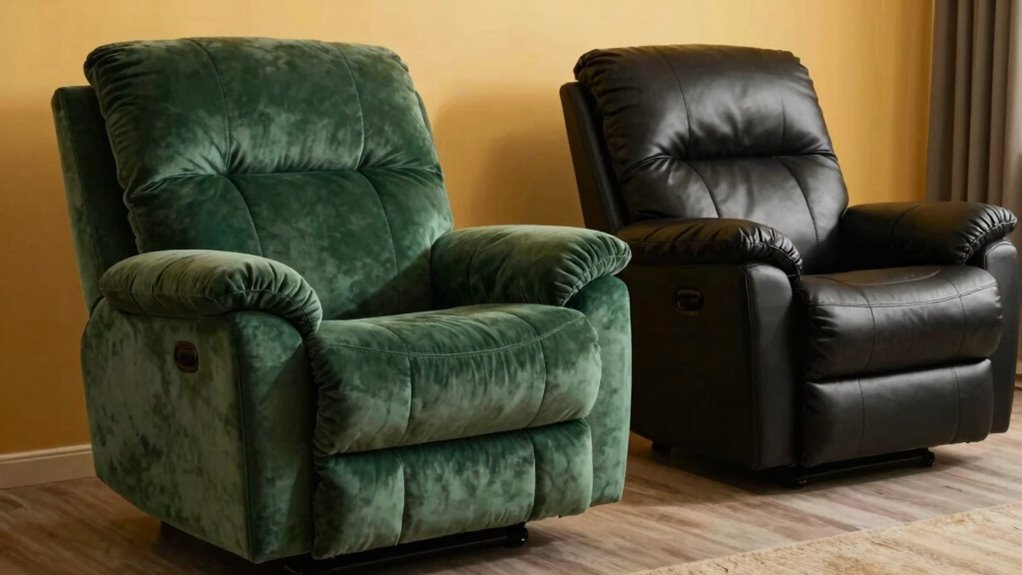
Recliners can feel like the ultimate comfort zone, but for some, they evoke a sense of safety, while others find them impossible to leave. The difference often lies in the comfort factors and safety features built into the chair. When you sit down, you immediately notice how the plush cushioning cradles your body, offering a sense of security and relaxation. The padding, lumbar support, and adjustable headrests are designed to conform to your shape, making you feel cocooned in comfort. These comfort factors aren’t just about luxury—they serve a psychological purpose, creating an environment where you feel protected from the outside world. When a recliner is well-cushioned and ergonomically designed, you’re more likely to associate it with safety, encouraging you to sink into it and stay longer.
Safety features also play a *vital* role in how you perceive a recliner. Many modern recliners include mechanisms like locking footrests, tilt locks, and secure reclining angles that prevent accidental movement. These features give you confidence that once you’re settled, the chair won’t unexpectedly shift or collapse. Some recliners come with safety stops that prevent the chair from reclining too far, reducing the risk of falls or injury. When you know the chair won’t tip over or suddenly release, you feel more secure, which can make it harder to get up. The presence of side safety locks or child-proof mechanisms further enhances this feeling of protection, especially if you’re using the recliner around children or elderly family members. Additionally, the safety features embedded in well-designed recliners help reinforce this sense of security, making it more comfortable to relax fully. Incorporating ergonomic design elements can also contribute to a feeling of safety by reducing strain and discomfort during extended use. A well-placed safety mechanism can significantly influence your overall perception of security and comfort. Furthermore, the integration of advanced safety technology has become increasingly common in modern recliners, further boosting confidence in their stability and safety.
The emotional connection you develop with your recliner depends on these safety factors and comfort features. If a chair is designed with your well-being in mind, it becomes more than just furniture—it becomes a sanctuary. You might find yourself reluctant to leave because the recliner offers a refuge from stress, discomfort, or fatigue. Including personalized comfort features can deepen this emotional bond, making the chair feel even more tailored to your needs. Conversely, if safety features are lacking or the comfort factors aren’t well-implemented, the chair might feel more like a trap than a haven. In that case, you could feel anxious or uneasy, making it easier to get up and move on.
Ultimately, the way a recliner influences your sense of safety comes down to how well it combines comfort factors with safety features. When these elements work together seamlessly, the chair becomes a space where you feel secure, relaxed, and even reluctant to leave. It’s this perfect balance that turns a simple piece of furniture into a personal retreat—one that invites you to settle in and stay awhile.

Lane Cedar Chest Safety Latch Lockset Replacement OEM (Oval)
- Pin Tumbler Lock: Replacement lock for Lane Cedar Chest
- Child Safety Design: Includes child safety latch
- Brushed Metal Finish: Durable and stylish finish
As an affiliate, we earn on qualifying purchases.
As an affiliate, we earn on qualifying purchases.
Frequently Asked Questions
How Does Recliner Design Influence Perceived Safety?
Recliner design influences perceived safety through ergonomic support and visual cues. When your chair offers proper lumbar and neck support, you feel more secure and comfortable. Clear visual cues like easy-to-reach levers or buttons help you understand how to use and exit the recliner safely. Smooth, intuitive mechanisms also prevent sudden movements, making you feel in control. Together, these design features create a sense of safety and ease of use.
Can Seat Material Affect Comfort and Safety Perceptions?
Yes, seat material can influence your comfort and safety perceptions. Soft fabric textures invite a cozy feeling, making you feel secure, while rough textures might cause discomfort. Additionally, color psychology plays a role; warm tones like reds and oranges can create a welcoming vibe, boosting confidence in your safety, whereas cooler shades might feel less inviting. These factors shape how safe and comfortable you feel when sitting in a recliner.
Do Personal Preferences Impact Feelings of Safety in Recliners?
Yes, your personal preferences impact how safe you feel in recliners. Personal bias and past experiences shape your emotional comfort, influencing whether a recliner feels inviting or restrictive. If a chair aligns with your preferences—like support, size, or style—you’re more likely to feel secure and relaxed. On the other hand, mismatched features can trigger discomfort or anxiety, making it harder to feel at ease and want to leave the recliner.
Are There Specific Features That Make Recliners Easier to Exit?
Yes, certain features make recliners easier to exit. Look for ergonomic support, which encourages proper posture and reduces strain, making it more comfortable to stand up. Safety mechanisms, like easy-to-reach release levers and non-slip bases, also help prevent falls and make exiting smoother. These features work together to create a sense of security and ease, especially if you have mobility concerns or prefer a more user-friendly recliner.
How Does Age Affect Comfort and Safety in Recliner Use?
As you age, mobility challenges can make recliners feel more like traps than safe havens, raising questions about comfort and safety. Age-related mobility decline may limit your ability to stand easily, while shifts in cognitive confidence could affect your decision-making. These factors combine to influence how secure or trapped you feel in a recliner, creating a subtle tension that impacts your daily comfort—and possibly your independence.
Conclusion
Think of a recliner as a cozy trap or a welcoming hug. When it feels safe, it’s like a gentle embrace, inviting you to relax without worry. But if it feels impossible to exit, it’s like being caught in quicksand—hard to escape and unsettling. Your comfort depends on how the chair’s design, support, and your mindset align. Choose wisely, and your recliner can be a sanctuary, not a snare.