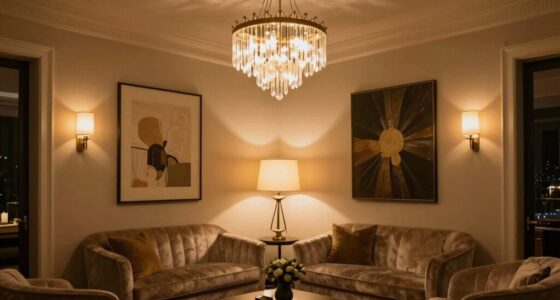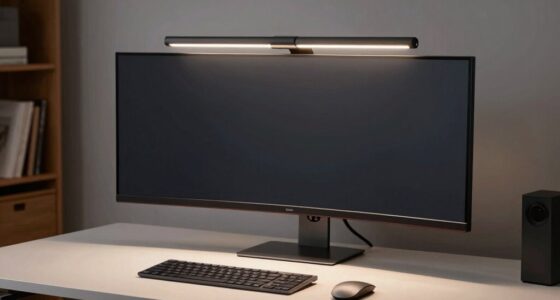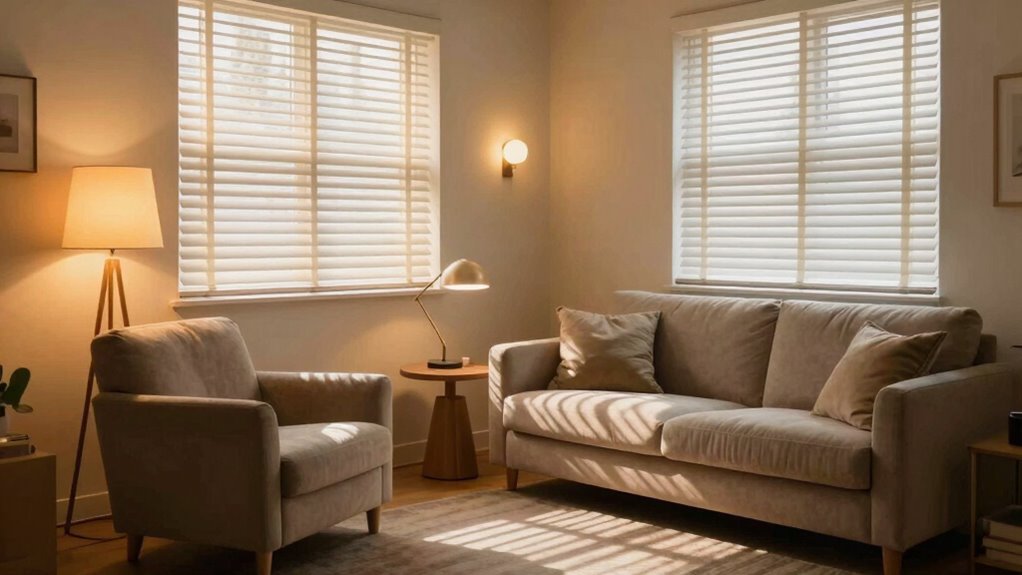

To build more light control into your everyday life, position furniture and windows to maximize natural daylight while using adjustable curtains or blinds to manage glare and heat. Incorporate dimmer switches and soft, adjustable fixtures to fine-tune artificial lighting as needed. Place mirrors strategically to reflect light into darker areas, and add natural elements like plants to diffuse light evenly. Exploring these strategies further can help you create a balanced, inviting space that adapts to your needs.
Key Takeaways
- Install adjustable window treatments like blinds or shades to easily regulate natural light throughout the day.
- Use dimmer switches and adjustable fixtures to customize artificial lighting for different activities and moods.
- Strategically position mirrors to reflect and amplify natural light in darker areas.
- Incorporate natural elements like plants to diffuse light evenly and enhance ambient brightness.
- Arrange furniture and windows to maximize daylight entry and reduce reliance on artificial lighting.
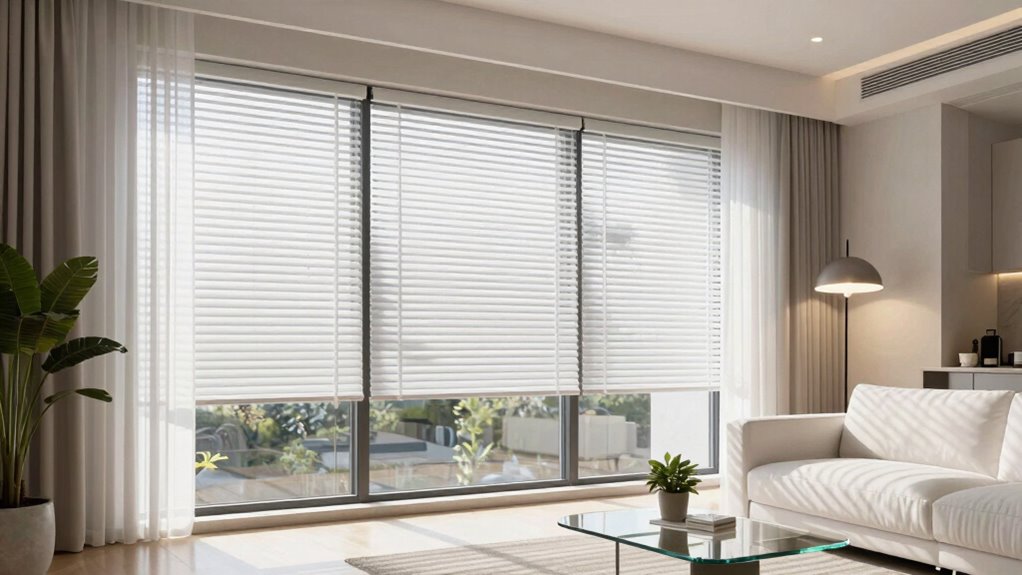
Controlling light in your daily environment can markedly enhance comfort and productivity, yet many people overlook simple ways to improve it. One of the most effective methods is maximizing natural illumination. Instead of relying solely on artificial lighting, consider how you position your furniture and windows to let in more daylight. Open curtains during the day to flood your space with sunlight, which not only brightens your surroundings but also boosts your mood. Natural illumination is a key factor in creating a welcoming atmosphere and can help regulate your circadian rhythms, ensuring you feel more alert during the day and sleep better at night.
To build more light control into your routine, think about using window treatments that give you flexibility. Blinds, shades, or adjustable curtains allow you to easily control the amount of sunlight entering a room. During peak sunlight hours, you can reduce glare and prevent overheating by adjusting these coverings. Conversely, on cloudy days or in the evenings, opening them wider floods your space with natural light, reducing dependence on artificial sources. This not only conserves energy but also creates a more dynamic, adaptable environment that responds to your needs. Embracing natural illumination as a primary lighting source can significantly influence your overall well-being.
In addition to window treatments, consider installing dimmer switches for your artificial lighting. Dimmers allow you to fine-tune the brightness, creating the perfect ambiance for different activities, whether you’re working, relaxing, or entertaining. Soft, adjustable lighting can substantially influence your mood, helping you feel calmer or more energized as needed. Combining natural illumination with dimmable fixtures offers a versatile lighting scheme that adapts throughout the day, enhancing your overall comfort and mood. Incorporating lighting control options can further optimize your environment for various times of day. Additionally, understanding how light quality impacts your space can help you choose the right fixtures and bulbs for a balanced environment.
Another way to improve light control involves strategic placement of mirrors. By reflecting natural light into darker corners or spaces, mirrors can amplify the effect of daylight and reduce the need for artificial lighting during daylight hours. This simple addition can make your environment feel brighter and more open, fostering a sense of spaciousness and well-being. Plus, well-placed mirrors can serve as decorative elements that complement your overall interior design.
Creating a well-balanced lighting environment also involves understanding the importance of biodiversity in your space, as plants and natural elements can contribute to healthier, more resilient indoor ecosystems that support natural light and air quality. Incorporating greenery can also help filter and diffuse natural light, making it more pleasant and evenly distributed throughout your environment. Ultimately, building more light control into your daily life is about making intentional choices. By harnessing natural illumination, adjusting window treatments, incorporating dimmer switches, and using mirrors effectively, you can create a space that feels inviting, vibrant, and adaptable. These small changes can notably improve your mood, boost your productivity, and make your everyday environment more comfortable and personalized.

LazBlinds No Drill Cordless Cellular Shades, 22" W x 36" H, White
- Installation Type: Inside mount only with adjustable fit
- No Tools Needed: Easy installation without drilling or screws
- Suitable for Various Walls: Fits wood, tile, concrete, and rough surfaces
As an affiliate, we earn on qualifying purchases.
As an affiliate, we earn on qualifying purchases.
Frequently Asked Questions
Can Smart Lighting Systems Be Integrated With Existing Home Automation?
Yes, you can integrate smart lighting systems with your existing home automation. Many systems support voice control, allowing you to turn lights on or off effortlessly. Plus, they often include energy monitoring features, so you can track your usage and save energy. Just make certain your current setup is compatible with the smart lights you choose, and follow the manufacturer’s instructions for seamless integration.
What Are the Best Window Treatments for Maximizing Natural Light Control?
You should consider using window films or blackout curtains to maximize natural light control. Window films allow you to reduce glare and UV rays while still letting in daylight, perfect for balancing brightness and privacy. Blackout curtains are ideal when you need complete darkness, like for sleeping or watching movies. Both options give you flexible control over natural light, helping you create a comfortable, well-lit environment tailored to your needs.
How Do Different Types of Light Bulbs Affect Energy Efficiency?
They say “you get what you pay for,” and that’s true with light bulbs. LED bulbs, for example, are highly energy-efficient, have longer lifespans, and offer various color temperature options to suit your mood. Incandescent bulbs use more energy and burn out faster, while CFLs strike a balance. Choosing the right bulb can cut energy costs and create the perfect ambiance, making your space more comfortable and eco-friendly.
Are There Portable Solutions for Controlling Light in Different Rooms?
Yes, you can easily control light in different rooms with portable lamps and light dimmers. Portable lamps let you move lighting where you need it most, offering flexibility. Light dimmers give you adjustable brightness, helping you set the perfect mood or save energy. Combining these options allows you to create customized lighting across your home, making it simple to control light levels in various spaces without permanent fixtures.
How Can Lighting Adjustments Improve Mood and Productivity?
Adjusting your lighting can markedly boost your mood and productivity by syncing with your Circadian rhythm. Bright, natural light during the day helps improve alertness and mood, while softer, dimmer lights in the evening promote relaxation. Use task lighting for focus and consider warm tones for mood enhancement. These small changes create an environment that supports your natural body clock, making you feel more energized and balanced throughout the day.
Conclusion
By mastering mindful manipulation of lighting, you create a cozy, calm, and enchanting space that suits your mood. Simple switches and strategic settings serve as your secret tools, transforming dull days into dynamic delights. With a little planning and a touch of intention, you’ll craft a luminous landscape where comfort and clarity coexist in perfect harmony. Take control, turn the switch, and transform your everyday environment into a radiant retreat that reflects your rhythm and reigns.