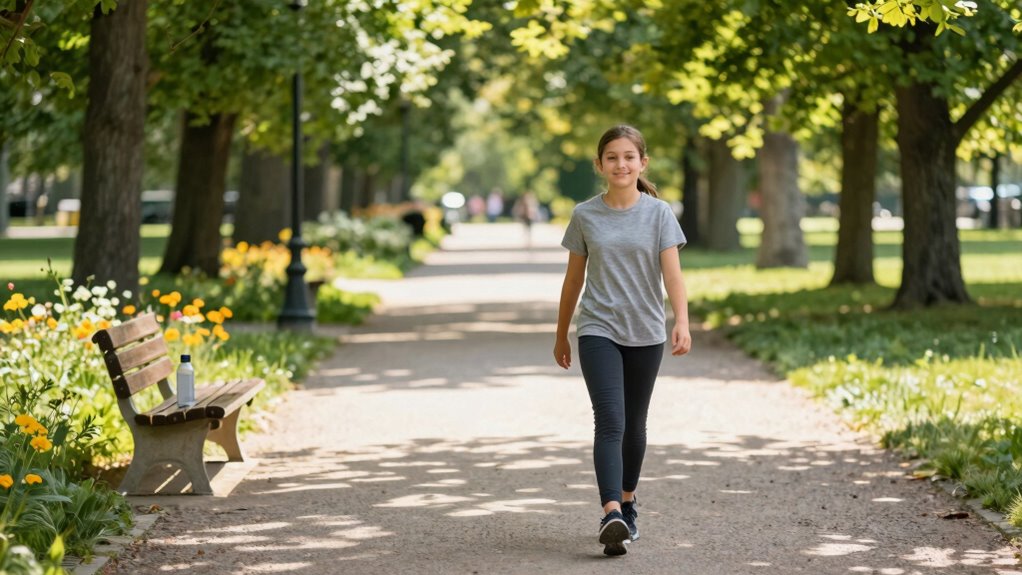

Start with comfortable shoes and breathable clothing to feel confident from the beginning. Keep your walks short, around 10-15 minutes, and do them 3-4 times a week to build a routine without feeling overwhelmed. Use simple tools like a step counter or an app to track your progress and celebrate small wins. Focus on good posture and hydration to make each walk more enjoyable. Keep going, and you’ll discover new ways to stay motivated and feel great.
Key Takeaways
- Start with short, manageable walks of 10-15 minutes, gradually increasing duration over time.
- Wear comfortable, weather-appropriate clothing and proper shoes to build confidence and comfort.
- Set small, achievable goals like walking three times a week or exploring new routes.
- Focus on relaxed pacing, good posture, and breathing to make walks more enjoyable and less daunting.
- Track progress and celebrate small wins to stay motivated and reinforce positive habits.

Starting a walking routine can be an easy and effective way to improve your health, even if you’re new to exercise. The key is making it feel manageable and enjoyable, so you’re more likely to stick with it. To start, focus on simple steps like choosing comfortable walking gear. Opt for supportive shoes that fit well, as they can prevent discomfort and injuries. Wear breathable clothing suited to the weather, and consider a lightweight hat or sunglasses for sunny days. Having the right gear can boost your confidence and make each walk more pleasant, helping you develop a consistent habit.
Start with comfortable shoes and breathable clothing to enjoy walking and stay motivated.
As you begin, keep your walks short and manageable, gradually increasing your time and intensity as your fitness improves. A good rule of thumb is to aim for 10 to 15-minute walks, three to four times a week. This pace allows your body to adapt without feeling overwhelming. During your walks, pay attention to hydration tips. Staying well-hydrated is essential, especially if you’re walking in warm weather or for longer durations. Carry a small water bottle with you, and take sips regularly to keep your fluids up. Don’t wait until you’re thirsty to drink, as thirst is a sign you’re already slightly dehydrated. Drinking water before and after your walk also helps your body recover and keeps you energized.
You don’t need fancy equipment or extensive planning to get started. Just put on your walking gear, grab your water, and head outside or to a safe indoor space. Focus on your breathing and posture to make your walks more effective and comfortable. As you get more comfortable, consider setting small goals, like walking for 20 minutes or exploring new routes. Remember, the goal isn’t to push yourself too hard but to establish a sustainable routine. If you feel tired, it’s okay to slow down or take a break — the important part is staying consistent. Incorporating proper technique can help make your walks more effective and prevent injury.
Tracking your progress can also keep you motivated. Use a simple step counter or a walking app to see how much you’re improving over time. Celebrate your achievements, whether it’s walking a little farther or feeling more energized afterward. Over time, these small wins will help you build confidence and make walking a natural part of your daily life. Additionally, understanding basic health benefits can motivate you to stay committed and recognize the positive impacts of your routine. Gaining awareness of how hydration impacts performance can also help you optimize your walks for better energy and endurance. Remember that proper hydration is crucial for maintaining energy levels and overall well-being during your walks. Maintaining good walking posture can also reduce discomfort and improve your overall experience. With the right gear, hydration tips, and a gentle start, your walking plan can feel less intimidating and more like a rewarding routine you look forward to.
comfortable walking shoes for beginners
As an affiliate, we earn on qualifying purchases.
As an affiliate, we earn on qualifying purchases.
Frequently Asked Questions
How Do I Stay Motivated to Walk Regularly?
To stay motivated to walk regularly, try using motivation techniques like setting small, achievable goals and rewarding yourself. Incorporate walking accountability by finding a buddy or joining a walking group, which keeps you committed. Track your progress with a journal or app to see your improvements. Remember, consistency is key, so make walking a non-negotiable part of your routine, and you’ll find it easier to stay motivated over time.
What Should I Wear for Comfortable Walking?
For comfortable walking, wear proper footwear that offers support and fits well, preventing blisters and fatigue. Choose breathable clothing that keeps you cool and dry, even on warmer days. Opt for moisture-wicking fabrics, lightweight layers, and comfortable socks. Dress in functional, weather-appropriate gear that moves with you and prevents chafing. With the right shoes and breathable clothing, you’ll enjoy your walk more and stay motivated to keep going.
Can Walking Help With Weight Loss?
Yes, walking can help with weight loss when combined with diet adjustments and maintaining a steady walking pace. You burn calories and boost your metabolism, especially if you walk briskly. To maximize results, focus on consistent, moderate-intensity walks and pair them with healthier eating habits. Over time, this approach helps shed pounds and improves overall fitness, making your walking routine both effective and enjoyable.
How Do I Prevent Walking-Related Injuries?
Imagine feeling a sharp twinge mid-walk—that’s a warning sign. To prevent walking-related injuries, always wear proper footwear that supports your arches and cushions your feet. Start each session with a warm-up routine, like gentle stretches or brisk walking, to prepare your muscles and joints. Pay attention to your body’s signals, and don’t push through pain. These steps keep you safe and guarantee every walk is a step toward better health.
Is It Okay to Walk Alone as a Beginner?
Yes, it’s okay to walk alone as a beginner, but you should take safety precautions. Solo walking helps build confidence, but always stay aware of your surroundings, carry a phone, and tell someone your route and expected return time. Choose well-lit, populated paths, and avoid risky areas. Trust your instincts, and if something feels off, don’t hesitate to cut your walk short. Safety first guarantees you enjoy your walks confidently.
Conclusion
Remember, this walking plan is your gentle river, guiding you steadily toward better health without rushing the current. Take it one step at a time, and soon you’ll find your stride becoming smoother and more confident. Don’t let the idea of starting overwhelm you—think of each walk as planting seeds for a healthier tomorrow. Before you know it, those small steps will grow into a mighty journey, transforming your life one stride at a time.