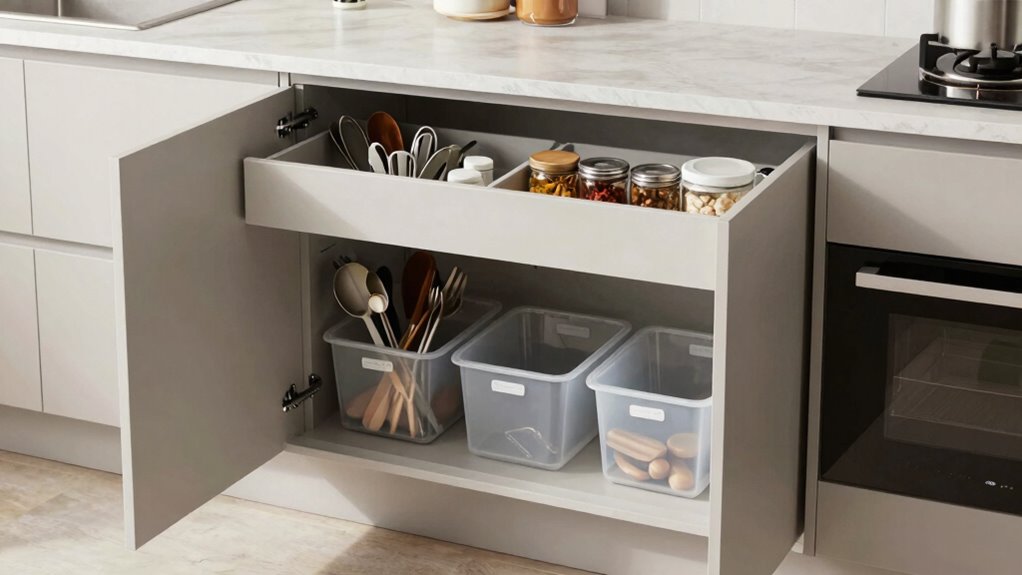

To make your kitchen work better, follow the accessible storage rule of organizing items so they are within easy reach, especially for frequently used items. Secure heavy cabinets and use pull-out shelves or lazy Susans for easier access. Make sure your space is well-lit and free of clutter to improve safety and visibility. Incorporate ergonomic and inclusive design principles to minimize strain and make everyone comfortable. Keep exploring to discover more tips that can transform your kitchen into a safer, more efficient space.

Get decor and gifts delivered free with Prime
- Fast, free delivery on millions of items
- Prime Video, Amazon Music and more included
- Member-only deals all year
Key Takeaways
- Implement pull-out shelves and lazy Susans for easier access to stored items.
- Place frequently used items within easy reach to minimize bending and stretching.
- Securely anchor tall or heavy cabinets to prevent tipping hazards.
- Ensure proper lighting in storage areas to improve visibility and safety.
- Maintain organized, clutter-free spaces to facilitate quick retrieval and reduce accidents.

Have you ever wondered how to guarantee your storage solutions are accessible to everyone? Ensuring that your kitchen storage meets this standard isn’t just about convenience; it’s about making your space functional and safe for all users. To achieve this, you need to pay close attention to design considerations that promote ease of access and safety guidelines that prevent accidents. When planning or reorganizing your kitchen, think about how different users will interact with the storage. For example, installing pull-out shelves or lazy Susans can make reaching items easier, especially for those with limited mobility or strength. You should also consider the height of cabinets and storage areas—placing frequently used items within easy reach minimizes unnecessary bending or climbing. These design considerations not only improve usability but also help create a more inclusive environment. Incorporating inclusive design principles into your storage solutions ensures everyone can comfortably access and use the space. Safety guidelines are equally important when designing accessible storage. Securely anchoring tall or heavy cabinets prevents tipping accidents, which are a common hazard in kitchens. Avoid cluttered or overly crowded shelves to reduce the risk of items falling and causing injury. Use non-slip mats or liners inside drawers and shelves to keep objects stable and prevent slips when retrieving items. When installing pull-out or sliding shelves, ensure they operate smoothly without pinching fingers or causing strain. Proper lighting also plays a significant role—well-lit storage areas help users see what they’re grabbing, reducing the chance of accidents. Additionally, ergonomic design principles can help reduce physical strain and improve comfort during use. A good understanding of storage organization can further enhance accessibility by making sure everything has a designated place, simplifying retrieval and return. Incorporating accessible storage standards ensures your kitchen is designed to meet safety and usability benchmarks. Keep hazardous items like sharp knives or cleaning chemicals stored out of reach of children, following safety guidelines that protect vulnerable individuals. Creating clear pathways and maintaining an organized, clutter-free space further reduces tripping hazards. Incorporating these design considerations and safety guidelines into your storage solutions transforms your kitchen into a space that works better for everyone. Accessibility isn’t just about compliance; it’s about making daily tasks easier and safer for all users, regardless of age or ability. By thoughtfully selecting storage options and adhering to safety standards, you ensure your kitchen is not only functional but also welcoming and secure. This proactive approach minimizes frustration and accidents while maximizing efficiency. Ultimately, an accessible storage system makes your entire kitchen more user-friendly, helping you maintain a space that truly works for everyone who uses it.
pull-out shelf for kitchen cabinets
As an affiliate, we earn on qualifying purchases.
As an affiliate, we earn on qualifying purchases.
Frequently Asked Questions
How Does the Accessible Storage Rule Comply With Local Building Codes?
You guarantee the accessible storage rule complies with local building codes by integrating universal design principles and adhering to safety standards. This means designing storage spaces that are reachable and usable for everyone, including those with mobility challenges, while meeting safety regulations. You consult local codes and adapt your designs accordingly, making sure they support accessibility and safety, which helps your kitchen stay compliant and functional for all users.
What Are Cost Considerations for Implementing Accessible Storage Solutions?
When considering accessible storage solutions, you should factor in budget planning and design flexibility. Costs can vary depending on the quality of materials, custom features, and installation complexity. While initial expenses might be higher, investing in adaptable designs can save money long-term by decreasing the need for future upgrades. Balancing affordability with functionality ensures your kitchen remains accessible and efficient, aligning with your budget and design goals.
Can the Rule Be Customized for Different Kitchen Sizes and Layouts?
Yes, the rule can be customized for different kitchen sizes and layouts. You have various customization options to adapt the storage solutions to your space, ensuring everything remains accessible. Layout adaptability allows you to optimize storage based on your kitchen’s specific dimensions and design. By adjusting shelf heights, drawer placements, and cabinet configurations, you create a more functional, user-friendly environment tailored to your needs.
How Long Does It Typically Take to Retrofit a Kitchen With Accessible Storage?
Retrofitting your kitchen with accessible storage usually takes a few days to a week, depending on the scope of the project. You’ll focus on improving storage organization and implementing ergonomic design principles to make everything easier to reach and use. The process involves removing old fixtures, installing new cabinets or shelves, and adjusting layout for better accessibility. Planning ahead helps guarantee a smooth, efficient transformation that enhances your kitchen’s functionality.
Are There Specific Brands or Products Recommended for Accessible Storage?
Think of accessible storage like the Holy Grail—finding the right fit matters. For brand recommendations, look into well-known options like Rev-A-Shelf, UPLIFT Desk, and Hafele for reliable, user-friendly products. These brands offer a range of product options, from pull-out shelves to adjustable-height cabinets, ensuring you can customize your kitchen to meet your needs. Prioritize quality and ease of use to make your space truly accessible.
Conclusion
By following the accessible storage rule, you’ll make your kitchen more efficient and enjoyable to use. Keep everything within reach and avoid unnecessary clutter—after all, a well-organized space is a happy space. Remember, don’t put all your eggs in one basket; spread out your essentials so you’re never caught off guard. When your kitchen is accessible, cooking becomes a breeze, and you’ll wonder why you didn’t do it sooner.
Halloween Picks
halloween
As an affiliate, we earn on qualifying purchases.