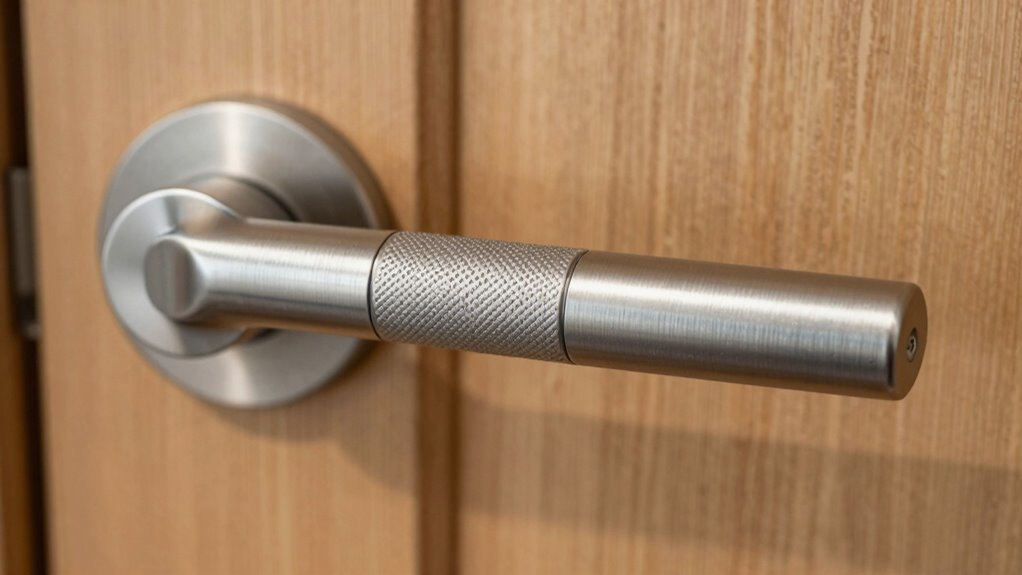

Upgrading your door hardware to smart, ergonomic options makes it easier to open and close doors, especially if you have limited hand strength or arthritis. Keyless locks with keypad codes, fingerprint scanners, or smartphone controls eliminate the need to turn stiff knobs and levers. Larger, stylish handles also require less grip strength. These improvements not only boost convenience and safety but also add a touch of style to your home. Keep going to discover more on how to make your doors easier to use.

Get decor and gifts delivered free — and shop member deals
- Fast, free delivery on millions of items
- Access to Prime Big Deal Days deals on October 6–7
- Prime Video, Amazon Music and more included
Key Takeaways
- Smart locks with keyless entry options reduce the need for grip strength to operate traditional hardware.
- Ergonomic, larger handles and levers are easier to grasp and require less force for aging hands.
- Remote access and monitoring features enhance security and convenience for users with limited hand strength.
- Modern, stylish hardware designs improve both function and home aesthetics for easy usability.
- Upgrading to accessible, smart hardware promotes independence and safety for seniors and those with arthritis.
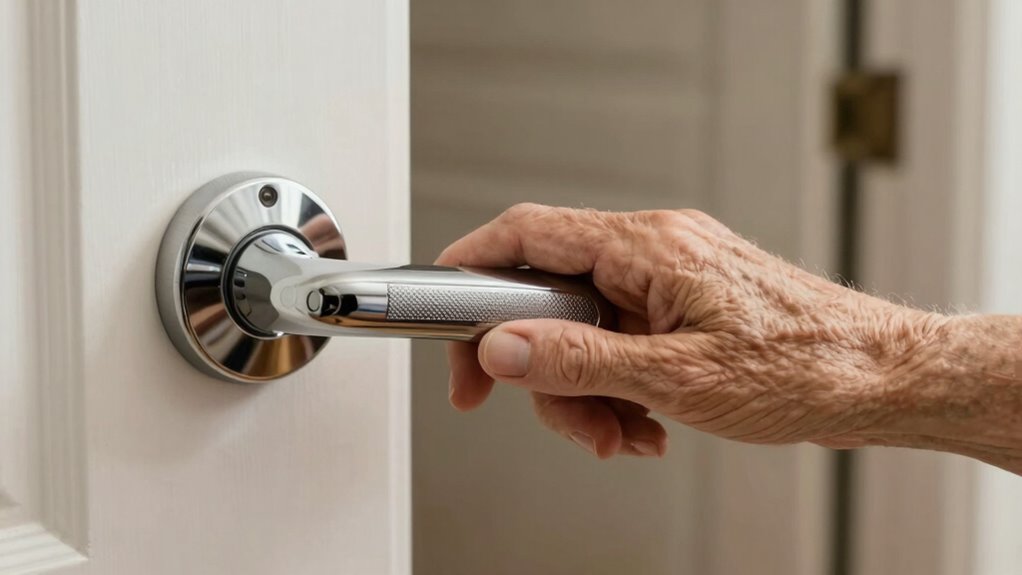
As your hands age, opening and closing traditional door hardware can become increasingly difficult and frustrating. You might find yourself struggling with stiff knobs or levers that require more grip strength than you have. Luckily, there are modern solutions designed to make everyday tasks easier. One of the most effective upgrades is switching to hardware that incorporates smart lock technology. These locks often feature keyless entry options like keypad codes, fingerprint scanners, or mobile app controls, removing the need to turn knobs or handles altogether. With a simple tap or input, you can access your door effortlessly, which is especially beneficial if you have arthritis or limited hand strength.
Smart locks provide easy, keyless access, ideal for limited hand strength and arthritis.
In addition to practical benefits, smart lock technology adds a layer of convenience and security to your home. You can grant temporary access to visitors or service providers remotely, monitor who enters and exits, and avoid fumbling with keys in the middle of the night. These advanced locks often integrate seamlessly with your smartphone or home automation systems, giving you control at your fingertips. Such features mean you no longer need to wrestle with traditional hardware, making adaptive solutions a key component of accessible home design. Incorporating ergonomic hardware options further enhances ease of use and comfort. Many of these hardware options are designed with ergonomics in mind, ensuring they are comfortable and easier to operate for people with limited grip strength.
Alongside smart locks, decorative hardware options also play a significant role in upgrading your door hardware. Many brands now offer stylish, ergonomic designs that prioritize ease of use. These decorative hardware options tend to have larger, more accessible levers or handles that require minimal grip strength, making them easier to operate. Plus, they come in a variety of finishes and styles, so you can choose something that complements your home’s decor. Whether you prefer a sleek modern look or a vintage-inspired design, decorative hardware options can enhance your home’s aesthetic without sacrificing functionality.
The combination of smart lock technology and attractive, user-friendly hardware allows you to create an entryway that’s both beautiful and accessible. You’ll no longer need to struggle with stiff or complicated hardware, and instead, enjoy the peace of mind that comes with modern, adaptive solutions. These upgrades make everyday tasks more manageable and help you maintain independence in your own home. Plus, they add a touch of sophistication and style, ensuring your doors not only work better but also look great. Upgrading your door hardware is an investment that pays off by making your home safer, more convenient, and visually appealing, especially as your hands change over time.
As an affiliate, we earn on qualifying purchases.
Frequently Asked Questions
Are There Specific Materials Best for Arthritis-Friendly Door Hardware?
You should choose door hardware made from materials like brushed nickel or silicone-coated options, as they strike a good balance between material durability and aesthetic appeal. These materials are easier to grip, reducing strain on arthritis-affected hands, and they resist wear over time. Look for hardware with smooth, ergonomic designs and finishes that complement your decor, ensuring both functionality and style in your home.
How Do I Measure for the Right Lever or Handle Size?
Your door hardware needs to be as perfect as a masterpiece, so measure carefully. To find the right lever or handle size, first measure the distance from the center of the spindle to the end of the handle—this determines your length. Check the door’s thickness and design aesthetics, guaranteeing compatibility. For installation tips, ensure the hardware fits comfortably in your hand, making opening doors effortless and reducing strain.
Can Existing Door Hardware Be Easily Replaced With Ergonomic Options?
Yes, existing door hardware can be easily replaced with ergonomic options. When considering design, focus on lever handles with smooth, easy-to-grasp surfaces. During installation, follow tips like turning off the power if applicable and matching the new hardware to your door’s measurements. Make sure the new handles are compatible with your door’s latch and lock mechanisms. This upgrade improves accessibility and comfort, especially for those with limited hand strength.
What Is the Cost Difference Between Standard and Upgraded Hardware?
A cost comparison shows upgraded ergonomic door hardware typically costs about $20 to $50 more than standard options. For example, a homeowner replaced their old doorknob with an easy-grip handle, paying an extra $30. The price analysis reveals this small investment enhances grip and safety for aging hands. While slightly more expensive upfront, the ergonomic upgrade offers long-term benefits, making it a worthwhile choice for comfort and accessibility.
Are There Any Maintenance Tips for Long-Lasting Ergonomic Hardware?
To guarantee your ergonomic hardware lasts, regularly clean it with mild soap and water to prevent dirt buildup that can compromise design ergonomics. Lubricate moving parts periodically to maintain smooth operation, reducing strain on your hands. Check for loose screws or components and tighten or replace them promptly. Proper maintenance enhances hardware longevity, keeps it functional, and supports ergonomic comfort, making daily use easier and safer for aging hands.
Conclusion
As you embrace these upgrades, you’re forging a path much like Icarus reaching for the sun—bold and purposeful. With easier-to-grasp hardware, every door becomes a gateway, every entrance a demonstration of resilience. You’re turning the tide, making each day smoother, safer, and more secure. Like a gentle breeze guiding a ship, your choices now steer you toward independence, proving that even small changes can lift you toward a brighter, more comfortable tomorrow.
Fall Picks
fall essentials
As an affiliate, we earn on qualifying purchases.