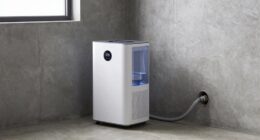
Air purifiers combine HEPA filters, activated carbon, and UV-C light to clean indoor air effectively. HEPA captures tiny particles like dust, pollen, and pet dander, while activated carbon adsorbs odors and VOCs. UV-C light kills bacteria, viruses, and mold spores, providing biological sterilization. Together, these technologies offer exhaustive protection against airborne pollutants and allergens. Understanding how each works helps you choose the right system—continue exploring to learn more about how these elements work together for cleaner air.
Key Takeaways
- HEPA filters capture 99.97% of airborne particles as small as 0.3 microns, removing dust, pollen, and allergens.
- Activated carbon adsorbs gases, odors, and VOCs, improving air freshness by targeting chemical pollutants.
- UV-C sterilization uses ultraviolet light to inactivate bacteria, viruses, and mold spores, reducing biological contaminants.
- Combining HEPA, activated carbon, and UV-C offers comprehensive air purification by targeting particles, gases, and microbes.
- Regular maintenance and filter replacement are essential to ensure optimal performance of multi-stage air purification systems.

Air purifiers are essential tools for improving indoor air quality, but understanding how they work can help you choose the right one. At the core of many effective air purifiers are different filtration and sterilization methods that target pollutants in various ways. HEPA filtration, activated carbon, and UV-C sterilization each play a unique role in creating cleaner, healthier indoor environments. Recognizing how these technologies work together can help you select the best device for your needs.
HEPA filters are the gold standard for capturing airborne particles. They use a dense, pleated material that traps particles as small as 0.3 microns with 99.97% efficiency. This means that dust, pollen, pet dander, mold spores, and even some bacteria get caught in the filter, preventing them from circulating in your living space. When you choose an air purifier with HEPA filtration, you’re effectively reducing allergens and airborne irritants, which is especially beneficial if you suffer from allergies or asthma. Because HEPA filters are highly efficient and require periodic replacement, they form the backbone of many air purification systems.
HEPA filters effectively trap tiny airborne particles, reducing allergens and irritants for healthier indoor air.
Activated carbon filters work differently. Instead of trapping particles, they adsorb gases, odors, and volatile organic compounds (VOCs). The activated carbon’s porous surface provides a large surface area, which attracts and binds these gaseous pollutants chemically. If your home has odors from cooking, pets, smoking, or chemical fumes from cleaning products, activated carbon filters can substantially improve air freshness. They complement HEPA filters by addressing pollutants that filters alone can’t capture. When selecting an air purifier, look for models with sufficient activated carbon to handle your specific odor and VOC concerns.
UV-C sterilization adds a sterilizing layer to the purification process. This technology uses ultraviolet light at a specific wavelength (UV-C) to break down the DNA of bacteria, viruses, and mold spores, rendering them inactive or killing them outright. UV-C sterilization is particularly useful in reducing biological contaminants, which can cause illnesses or worsen allergy symptoms. Many modern air purifiers combine UV-C with HEPA and activated carbon to provide all-encompassing air cleaning. When UV-C is integrated correctly, it doesn’t produce ozone or harmful byproducts, making it a safe addition to your air quality arsenal. Additionally, advancements in robotic automation are leading to smarter and more efficient air purification systems that adapt to changing indoor conditions.
Frequently Asked Questions
How Often Should HEPA Filters Be Replaced?
You should replace HEPA filters every 6 to 12 months, depending on usage and air quality. Regular filter maintenance is essential for peak performance, so check your manufacturer’s recommendations. Keep an eye on air quality monitoring results; if you notice increased dust or allergens, it might be time to change the filter sooner. Proper maintenance ensures your air purifier works efficiently and keeps your indoor air clean.
Can Activated Carbon Filters Remove All Odors?
Activated carbon filters can’t remove all odors, but they do a great job with many. Their adsorption capacity allows them to trap and chemically filter a wide range of smells, including smoke, pet odors, and fumes. However, some strong or persistent odors may require additional filtration methods. To maximize effectiveness, verify your filter is fresh and replace it as recommended, usually every 3 to 6 months.
Do UV-C Purifiers Produce Ozone?
You might think UV-C purifiers are perfectly safe, but surprise—they can produce ozone, which isn’t exactly air quality’s best friend. While UV-C safety is often emphasized, ozone production varies depending on the device. Too much ozone can irritate your lungs and worsen allergies. So, if you’re concerned about air safety, check if your UV-C purifier minimizes ozone output—because good intentions don’t always guarantee safe results.
Are Air Purifiers Effective Against Viruses?
Yes, air purifiers are effective against viruses, especially when they have high filtration efficiency. HEPA filters can trap virus particles, reducing airborne transmission. UV-C purifiers can deactivate viruses by damaging their DNA or RNA, enhancing virus mitigation. To maximize protection, choose an air purifier with proven filtration efficiency and UV-C capabilities. Regular maintenance and proper placement also guarantee peak performance in reducing airborne viruses in your space.
What Is the Lifespan of UV-C Lamps?
A UV-C lamp typically lasts about 9,000 to 10,000 hours with proper UV-C lamp maintenance. You should regularly check and replace it to maintain effectiveness and guarantee UV-C lamp safety, preventing potential exposure to harmful UV rays. Keep in mind that over time, the lamp’s UV output diminishes, so timely replacement is crucial for continued air purification. Always follow manufacturer guidelines for peak performance and safety.
Conclusion
Think of your air purifier as a guardian, wielding HEPA filters, activated carbon, and UV-C light like a shield against invisible foes. Each component symbolizes a different strength—HEPA captures the tiny enemies, carbon absorbs the unseen toxins, and UV-C destroys the threat at its source. Together, they create a fortress of clean air, guarding your space like a silent protector. Trust in this powerful trio to keep your environment pure and safe, breath by breath.