
Induction cooktops use electromagnetic fields generated by coils beneath the surface to transfer energy directly into ferromagnetic cookware. These rapidly changing magnetic fields induce eddy currents inside the pots, heating them efficiently while keeping the cooktop surface cool. This precise, direct transfer minimizes energy loss and warming time. The math behind it involves complex electromagnetic principles that make induction cooking faster, safer, and more efficient—if you’re curious about how the hidden science works, there’s more to discover.

Get decor and gifts delivered free — and shop member deals
- Fast, free delivery on millions of items
- Access to Prime Big Deal Days deals on October 6–7
- Prime Video, Amazon Music and more included
Key Takeaways
- Induction cooktops generate rapidly changing magnetic fields that induce currents only in ferromagnetic cookware, ensuring targeted energy transfer.
- The efficiency stems from converting electrical energy directly into heat within the cookware, minimizing heat loss.
- Magnetic fields respond instantly to temperature adjustments, allowing precise control and faster heating times.
- The math of electromagnetic induction explains how magnetic flux and eddy currents enable rapid, focused heating.
- This technology reduces energy waste, making induction cooktops faster, safer, and more environmentally friendly than traditional stoves.

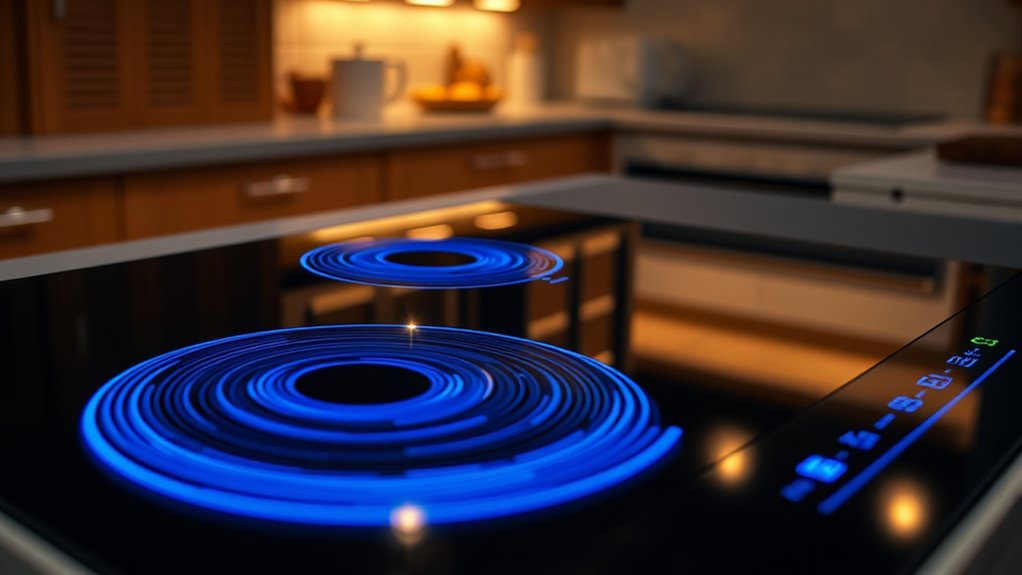
Have you ever wondered what makes induction cooktops so fast and efficient? It all comes down to the way they use magnetic fields to transfer energy directly to your cookware. Unlike traditional stoves that rely on heating elements or open flames, induction cooktops generate a magnetic field that interacts with ferromagnetic pots and pans. When you turn on the cooktop, an electric current flows through a coil beneath the surface, creating a rapidly changing magnetic field. This magnetic field then induces electric currents—called eddy currents—inside the cookware itself. The process of energy transfer is highly efficient because it heats the cookware directly, rather than warming the air or the stove surface first. This direct transfer of energy minimizes heat loss, allowing for faster heating times and precise temperature control.
Induction cooktops transfer energy directly via magnetic fields for faster, more efficient cooking with minimal heat loss.
The key to this efficiency is understanding how magnetic fields facilitate energy transfer. When the magnetic field interacts with the metal of your cookware, it induces currents that cause the metal to heat up due to electrical resistance. This means that most of the energy from the electrical current is converted directly into heat within the cookware, not in the cooktop or the surrounding air. Because the heat is generated right in the pot or pan, heat loss through conduction and convection is drastically reduced. This process also means that the surface of the cooktop remains relatively cool, making it safer and easier to clean. The magnetic fields only extend to the ferromagnetic cookware, preventing unnecessary energy transfer to non-compatible materials. Additionally, the rapid response of magnetic fields is enabled by precise electromagnetic principles, which optimize energy transfer and control.
Another reason induction cooktops are so efficient is that the energy transfer happens almost instantaneously. As soon as you adjust the temperature, the magnetic field responds immediately, allowing you to control heat levels with precision. This rapid responsiveness saves energy because you’re not wasting heat or waiting for the entire cooking surface to warm up. Plus, since the magnetic fields target only the cookware, the energy isn’t dispersed throughout the environment, further boosting efficiency. This focused energy transfer also means less heat escapes into the kitchen, helping you save on cooling costs and making the cooking process more environmentally friendly.
In essence, the advanced math behind magnetic fields and energy transfer explains why induction cooktops outperform traditional methods. They convert electrical energy directly into heat within your cookware, offering speed, safety, and energy efficiency. Understanding this underlying science helps you appreciate how modern technology leverages the power of magnetic fields to transform everyday cooking into a faster, greener process.
As an affiliate, we earn on qualifying purchases.
Frequently Asked Questions
How Does Induction Heating Compare to Traditional Gas Stoves?
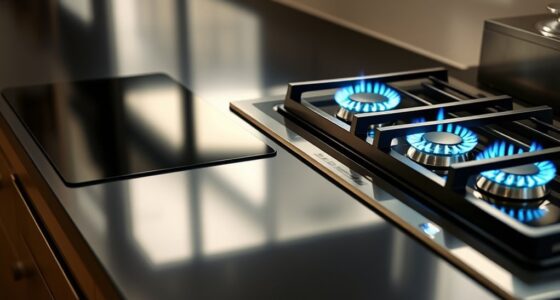
You’ll find that induction heating outperforms traditional gas stoves in efficiency and control. Magnetic induction generates heat directly in your cookware through electromagnetic fields, leading to faster heat transfer and less energy loss. Unlike gas stoves, which rely on combustion and heat transfer from flame to pot, induction cooktops heat only the cookware, making them safer, more precise, and more energy-efficient.
Are Induction Cooktops Safe for All Types of Cookware?
You might wonder if induction cooktops are safe for all cookware types, and the answer isn’t straightforward. While they’re highly efficient, safety concerns center on cookware compatibility. Only magnetic materials work, so non-magnetic pots won’t heat. This limitation could surprise you, but it’s a safety feature, preventing accidental heating of incompatible cookware. Always check if your pots and pans are magnetic to ensure safe, efficient cooking on induction surfaces.
What Maintenance Is Required for Induction Cooktops?
You need to do regular cleaning maintenance by wiping down your induction cooktop with a soft cloth and mild cleaner to prevent residue buildup. Additionally, schedule electrical inspections periodically to guarantee everything functions safely and efficiently. Avoid abrasive cleaners that can damage the surface, and always unplug the unit before cleaning. Keeping up with these simple steps helps maintain peak performance and extends the lifespan of your induction cooktop.
Do Induction Cooktops Produce Electromagnetic Radiation?
Did you know induction cooktops generate electromagnetic fields that heat cookware? While these fields produce some electromagnetic radiation, it’s generally low and safe. Experts confirm radiation safety standards are met, making it unlikely you’ll face health risks from typical use. You can enjoy efficient cooking without worry, as these electromagnetic fields are contained within safety limits, ensuring your kitchen remains a safe environment.
Can Induction Cooktops Be Used for Outdoor Cooking?
You can use induction cooktops for outdoor cooking, but consider their outdoor durability and weather resistance first. Most are designed for indoor use, so exposure to rain, moisture, or extreme temperatures could damage them or diminish efficiency. If you plan to cook outside often, look for models specifically built with weather-resistant features. That way, you guarantee safe, reliable performance without worrying about outdoor elements.
Conclusion
Now that you understand the hidden math behind induction cooktops, you see how they use precise energy transfer, focused magnetic fields, and efficient heat generation. You realize they’re not just appliances; they’re marvels of modern engineering. They heat quickly, save energy, and reduce waste. With every meal you cook, you witness the harmony of science and everyday life—where innovation cooks up efficiency and elegance, turning your kitchen into a space of smarter, cleaner, and more powerful cooking.
Fall Picks
fall essentials
As an affiliate, we earn on qualifying purchases.