
If you’re choosing between automatic and manual pool cleaning, automatic cleaners save you time and effort by operating independently, are energy-efficient, and often reduce chemical use, but they come with a higher upfront cost. Manual cleaning is cheaper initially and offers full control, yet it’s physically demanding and time-consuming. Your decision depends on your budget, schedule, and how much control you want—all important factors to weigh for a seamless pool experience. Keep exploring to find out which option fits your needs best.
Key Takeaways
- Automatic cleaners save time and effort with programmable schedules and sensors, while manual cleaning offers precise control over targeted areas.
- Robotic pool cleaners are energy-efficient and reduce chemical use, but require a higher initial investment compared to manual methods.
- Manual cleaning may be cheaper upfront but can be labor-intensive and costly over time, especially for large or frequent-use pools.
- Automatic devices provide convenience with minimal supervision, whereas manual cleaning demands consistent physical effort and time commitment.
- The choice depends on budget, lifestyle, pool size, and personal preference for control versus automation.
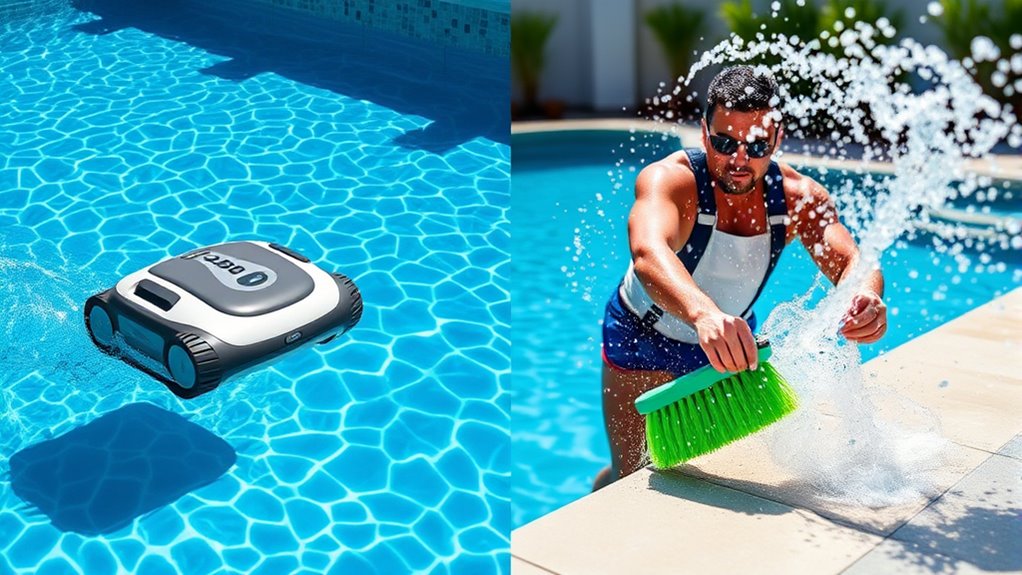
Have you ever wondered whether automatic or manual pool cleaning is the better choice for your backyard oasis? When it comes to keeping your pool sparkling, you’re faced with options that range from high-tech robotic technology to traditional manual maintenance. Each approach has its own set of advantages and drawbacks, so understanding what fits your lifestyle and budget is essential.
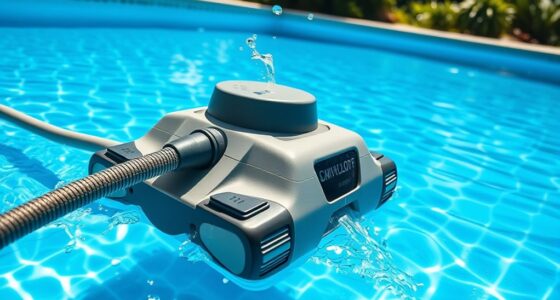
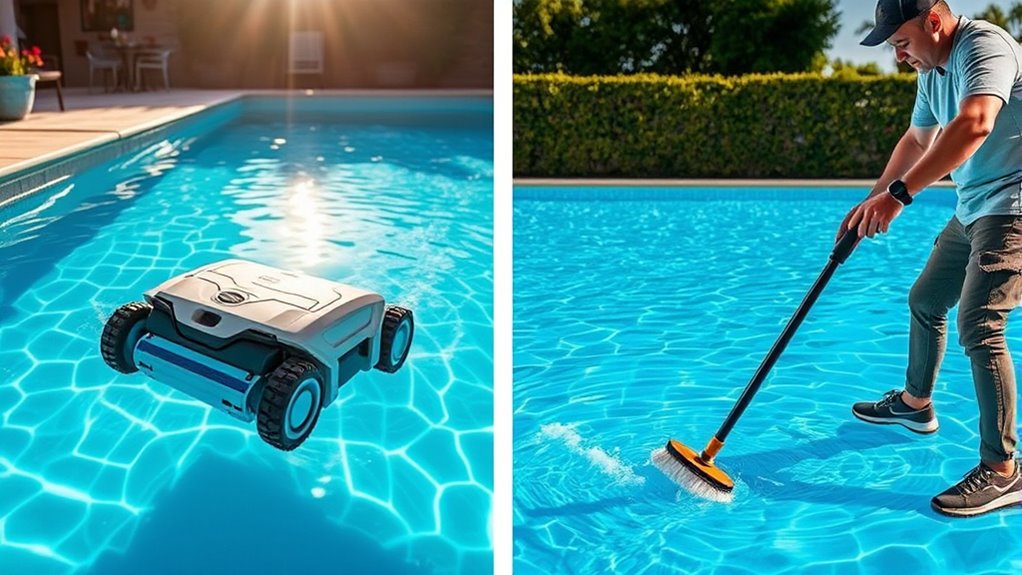
Automatic pool cleaners, especially robotic models, have revolutionized how homeowners maintain their pools. These devices are designed to do the hard work for you, utilizing robotic technology to navigate and scrub your pool’s surfaces efficiently. They often come with programmable schedules, sensors, and advanced brushes that target dirt, algae, and debris with minimal supervision. The convenience is undeniable—you simply place the robot in the water, turn it on, and let it do the work. This can save hours of manual labor each week, freeing you up to enjoy your pool rather than spend endless hours cleaning it. Robotic cleaners are also energy-efficient, typically consuming less power than traditional suction or pressure-side cleaners, which helps reduce ongoing costs. Plus, many models come with filters that trap fine particles, resulting in cleaner water and less frequent chemical treatments. Advances in robotic technology are making automatic cleaners more effective and accessible than ever before.
Robotic pool cleaners efficiently navigate and scrub surfaces, saving time and energy while providing cleaner water with minimal supervision.
On the other hand, manual maintenance involves physically skimming, brushing, and vacuuming your pool. While it may seem labor-intensive, some pool owners prefer this hands-on approach because it gives them full control over the cleanliness process. Manual cleaning allows you to target specific areas that might be missed by automatic cleaners or where algae and grime tend to accumulate. It’s also less expensive upfront since you don’t need to invest in a robotic device. However, manual maintenance can be time-consuming and physically demanding, especially if you have a large or heavily used pool. It requires consistent effort and can be affected by weather, personal schedule, or physical ability.
In terms of overall cost, robotic cleaners tend to have a higher initial investment but can save you money in the long run through reduced chemical usage and less manual labor. Manual maintenance may be cheaper initially but could add up over time if you need to hire professional services or spend a lot of your own time cleaning. When weighing these options, consider your budget, how much time you want to devote to pool upkeep, and your preference for convenience versus hands-on control. Both methods can keep your pool inviting, but the decision ultimately hinges on what fits your lifestyle best.

Robotic Pool Cleaner, Cordless Pool Vacuum for Above Ground & Inground Pools, 200mins Runtime Automatic Pool Vacuum Robot for Leaves & Dirt, Powerful Suction up to 2500 sq.ft, Self Parking-Sky
- Powerful Dual-Suction System: Deep cleaning for pool floors
- Smart Adaptive Navigation: Optimizes cleaning path in real-time
- 200-Minute Battery Life: Long runtime for large pools
As an affiliate, we earn on qualifying purchases.
As an affiliate, we earn on qualifying purchases.
Frequently Asked Questions
How Long Does Automatic Pool Cleaning Equipment Typically Last?
Automatic pool cleaning equipment usually lasts around 3 to 5 years, depending on usage and maintenance. Your pool cleaner lifespan depends on equipment durability and how well you care for it. Regularly cleaning filters and inspecting parts can extend its life. If you keep up with proper maintenance, you might get more years of reliable service, making your investment worthwhile and ensuring your pool stays clean efficiently.
Are Manual Cleaners Effective for Large or Heavily Debris-Laden Pools?
Manual cleaners can be effective for large or heavily debris-laden pools if you’re willing to put in the effort. They allow you to target specific areas and remove debris thoroughly. However, their manual effectiveness depends on your time and energy, and they might not be as efficient as automatic options for constant maintenance. For heavily debris-filled pools, manual cleaning is effective but can be labor-intensive and time-consuming.
What Maintenance Is Required for Automatic Pool Cleaners?
You’ll need to regularly maintain your automatic pool cleaner to keep it running smoothly. This includes checking and replacing the filter when it gets clogged or dirty, ensuring proper filtration. You should also inspect and clean the brushes to remove debris build-up, which helps maintain cleaning efficiency. Additionally, regularly check for wear and tear on parts like hoses and wheels to prevent breakdowns and extend your cleaner’s lifespan.
Can Automatic Cleaners Reach All Pool Corners and Steps?
You might wonder if automatic cleaners can truly reach every corner and step. With advanced robotic guidance, many models excel in corner cleaning efficiency, maneuvering tricky spots with ease. However, some designs still struggle in tight corners or uneven steps, leaving small areas untouched. The key is choosing a cleaner with smart navigation features, ensuring your entire pool, including corners and steps, stays spotless without you lifting a finger.
How Does Energy Consumption Compare Between Automatic and Manual Cleaning?
You wonder how energy consumption compares between automatic and manual cleaning. Automatic cleaners generally have better energy efficiency since they’re designed to optimize power usage, cleaning your pool quickly and effectively with less energy. Manual cleaning, while requiring minimal power, takes more time and effort, leading to higher overall energy use if you consider equipment like pumps. Overall, automatic cleaners tend to be more energy-efficient, saving you power and reducing costs over time.
Conclusion
Whether you choose automatic or manual cleaning, the decision shapes your pool’s future and your summer memories. Imagine stepping onto your pool deck, sunlight shimmering on crystal-clear water, knowing your choice kept it pristine. As you relax, the gentle hum of your automatic cleaner or the rhythmic sweep of your manual brush becomes part of the season’s soundtrack. In the end, both options turn pool maintenance into a simple, satisfying part of enjoying those warm, sunny days.