When choosing a smart thermostat, make certain it’s compatible with your existing HVAC system, whether it’s central air, heat pumps, or multi-zone setups. Look for models with sensors that detect temperature, occupancy, and humidity to optimize comfort and save energy. An intuitive interface, whether a touchscreen or app, makes control easier. If you want seamless integration with your smart home ecosystem and advanced sensor features, there’s more to take into account—discover the best options for your home.

Get decor and gifts delivered free with Prime
- Fast, free delivery on millions of items
- Prime Video, Amazon Music and more included
- Member-only deals all year
Key Takeaways
- Ensure the thermostat supports your existing HVAC system, such as central air, heat pumps, or multi-zone setups.
- Verify compatibility with your smart home ecosystem (Amazon Alexa, Google Assistant, Apple HomeKit).
- Prioritize devices with intuitive displays and straightforward controls for easy programming and daily use.
- Choose models equipped with occupancy, temperature, and humidity sensors for real-time environmental adjustments.
- Consider sensors that enable targeted control and energy savings by detecting room occupancy and environmental changes.
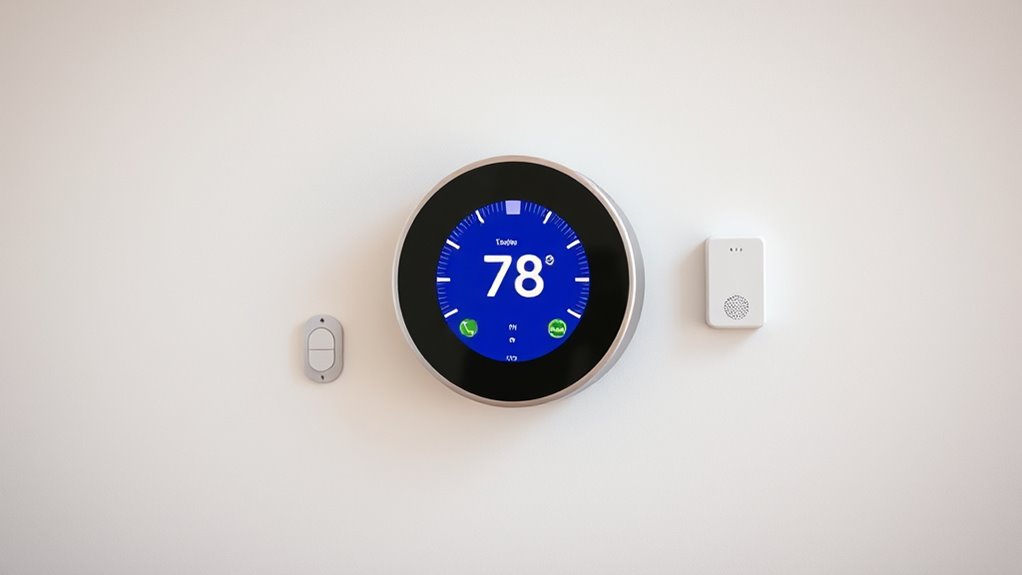
Choosing the right smart thermostat can substantially enhance your home’s comfort and energy efficiency. When you’re selecting a device, one of your top priorities should be how it helps you save energy and reduce utility bills. The key to achieving these goals lies partly in the thermostat’s design and functionality, especially its user interface and compatibility with your existing systems. A user-friendly interface ensures you can easily program and control the device without frustration, making it more likely you’ll use its features consistently. An intuitive display with clear menus, accessible controls, and simple scheduling options helps you optimize your heating and cooling routines effortlessly. This ease of use encourages regular adjustments based on your lifestyle, which directly contributes to energy savings over time. Additionally, some smart thermostats include adaptive learning algorithms, which can automatically adjust settings based on your habits, further enhancing energy efficiency and comfort. Compatibility is another essential factor. Your smart thermostat needs to work smoothly with your current HVAC system, whether it’s a central air system, heat pump, or multi-zone setup. Before purchasing, check if the device supports your specific equipment and whether it’s compatible with your smart home ecosystem—be it Amazon Alexa, Google Assistant, or Apple HomeKit. Compatibility ensures seamless integration, enabling you to control your thermostat through voice commands or centralized smart home apps, which simplifies managing your home’s climate. This integration not only boosts convenience but also encourages consistent use, further maximizing your energy savings. Sensors also play a fundamental role in the effectiveness of a smart thermostat. Advanced sensors can detect occupancy, temperature fluctuations, and even humidity levels. These sensors allow the thermostat to adapt in real time, adjusting settings based on whether rooms are occupied or vacant. For example, if sensors detect that no one is home during certain hours, the thermostat can automatically lower or raise temperatures to conserve energy. Some models also include remote sensors placed in different rooms, providing a more accurate picture of your home’s overall temperature. This targeted control prevents unnecessary heating or cooling, leading to more efficient energy use and cost savings. Ultimately, selecting a smart thermostat involves balancing ease of use, compatibility, and sensor capabilities. Your goal should be a device that offers a straightforward user interface, integrates well with your existing systems, and utilizes intelligent sensors to optimize comfort while minimizing energy waste. When these elements align, you’ll find yourself enjoying a more comfortable home that also saves you money, thanks to smarter, more efficient climate control.
smart thermostat compatible with Alexa
As an affiliate, we earn on qualifying purchases.
As an affiliate, we earn on qualifying purchases.
Frequently Asked Questions
How Does a Smart Thermostat Improve Energy Efficiency?
A smart thermostat improves energy efficiency by learning your schedule and adjusting temperatures accordingly, leading to significant energy savings. It reduces unnecessary heating or cooling, which cuts down on energy use and lowers your environmental impact. You can control it remotely, ensuring ideal comfort while conserving resources. Overall, a smart thermostat helps you save money and supports a greener environment by intelligently managing your home’s energy consumption.
Can I Install a Smart Thermostat Myself?
Installing a smart thermostat yourself is like assembling a puzzle—possible if you’re comfortable with DIY projects. You can usually handle the DIY installation, especially if your wiring is simple. However, for complex systems or if you’re unsure, a professional setup guarantees safety and proper functioning. Make sure to follow the manufacturer’s instructions closely, and don’t hesitate to call in an expert if needed to avoid potential issues.
What Are the Security Risks of Smart Thermostats?
Smart thermostats can pose cybersecurity vulnerabilities if not properly secured, making you susceptible to hacking attempts that could manipulate your home’s temperature or access personal data. Privacy concerns also arise since these devices collect and transmit your household information. To mitigate these risks, guarantee you update firmware regularly, use strong passwords, and connect your thermostat to a secure Wi-Fi network. Staying vigilant helps protect your privacy and home security.
How Do Smart Thermostats Integrate With Other Smart Home Devices?
Your smart thermostat can seamlessly integrate with other devices, creating a futuristic home ecosystem. It connects effortlessly through Wi-Fi or Zigbee, allowing device compatibility with lights, security systems, and voice assistants. You interact with it via intuitive user interfaces, like apps or voice commands, making control feel like commanding a spaceship. This integration simplifies your life, automates routines, and creates a cohesive smart home experience that’s as smooth as butter.
What Is the Typical Lifespan of a Smart Thermostat?
A smart thermostat usually lasts around 10 to 15 years, depending on your usage and maintenance. Battery life varies; many models have rechargeable or replaceable batteries, lasting several years. Regular maintenance, like cleaning sensors and updating firmware, helps prolong its lifespan. Keep in mind that faulty components or outdated technology might require replacement sooner, but with proper care, your smart thermostat can serve you well for over a decade.
Conclusion
In the end, choosing the right smart thermostat means you’re taking control of your comfort and energy use, just like the wise ancients once did with their simple tools. Make sure it’s compatible with your system, equipped with the right sensors, and easy to interface with. Trust your instincts, and don’t be daunted by the tech—your home’s comfort is worth the quest. After all, even in this brave new world, a cozy home never goes out of style.
Fall Picks
fall essentials
As an affiliate, we earn on qualifying purchases.