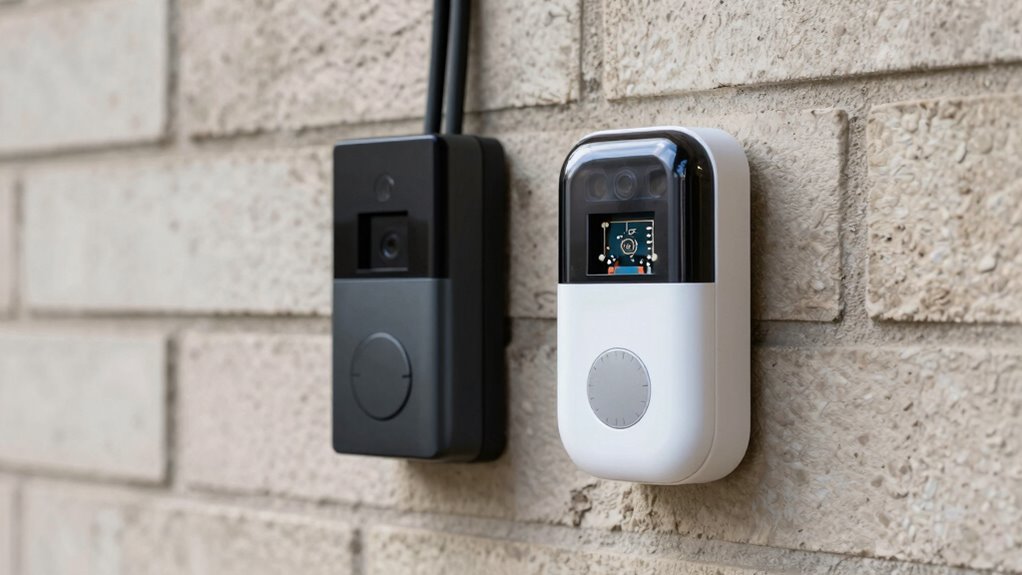

Wired video doorbells offer more reliability since they get continuous power from existing wiring, so you won’t worry about batteries dying. Battery-powered models are easier to install and move but can experience downtime if batteries run out or need charging. If you want steady performance and fewer interruptions, wired options are best. However, if convenience matters most, battery models provide quick setup. To explore how these choices compare in detail, keep going for more insights.
Key Takeaways
- Wired doorbells offer consistent power, reducing downtime and ensuring higher reliability compared to battery-powered models.
- Battery doorbells depend on charge levels, risking offline periods if batteries are not regularly maintained.
- Wired installations provide continuous operation but may require professional setup, while battery models are easier to install and relocate.
- Battery-powered doorbells are convenient but require ongoing maintenance like recharging or replacing batteries.
- The choice impacts reliability: wired systems are more stable, while battery models prioritize ease of installation and flexibility.
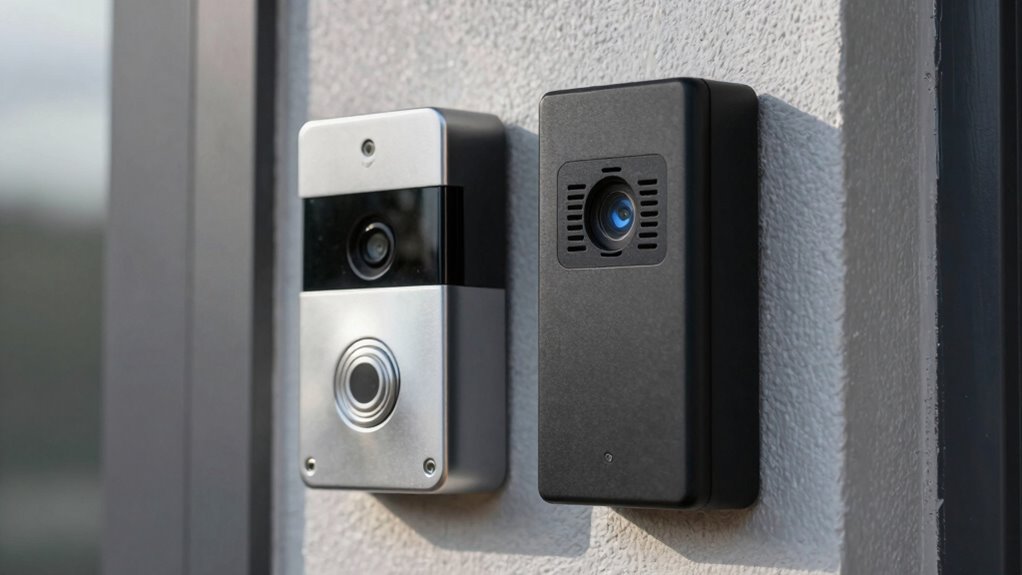
When choosing a video doorbell, understanding the differences between wired and battery-powered models is essential. The most significant factor to contemplate is the power source. Wired doorbells draw electricity directly from your existing doorbell wiring, providing a constant power supply. This means you don’t have to worry about recharging or replacing batteries, ensuring your device stays operational at all times. Battery-powered doorbells, on the other hand, rely on rechargeable batteries that need periodic charging or replacement. While this can be more convenient in certain situations, it introduces the potential for power loss if batteries run out unexpectedly.
Wired doorbells offer constant power, while battery models require regular charging or replacement.
Installation complexity is another critical aspect you need to evaluate. Wired models generally require more effort during installation because they need to be connected to your existing doorbell wiring and often involve working with electrical components. If your home’s wiring isn’t easily accessible or if you’re not comfortable handling electrical work, installing a wired doorbell can become a challenging task. You might need professional help to ensure proper setup and safety compliance. Conversely, battery-powered doorbells usually feature a straightforward, DIY-friendly installation process. They often come with a mounting bracket and wireless connectivity, meaning you can set them up without dealing with electrical wiring. This ease of installation makes them an attractive choice if you want a quick and simple upgrade.
However, it’s important to weigh these convenience benefits against potential reliability issues. Wired models tend to be more dependable since they’re constantly powered, minimizing downtime caused by power interruptions or battery failures. Their consistent power source means you’re less likely to experience missed recordings or connection problems. Battery-powered options, despite their portability and ease of setup, can sometimes compromise reliability. If the battery isn’t charged regularly, the device may go offline, leaving your property unmonitored. Some models include alerts to notify you when the battery is low, but neglecting these can result in periods without surveillance. Additionally, understanding content quality and topical authority can help you choose a device with reliable performance and features that meet your needs.
Ultimately, your choice depends on your home’s existing infrastructure, your comfort with electrical work, and your priorities for reliability. Wired models deliver uninterrupted power and stability but require more complex installation. Battery-powered models are easier to set up and move around but demand ongoing maintenance of the power source. By considering these factors carefully, you can select a video doorbell that best fits your needs, balancing convenience with dependability.
Frequently Asked Questions
How Long Do Battery-Powered Doorbells Typically Last Before Needing a Recharge?
Battery-powered doorbells typically last between one to six months before needing a recharge, depending on usage and features. You’ll find that the battery life varies based on motion detection, video recording, and live streaming. Recharging usually takes about 2 to 5 hours, so it’s a good idea to keep an eye on the battery level. Regular recharges guarantee your doorbell stays operational and provides reliable security.
Can Wired Doorbells Operate During a Power Outage?
Wired doorbells operate during a power outage because they rely on your home’s electrical system, not batteries. They maintain their electrical dependency, ensuring continuous operation even when the power’s out. Unlike battery-powered models, wired doorbells stay functional, providing security and convenience. You can depend on them to work during a power outage, offering peace of mind and consistent performance, regardless of electrical interruptions.
Are There Any Security Risks Unique to Wireless Doorbells?
Wireless doorbells face unique security risks like wireless hacking, where hackers can access your video feed or control your device remotely. Signal interference from other electronic devices can also disrupt your doorbell’s connection, causing missed alerts or lag. To safeguard yourself, use strong passwords, enable encryption, and keep your firmware updated. Avoid placing your wireless doorbell near devices that cause interference to guarantee reliable security and smooth operation.
How Do Installation Costs Compare Between Wired and Battery Options?
Picture a construction site, with wires tangled like a jungle; that’s wired installation—more complex and costly upfront. You’ll face higher installation costs and greater complexity, but it often pays off in long-term reliability. Battery options are like a simple, quick setup—lower initial expenses, fewer tools needed—but you might encounter ongoing replacement costs. So, consider your budget and patience for installation versus long-term expenses when choosing.
Do Battery-Powered Doorbells Require Professional Setup?
Battery-powered doorbells often don’t require professional setup, making DIY installation straightforward for most users. You can typically mount and connect them without specialized tools, saving you money on installation costs. However, you should consider compatibility concerns with your existing doorbell wiring or home Wi-Fi. If your setup isn’t compatible or if you prefer a more seamless integration, you might opt for professional help, but generally, battery models are user-friendly for DIY enthusiasts.
Conclusion
Choosing between wired and battery video doorbells is like picking a trusted guardian or a free-spirited wanderer. Wired doorbells promise unwavering reliability, standing tall like a fortress, while battery-powered ones offer freedom’s breeze but may falter in a storm. Consider your home’s heartbeat and your peace of mind. Whichever you pick, make certain it’s the watchful eye that guards your sanctuary, turning your front door into a steadfast protector in the quiet of the night.