You need better seating in caregiving spaces because it supports your natural posture, reducing fatigue and preventing long-term health issues like back pain. Comfortable, ergonomic chairs help you stay focused and efficient while caring for others. Aesthetically appealing furniture creates a calming environment that promotes dignity and well-being. When style meets function, your space becomes more inviting and professional. Keep exploring to discover how the right seating can transform your caregiving experience for everyone involved.

Get decor and gifts delivered free — and shop member deals
- Fast, free delivery on millions of items
- Access to Prime Big Deal Days deals on October 6–7
- Prime Video, Amazon Music and more included
Key Takeaways
- Ergonomic seating reduces caregiver fatigue and prevents long-term health issues like back pain.
- Comfortable, stylish furniture creates a calming environment that supports emotional well-being for everyone.
- Adjustable features enhance posture and adaptability, improving efficiency during caregiving tasks.
- Well-designed seating promotes focus, alertness, and physical safety for caregivers and care recipients.
- Combining function and aesthetics fosters a welcoming space that encourages positive interactions and dignity.
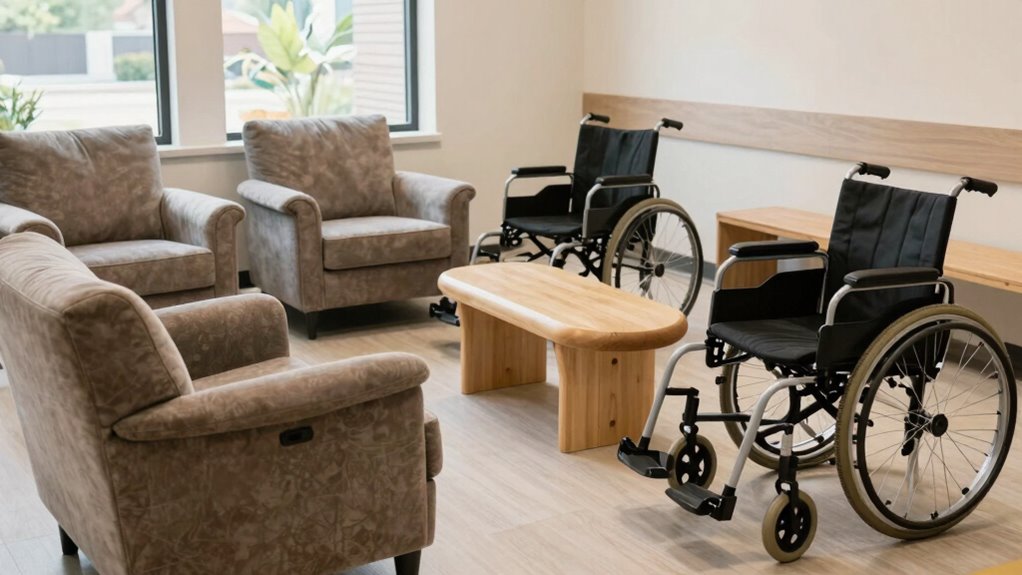
Creating a comfortable and supportive seating environment is vital for caregivers, who often spend long hours tending to others. When you’re responsible for the wellbeing of someone else, the last thing you want is discomfort or strain from poorly designed furniture. That’s why investing in seating that combines ergonomic design with aesthetic appeal is so significant. Good ergonomic seating supports your body’s natural posture, reducing fatigue and preventing long-term health issues like back pain or joint stress. It guarantees that your focus remains on providing quality care rather than battling discomfort. Incorporating ergonomic principles into your furniture choices can make a substantial difference in your daily comfort and health.
Supporting caregivers with ergonomic, stylish seating reduces fatigue and enhances long-term health.
Aesthetic appeal also plays an essential role in caregiving spaces. When your environment looks inviting and well-designed, it creates a calming atmosphere that benefits both you and those you care for. Comfortable, attractive seating can make caregiving feel less like a chore and more like a nurturing environment. When furniture blends style with function, it encourages a sense of calm and dignity, which can ease tension during stressful moments. Plus, visually appealing seating can make the space more welcoming for visitors and other family members, fostering a supportive community environment. Additionally, choosing ergonomic furniture that is also visually appealing can help create a balanced space that promotes well-being for everyone present. Incorporating ergonomic design can also improve overall space utilization and efficiency, making caregiving tasks easier to perform. Properly designed seating can also contribute to space optimization, ensuring the room remains functional and comfortable for all users.
Choosing ergonomic furniture isn’t just about comfort; it’s about health and efficiency. Properly designed chairs and seating arrangements help maintain good posture, which minimizes physical strain during long shifts. Features like adjustable height, lumbar support, and flexible armrests allow you to customize your seat to fit your body perfectly. This adaptability means you can shift positions easily, reducing stiffness and preventing discomfort from prolonged sitting. When your seating setup is ergonomic, you’re more alert, less prone to fatigue, and better equipped to handle the physical demands of caregiving.
At the same time, you shouldn’t have to sacrifice style for comfort. Modern caregiving furniture combines ergonomic principles with sleek, attractive designs that complement your space. Whether it’s a plush armchair with supportive cushioning or a streamlined stool that fits seamlessly into the room’s decor, the right seating helps you feel good physically and visually. When your environment looks well thought out, it boosts your morale and creates a space that feels safe and professional.
In the end, better seating isn’t just a luxury; it’s a necessity. By prioritizing ergonomic design and aesthetic appeal, you set yourself—and those you care for—up for success. Comfortable, supportive, and attractive furniture enhances your ability to provide attentive care while maintaining your own health and wellbeing. It’s an investment that pays off in improved comfort, better health, and a more welcoming caregiving environment for everyone involved.
As an affiliate, we earn on qualifying purchases.
Frequently Asked Questions
How Do Ergonomic Seats Reduce Caregiver Fatigue?
Ergonomic seats reduce caregiver fatigue by promoting better ergonomic posture, which minimizes strain on your back, neck, and shoulders. When you sit comfortably and support your body properly, you conserve energy and avoid muscle fatigue. This fatigue reduction helps you stay alert and effective during long shifts. With ergonomic seating, you can focus more on caregiving tasks and less on physical discomfort, ultimately improving both your well-being and patient care.
What Materials Are Best for Long-Term Seating Durability?
You should choose materials like high-quality leather or durable synthetic fabrics for long-term seating, as they offer excellent fabric durability and resist wear. Look for options with reinforced stitching and sturdy frames to guarantee longevity. Prioritize sustainable materials, such as recycled fabrics or eco-friendly composites, which provide durability while supporting material sustainability. These choices help maintain comfort and functionality over time, reducing the need for frequent replacements in caregiving spaces.
How Can Seating Accommodate Different Caregiver and Patient Needs?
Imagine a space where every caregiver and patient feels understood. You can achieve this by choosing adaptable seating that supports diverse needs, like adjustable height chairs for varying patient mobility and private, cushioned areas for caregiver privacy. Incorporate ergonomic designs and flexible arrangements to foster comfort and dignity. This approach guarantees everyone’s needs are met, creating a caring environment that truly responds to each individual’s unique requirements.
Are There Cost-Effective Options for Upgrading Caregiving Seating?
Yes, there are budget-friendly, DIY solutions to upgrade caregiving seating. You can repurpose existing furniture with affordable cushions or add ergonomic accessories to improve comfort. Consider reupholstering chairs with easy-to-install slipcovers or using inexpensive padding to provide better support. These cost-effective options help you enhance seating quality without overspending, ensuring both caregivers and patients experience more comfort and accessibility in caregiving spaces.
How Does Seating Design Impact Patient Comfort and Safety?
Seating design directly impacts patient comfort and safety by providing proper support and reducing fall risks. When you consider aesthetic appeal, the space feels welcoming, easing anxiety. Incorporating cultural sensitivity guarantees seating choices respect diverse backgrounds, making everyone feel respected and comfortable. Thoughtful design promotes better posture, minimizes discomfort, and encourages relaxation, which is essential for safety and overall well-being in caregiving environments.
Conclusion
By redesigning caregiving spaces with better seating, you create a welcoming haven where everyone feels valued and comfortable. Think of these spaces as the heart of compassion, beating stronger with thoughtful design. When seating caters to all, you nurture connection and ease suffering like a gentle breeze on a warm day. It’s not just about furniture; it’s about building a community where care flows freely, making every moment more human and more healing.
Fall Picks
fall essentials
As an affiliate, we earn on qualifying purchases.