
If your home always feels dusty, it’s likely because airborne particles like pollen, pet dander, and dust mites constantly circulate and settle despite your cleaning efforts. Poor ventilation traps dust indoors, while outdated filters allow particles to flow freely. Vent placement and drafts can stir up settled dust, making it seem never-ending. Upgrading filters and improving airflow help reduce dust buildup. Keep exploring to discover more effective ways to keep your home cleaner and fresher.

Get decor and gifts delivered free — and shop member deals
- Fast, free delivery on millions of items
- Access to Prime Big Deal Days deals on October 6–7
- Prime Video, Amazon Music and more included
Key Takeaways
- Continuous airborne particles like pollen and pet dander constantly settle, making surfaces feel dusty despite cleaning.
- Poor indoor ventilation traps dust and prevents fresh air exchange, worsening dust accumulation.
- Ineffective or outdated HVAC filters fail to trap airborne dust, allowing particles to circulate and settle.
- Improper vent placement and drafts can stir up settled dust and push airborne particles into different areas.
- Relying solely on cleaning without improving filtration and ventilation allows dust to persist in the environment.
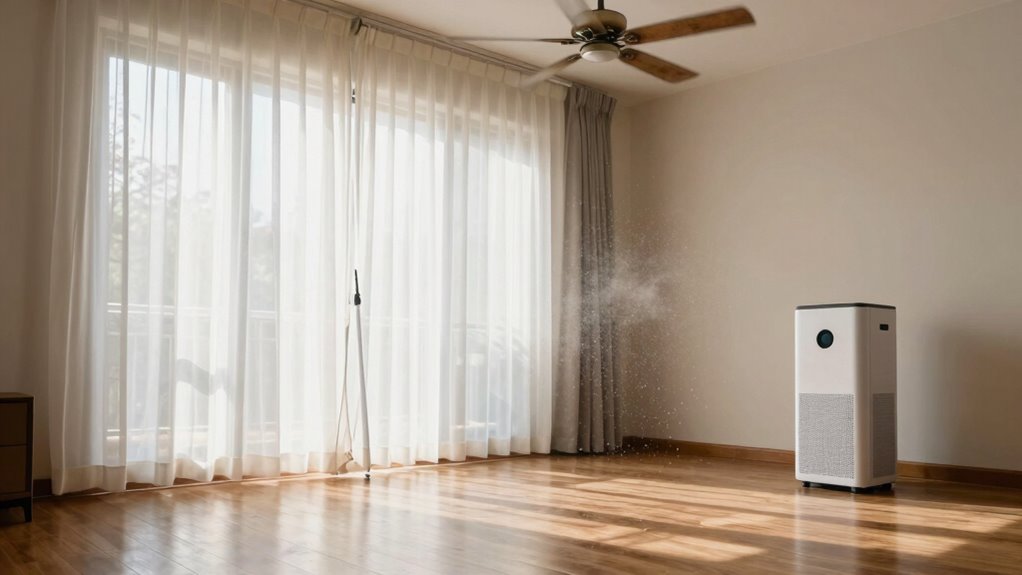
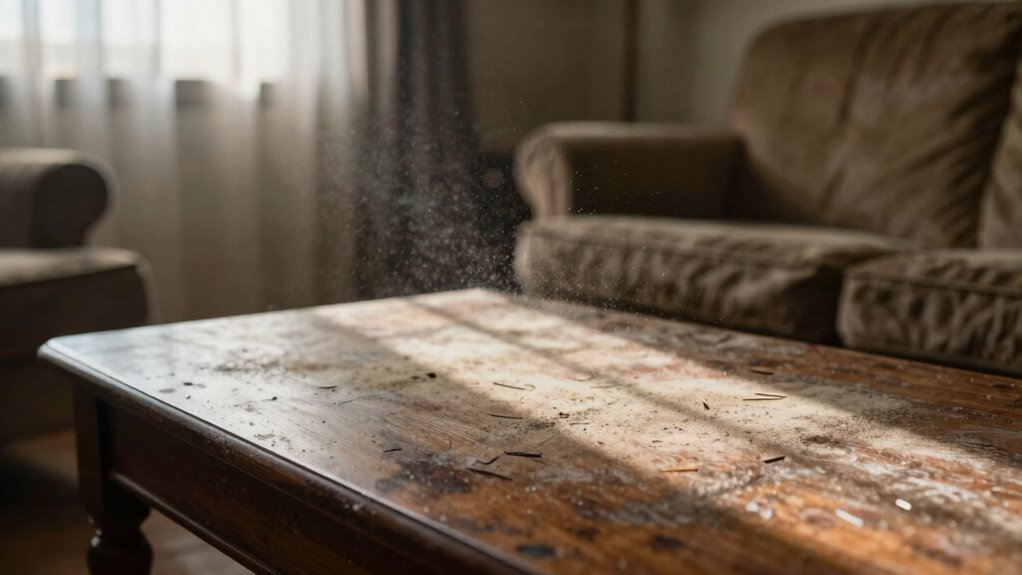
Even if you clean your home daily, some spaces still feel perpetually dusty. That lingering dust isn’t just a matter of dirt accumulating; it often has to do with airborne particles that circulate constantly in your environment. These tiny particles, like pollen, pet dander, and dust mites, stay suspended in the air and settle on surfaces quickly. No matter how often you wipe down your furniture or vacuum carpets, these airborne particles keep replenishing, making it seem like dust is always present.
Persistent dustiness is caused by airborne particles that circulate and settle quickly, despite regular cleaning efforts.
One major factor behind this persistent dustiness is ventilation issues. If your home doesn’t have proper airflow, airborne particles can become trapped indoors, creating a stagnant environment. Poor ventilation prevents fresh air from replacing the indoor air, so dust and other pollutants linger longer than they should. When you open windows or run exhaust fans, you allow outdoor air, which often contains fewer airborne particles, to flow in and carry away trapped dust. Without this exchange, dust particles settle on surfaces and stay put, making your home feel dusty despite your cleaning efforts. Proper ventilation systems are essential for maintaining good indoor air quality and minimizing dust buildup over time.
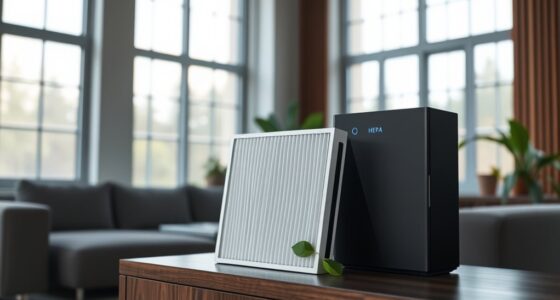
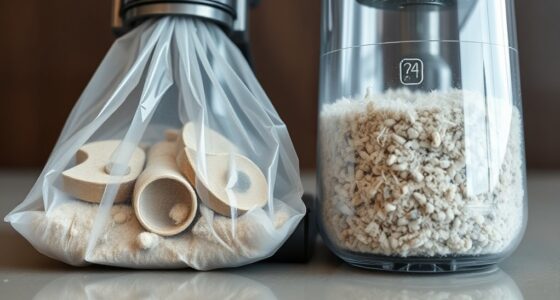
Another common culprit is inadequate filtration. If your HVAC system or air filters are outdated or poorly maintained, they won’t effectively trap airborne particles. This means dust keeps circulating through the air, settling on your furniture, shelves, and floors. Even if you vacuum regularly, you’re only removing surface dust, not the particles that remain suspended in the air. Upgrading to high-efficiency filters and changing them frequently can drastically reduce airborne particles, helping your home feel cleaner and less dusty. Additionally, air purifier devices equipped with HEPA filters can further improve air quality by capturing very small particles before they settle.
Additionally, the placement of heating and cooling vents can influence how dust spreads. If vents blow air directly onto surfaces, they can stir up settled dust or push airborne particles into different areas of your home. Properly balancing your ventilation system and ensuring it doesn’t create drafts can help minimize dust circulation. Using air purifiers with HEPA filters is another effective way to catch airborne particles before they settle on your surfaces, reducing the overall dust load in your home.
HEPA air purifier for dust removal
As an affiliate, we earn on qualifying purchases.
As an affiliate, we earn on qualifying purchases.
Frequently Asked Questions
Can Indoor Plants Help Reduce Dust in the Home?
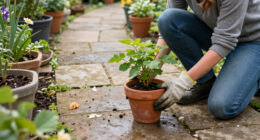
Indoor plants can help reduce dust in your home through natural filtration, but only if you properly maintain them. Regular plant maintenance, like wiping leaves and watering, guarantees their effectiveness. Plants absorb airborne dust particles, improving air quality. However, they shouldn’t be your sole solution. Combining plants with regular cleaning routines creates a cleaner, healthier environment, making your home feel less dusty and more inviting.
How Does Humidity Affect Dust Accumulation?
Humidity levels considerably impact dust accumulation in your home. When humidity is too low, dust particles become airborne and settle easily on surfaces. Conversely, higher humidity helps keep dust particles heavier, causing them to settle faster and reducing airborne dust. Maintaining balanced humidity levels between 40-50% can minimize dust buildup, making your home feel cleaner and reducing the effort needed to keep dust at bay.
Are Certain Flooring Types More Prone to Dust Buildup?
You reap what you sow, and certain flooring types attract more dust. Carpets trap fibers, making dust buildup more noticeable, while hardwoods with gaps allow dust to settle between planks. These gaps and fibers act like dust magnets, requiring regular vacuuming and sealing. So, if you want a dust-free home, choose flooring carefully and maintain it often to prevent dust from accumulating, no matter how often you clean.
What Are the Best Air Purifiers for Dust Removal?
You should look for air purifiers with HEPA filters, as they effectively trap dust particles. Check for features like adjustable fan speeds and real-time air quality sensors to tailor the purification process. Consider dust filter types—HEPA and electrostatic filters are top choices. These features and filter options help reduce dust buildup, making your home feel cleaner and fresher, even if dust seems relentless.
How Often Should HVAC Filters Be Replaced for Cleanliness?
You should replace your HVAC filters every 1 to 3 months to maintain cleanliness. Regular HVAC maintenance prolongs the filter lifespan and guarantees ideal air quality. Keep an eye on the filter’s condition; if it looks dirty or clogged sooner, replace it earlier. Consistent filter changes help prevent dust buildup, improve system efficiency, and keep your home feeling fresher and less dusty over time.
Conclusion
So, if your home’s dust keeps lingering like an unwelcome shadow, it’s time to look beyond just sweeping and scrubbing. Think of your space as a living garden—sometimes, the roots need tending, and the air needs purifying. By addressing hidden sources and improving airflow, you can turn your dusty fortress into a fresh, breezy sanctuary. With a little effort, you’ll finally breathe easy, knowing your home feels as clean as a clear spring morning.
Fall Picks
fall essentials
As an affiliate, we earn on qualifying purchases.