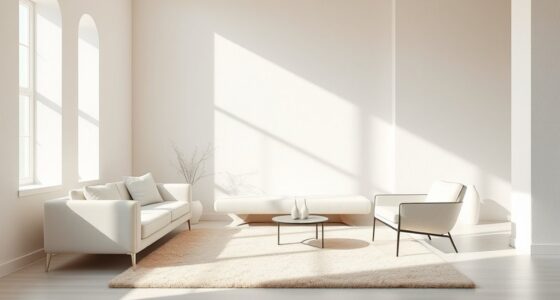

To make a narrow room feel more balanced, choose light, neutral colors like soft pastels or warm neutrals that reflect more light and open up the space. Combine these with layered lighting to eliminate dark corners and highlight architectural features. Adding mirrors opposite windows boosts natural light reflection and creates the illusion of more space. By managing color and light thoughtfully, you’ll create a more balanced, airy environment—there’s much more to explore to achieve the perfect look.
Get ready for Prime Big Deal Days — try Prime free
Exclusive member deals on October 6–7, plus fast free delivery. Cancel anytime.
As an affiliate, we earn on qualifying purchases.
Key Takeaways
- Use light, neutral, or pastel wall colors to reflect more light and create an open, spacious feel.
- Incorporate contrasting or accent colors to break up narrow walls and add visual interest.
- Apply consistent color schemes throughout the room to maintain a balanced and cohesive look.
- Choose colors that complement each other to avoid visual clutter and enhance harmony.
- Use color strategically to highlight architectural features, diverting attention from narrowness.
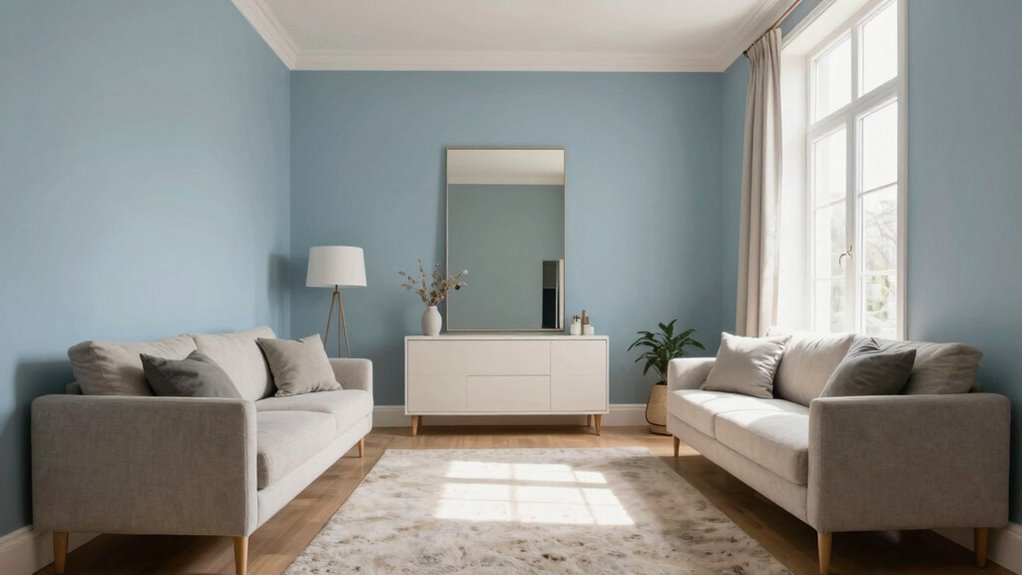
Narrow rooms can feel cramped, but the right color choices can make them appear more spacious and inviting. When you focus on clever lighting techniques, you can brighten up the space and create a sense of openness. Use layered lighting—combine ceiling fixtures, wall sconces, and table lamps—to eliminate dark corners and add depth. Light-colored walls reflect more light, so opting for soft neutrals or pastels can bounce illumination around the room, making it feel larger. Additionally, installing mirrors opposite windows helps reflect natural light, amplifying the sense of space. By playing with lighting, you draw attention away from the room’s narrowness, instead emphasizing its openness. Incorporating scientific testing devices for measuring light levels can help optimize your lighting setup effectively. Proper lighting can also highlight the room’s architectural features, further enhancing the perception of space. Understanding how perception of space is influenced by visual cues is essential for creating a balanced environment. Moreover, choosing the right color palette can significantly impact how spacious a room feels, making it appear more open and welcoming.
light neutral wall paint for small rooms
As an affiliate, we earn on qualifying purchases.
As an affiliate, we earn on qualifying purchases.
Frequently Asked Questions
Can Using Dark Colors Make a Narrow Room Feel Smaller?
Yes, using dark colors can make a narrow room feel smaller because they absorb light, creating a cozy but potentially confined atmosphere. According to color psychology, dark shades can evoke mood enhancement by adding sophistication or intimacy. However, if you want to avoid feeling cramped, balance dark colors with plenty of lighting and lighter accents. This way, you still enjoy the mood benefits without sacrificing spaciousness.
What Colors Are Best for Highlighting a Room’s Length?
They say “a picture is worth a thousand words,” and the same applies to room colors. To highlight a room’s length, opt for lighter shades on the walls, like soft blues or warm neutrals, which create a sense of openness through color psychology. Use color coordination with darker accents or trim to draw the eye along the space, emphasizing its depth and making it feel more expansive.
How Can I Incorporate Multiple Colors Without Overwhelming the Space?
To avoid overwhelming your space, choose a cohesive color palette with complementary or analogous hues. Use one dominant color and add accent colors sparingly for visual balance. Incorporate multiple colors through accessories, artwork, or small furniture pieces instead of painting every wall. This approach keeps the room lively without clutter, allowing the various colors to work harmoniously and create a balanced, inviting atmosphere.
Do Ceiling Colors Affect the Perception of Room Width?
Yes, ceiling colors do affect the perception of room width. Light-colored ceilings create the illusion of height, making the room feel more spacious, while darker shades can make the ceiling seem lower. Use color coordination techniques by matching ceiling and wall tones to create visual harmony. For ceiling height illusions, painting the ceiling a soft, light hue enhances openness, helping narrow rooms feel broader and more balanced.
Are There Specific Color Schemes Suitable for Small, Narrow Rooms?
For small, narrow rooms, opt for light, cool colors like soft blues, greens, or pastels. These shades promote a sense of spaciousness through color psychology, making the room feel more open. Use visual balance by incorporating these colors on walls and furniture, avoiding overly dark or warm tones that can shrink the space visually. This approach creates a calming, balanced environment that maximizes the room’s perceived size.
Conclusion
By weaving thoughtful colors into your narrow room, you’re painting a symphony that whispers balance and harmony. Lighter hues expand your space like a gentle breeze, while darker shades anchor and add depth. Think of your walls as a canvas, where color dances and guides the eye, turning confined quarters into an enchanting sanctuary. With these tips, your room transforms from a tight squeeze into a space that breathes and beckons, beautifully balanced in every hue.
Fall Picks
fall essentials
As an affiliate, we earn on qualifying purchases.