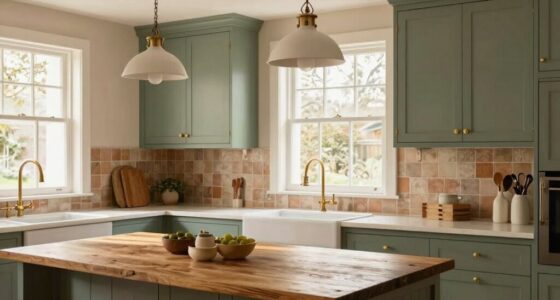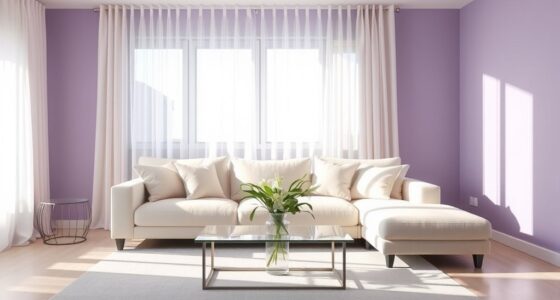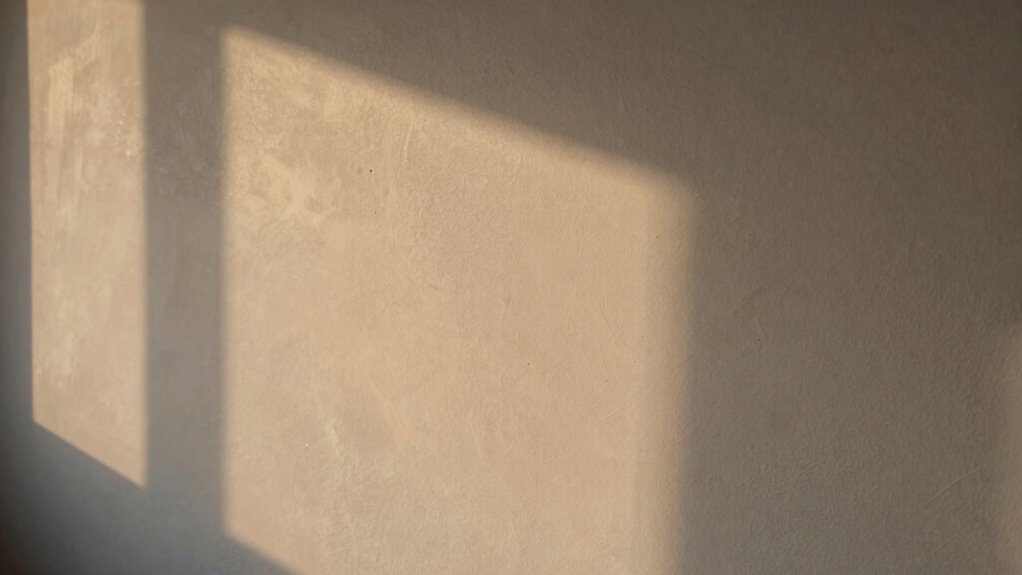

You might notice your paint colors shifting all day because natural light constantly changes, affecting how colors appear. Morning sunlight makes walls look cooler and bluish, while afternoon light warms them up into yellow or orange tones. Artificial lighting and surrounding reflections further alter color perception indoors. Room orientation also plays a role, with different sunlight exposure intensities. If you’re curious about how these factors work together, keep exploring to learn more about what causes these color changes.
Key Takeaways
- Natural light changes temperature and intensity throughout the day, altering how paint colors appear.
- Surface finish impacts light reflection, influencing the perceived warmth or coolness of paint.
- Room orientation and surrounding objects reflect light, causing subtle color shifts over time.
- Artificial lighting indoors can modify paint color perception, especially with different bulb types.
- Environmental reflections and changing sunlight patterns create dynamic, ever-evolving wall color appearances.
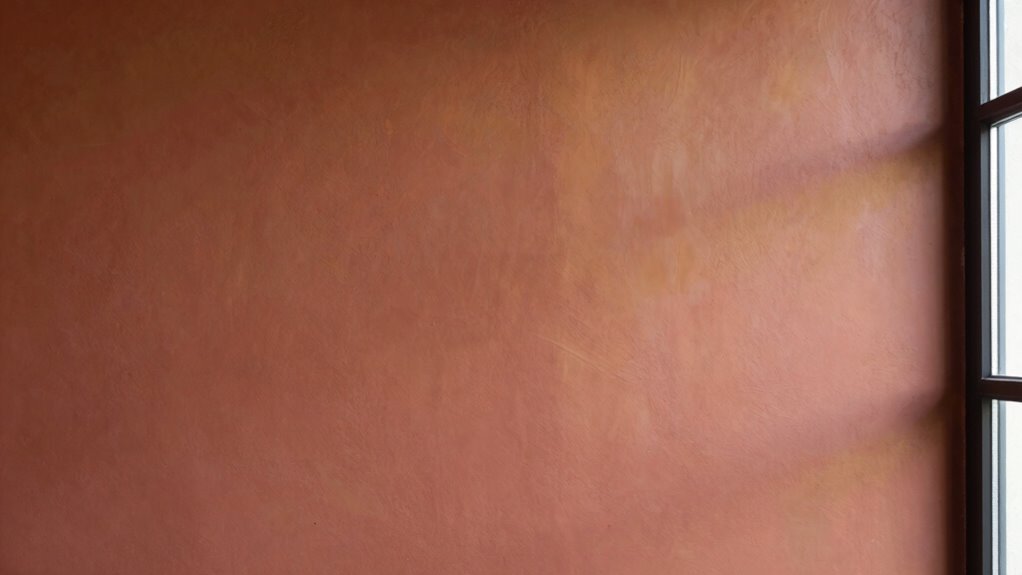
Throughout the day, the color of your painted walls can subtly change, influenced by natural light and the environment around them. This shift isn’t random; it’s rooted in the way light interacts with paint and how your eyes perceive color over time. One key factor is color temperature, which plays a significant role in how your walls appear at different moments. During the morning, the sunlight is cooler, with more blue and violet tones, making your walls seem more subdued or even slightly bluish. As the day progresses, the light warms up, shifting toward yellow and orange hues, giving your walls a richer, warmer feel. This natural variation can make a single paint color look completely different from morning to evening. Additionally, the surface finish of your walls influences how light reflection affects perceived color, with matte finishes diffusing light more evenly and glossier finishes amplifying color shifts. Light reflection is another vital element. Your walls don’t just absorb light—they reflect it. The way light bounces off your walls depends on the surface finish and the hue itself. Matte finishes tend to diffuse light more evenly, softening the color shifts, whereas glossier finishes reflect light more directly, amplifying the changes in perceived color. When sunlight hits your walls, the reflection can highlight certain undertones or make the color appear more vibrant or muted, depending on the angle and intensity of the light source. The surrounding environment also influences this, as objects, furniture, and even the color of nearby walls can reflect additional hues onto your painted surface. Changes in room orientation further amplify these shifts, as different directions receive varying amounts of sunlight throughout the day. A north-facing wall receives less direct sunlight, maintaining cooler tones longer, while south-facing walls bask in warm, direct sunlight, intensifying the warm color shifts throughout the day. The presence of curtains, blinds, or other window treatments can filter sunlight, softening or altering these shifts, creating a dynamic palette that evolves as the sun moves across the sky. Understanding these factors helps you anticipate how your chosen paint color will look at different times. It’s also helpful to consider lighting conditions, as artificial light sources can further influence how the color appears indoors at various times. The type of lightbulb used can significantly change the perception of color, especially in the evenings. You might select a warm, earthy tone, expecting it to glow in the afternoon, or a cooler shade, knowing it will appear more subdued in the morning light. Also, the environmental factors such as nearby objects or reflective surfaces can further influence how your paint color appears at different times of day. Ultimately, the way light temperature and reflection interact with your walls guarantees that your painted space is never static—constantly shifting, always alive with subtle color changes that reflect the natural rhythm of the day.
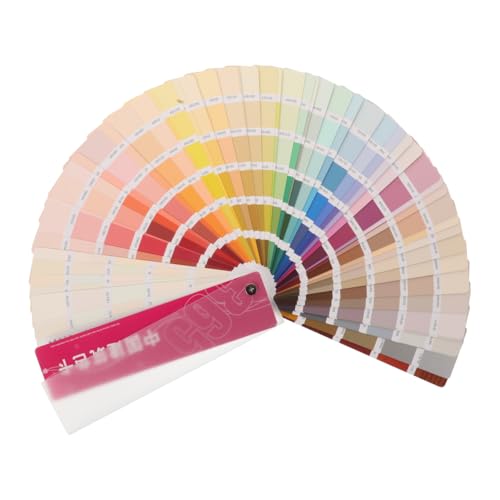
FAVOMOTO 1 Set Standard Paint Sample Cards, 365 Colors Walls Paint Chips Samples Architecture Contrast Sheets Color Chart for Painting Projects
- Practical for Various Paint Needs: Color test and sample cards for painting projects
- Durable Material: Made of plastic and paper for accuracy and reliability
- Suitable for Professionals and DIY: Ideal for both experts and hobbyists
As an affiliate, we earn on qualifying purchases.
As an affiliate, we earn on qualifying purchases.
Frequently Asked Questions
Can Lighting Conditions Permanently Change Paint Color?
Yes, lighting conditions can permanently change paint color through ongoing light influence. Over time, exposure to direct sunlight or harsh lighting can cause pigments to fade or alter, leading to color inconsistency. You might notice your walls look different throughout the day or after seasons change. To maintain color consistency, consider choosing paints with higher lightfastness and installing lighting that minimizes direct light exposure on your walls.
Do Certain Paint Brands Resist Color Shifting?
You’ll find that certain brands, like Benjamin Moore or Sherwin-Williams, resist color shifting better thanks to superior paint formulation and pigment stability. For example, a homeowner used Sherwin-Williams’ Duration line in a sunlit room, and the color stayed true all day. These brands invest in high-quality pigments and formulations, ensuring your paint’s hue remains consistent despite changing lighting conditions, making your space look perfect from morning to night.
How Long Does a Color Shift Typically Last?
A color shift typically lasts anywhere from a few hours to several days, depending on factors like lighting and paint formulation. You’ll notice the most change during the first 24 to 48 hours, but some colors can continue shifting subtly for up to a week. Paint formulation plays a key role in maintaining color consistency, so choosing high-quality paint can help reduce the duration and extent of color shifts throughout the day.
Is Color Shifting More Noticeable on Matte or Gloss Finishes?
Color shifting is more noticeable on matte finishes because their surface textures diffuse light differently, making color changes more apparent. Gloss finishes reflect light more uniformly, minimizing color shifts. When you choose finish types, consider surface textures—matte surfaces tend to hide shifts better, while gloss surfaces highlight them. So, if you want less color variation throughout the day, opting for a gloss finish can help reduce the noticeable shift.
Can Color Shifts Affect the Paint’s Durability?
You might notice that color shifts don’t directly affect paint’s durability, but they can highlight issues with pigment consistency or color stability. When pigments aren’t uniform or the paint isn’t designed for long-term stability, color changes could indicate potential weakening over time. While shiftiness itself isn’t a durability concern, poor pigment stability might lead to fading or deterioration, making it wise to choose high-quality paints with reliable pigment consistency for lasting results.
Conclusion
So, next time your paint seems to dance with the light, remember it’s just trying to find its true self in every moment’s glow. Embrace these gentle shifts, for they add a quiet charm and depth to your space. Like a subtle whisper, your walls reveal different moods, reminding us that even in permanence, there’s a graceful impermanence worth appreciating. After all, it’s life’s little way of keeping things interesting, don’t you think?