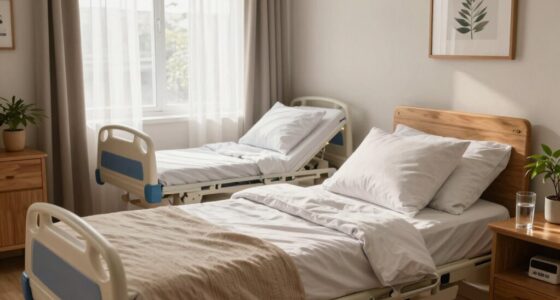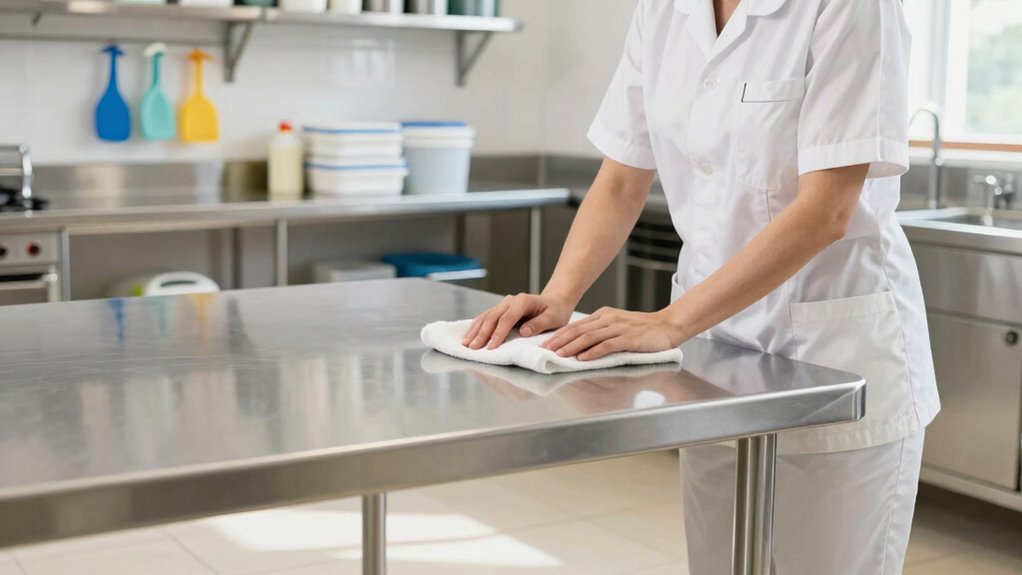
Choosing surfaces and materials that are easy to clean is essential for care homes because it directly impacts hygiene, infection control, and staff efficiency. When surfaces are simple to maintain, you reduce the risk of bacteria buildup and make routine cleaning faster and more effective. Properly selected materials also cut down on cross-contamination and long-term maintenance costs. If you want to learn more about how these choices can improve your care environment, keep exploring the options available.
Key Takeaways
- Easy-to-clean surfaces reduce cleaning time, increasing staff efficiency and allowing more focus on resident care.
- They help maintain high hygiene standards consistently, lowering infection risks in the care environment.
- Simplified cleaning processes support staff training and adherence to strict hygiene protocols.
- Durable, non-porous materials prevent bacteria buildup, ensuring long-term cleanliness and safety.
- Effective cleaning reduces cross-contamination, crucial for vulnerable care home residents’ health.
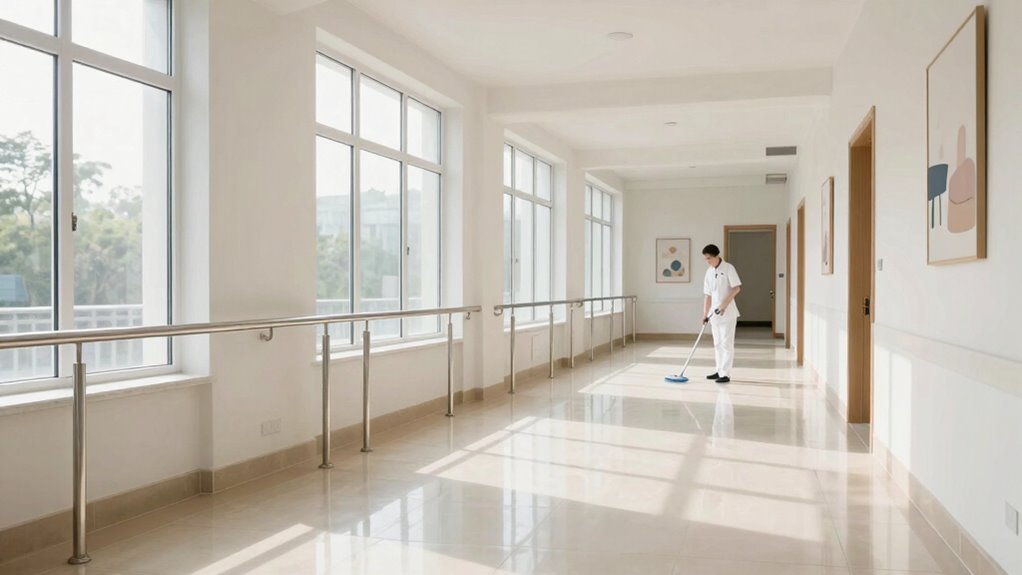
Are you wondering what makes a care home easy to clean? It’s a question that’s becoming more important as the industry recognizes the critical role cleanliness plays in residents’ health and safety. When choosing a care home, you might focus on décor or amenities, but the ease of cleaning often has a bigger impact on day-to-day operations and hygiene standards. The right cleaning-friendly features can help staff maintain high hygiene levels, reduce infection risks, and create a safer environment for everyone.
Staff training plays a significant role here. Well-trained staff know how to clean efficiently and effectively, following best practices that ensure germs and bacteria are eliminated. They understand which surfaces require special attention and how to use cleaning products correctly. When a care home invests in comprehensive staff training, it becomes easier to uphold hygiene standards consistently. Proper training ensures that cleaning routines are thorough, reducing the likelihood of cross-contamination or overlooked areas that could harbor harmful pathogens.
Proper staff training ensures effective cleaning, reduces contamination risks, and maintains consistent hygiene standards in care homes.
Beyond staff training, the choice of materials and surfaces in a care home affects how easily it can be maintained. Opting for smooth, non-porous surfaces like sealed countertops, vinyl flooring, and easy-to-clean wall finishes simplifies daily cleaning routines. These surfaces don’t trap dirt or bacteria as easily as textured or porous materials, making it quicker for staff to sanitize spaces properly. Additionally, fixtures and fittings should be designed for ease of access, so cleaning isn’t a cumbersome task that gets left undone. An understanding of hygiene standards can guide the selection of such surfaces and fixtures to meet regulatory requirements. Incorporating cleaning-friendly surfaces can further reduce the time and effort needed for effective cleaning routines. Recognizing the importance of surface durability ensures that surfaces remain easy to maintain over time, even with frequent cleaning. Furthermore, integrating maintenance considerations into the design phase can help ensure that cleaning remains straightforward as the environment evolves over time.
Hygiene standards set the benchmark for what’s acceptable in a care environment, and these standards are easier to meet when the premises are designed with cleaning in mind. Effective layouts minimize awkward corners or hard-to-reach areas, allowing staff to clean thoroughly without frustration. Proper storage solutions can also help keep clutter off surfaces, making cleaning more straightforward. A care home that prioritizes ease of cleaning doesn’t just focus on initial design but also on ongoing maintenance routines. Regular cleaning schedules, combined with easy-to-clean surfaces, ensure the environment remains safe and hygienic for residents and staff alike. Incorporating appropriate cleaning products and tools can enhance the effectiveness of hygiene practices, ensuring that cleaning routines are both efficient and thorough. In short, when you’re evaluating care homes, don’t overlook how easily they can be cleaned. Staff training and the adoption of high hygiene standards go hand-in-hand with choosing surfaces and layouts that support those standards. An easy-to-clean environment isn’t just about convenience; it’s about safeguarding health and maintaining a high quality of care. Making this a priority can significantly impact infection control, staff efficiency, and overall resident well-being, proving that “easy to clean” is a vital consideration in your decision-making process.
As an affiliate, we earn on qualifying purchases.
Frequently Asked Questions
How Does Cleaning Frequency Impact Infection Control in Care Homes?
Cleaning frequency directly impacts infection control in care homes by preventing the build-up of germs and bacteria. Regular cleaning schedules ensure high-touch areas are sanitized more often, reducing infection risks. Adhering to strict infection protocols, which specify cleaning intervals, keeps residents safe. You must prioritize consistent cleaning routines to uphold a hygienic environment, preventing outbreaks, and promoting better health for everyone in your care home.
What Materials Are Most Resistant to Cleaning Agents Used in Care Homes?
Surface coatings and antimicrobial materials stand strong against scrubbing and solutions, making them the most resistant choices in care homes. You’ll find that ceramic, stainless steel, and certain plastics boast durability, deflecting damaging disinfectants. These materials resist wear and warping, guaranteeing surfaces stay sanitary longer. By selecting surfaces with these resilient coatings, you guarantee easy cleaning, enhanced hygiene, and a healthier environment for residents and staff alike.
How Do Cleaning Requirements Vary Between Different Types of Care Home Residents?
Cleaning requirements differ based on resident needs, impacting your choice of materials and procedures. For residents prioritizing personal hygiene, you need easy-to-clean surfaces that prevent bacteria buildup, promoting comfort and health. In contrast, residents with mobility issues might require gentler cleaning methods that don’t compromise comfort. By tailoring cleaning routines, you enhance resident comfort and guarantee personal hygiene, making the environment safer and more supportive for everyone.
What Training Is Necessary for Staff to Maintain Easy-To-Clean Environments?
You need to provide staff training on cleaning protocols to guarantee environments stay easy to maintain. This training covers proper cleaning techniques, use of appropriate disinfectants, and safety procedures. Some might worry about time or resources, but investing in thorough training actually saves effort in the long run by preventing contamination and making daily cleaning quicker and more effective. Well-trained staff keep your care home safer and cleaner effortlessly.
Are There Cost Benefits to Choosing More Durable, Easy-To-Clean Flooring Options?
Choosing durable, easy-to-clean flooring offers cost benefits by reducing maintenance and replacement expenses over time. Durability testing guarantees the flooring withstands heavy foot traffic, saving you money long-term. Plus, you don’t have to compromise on aesthetic appeal, as many options combine durability with attractive designs. This means your care home stays visually welcoming while maintaining a practical, cost-effective environment for residents and staff alike.
Conclusion
In the end, prioritizing ease of cleaning isn’t just about convenience—it’s essential for maintaining a safe, hygienic environment in care homes. Did you know that facilities with streamlined cleaning processes report 30% fewer infection outbreaks? By choosing furniture and surfaces that are easy to clean, you’re not only saving time but also protecting your residents’ health. Making this simple yet impactful decision can truly transform the quality of care you provide.