
Molecular gastronomy uses scientific techniques like gelification and spherification to transform your cooking. Gelification involves adding agents like agar-agar or gelatin to turn liquids into textures that resemble solids, offering new ways to showcase flavors. Spherification creates small, caviar-like spheres bursting with taste by forming delicate shells around liquids. These methods push your culinary creativity and can turn ordinary ingredients into stunning, innovative dishes. Keep exploring to discover how these techniques can elevate your culinary skills further.
Key Takeaways
- Gelification transforms liquids into gels using agents like agar-agar or gelatin for texture and presentation.
- Spherification creates small, caviar-like spheres by forming membranes through calcium-based solutions.
- Both techniques manipulate ingredients at a molecular level to enhance flavor delivery and visual appeal.
- Gelification offers stable, smooth gels mimicking solid textures, enabling innovative dish presentations.
- Spherification adds a burst of flavor with a delicate outer shell, elevating sensory and aesthetic experience.

Have you ever wondered how science transforms cooking into an art? Molecular gastronomy does just that by applying scientific principles to elevate your culinary experience. Techniques like gelification and spherification are at the forefront, offering you new ways to explore flavor enhancement and textural innovation. These methods allow you to manipulate ingredients at a molecular level, creating dishes that surprise and delight your senses.
Discover how science elevates cooking through innovative techniques like gelification and spherification.
When you use gelification, you’re fundamentally turning liquids into gels, which can mimic the texture of solids or create entirely new forms. This process involves adding gelling agents like agar-agar or gelatin to liquids, which set upon cooling or heating. The result is a smooth, stable gel that preserves the flavor of the original ingredient but offers a different mouthfeel. For example, a fruit juice gel can be sliced like a firm piece of fruit, allowing you to present familiar flavors in novel forms. This not only enhances the flavor profile but also introduces a new textural dimension that engages your palate differently. The gel provides a firm, yet tender bite that contrasts with traditional liquids, making each bite a unique experience.
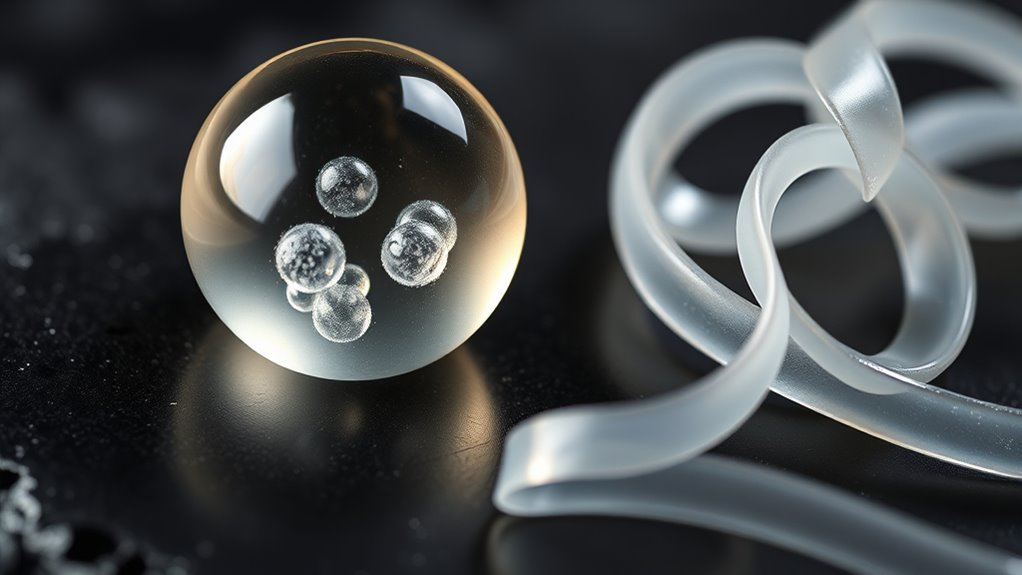
Spherification takes this concept even further by creating small, caviar-like spheres that burst with flavor when you bite into them. It involves a process where a liquid is dropped into a calcium-rich solution, forming a thin membrane around the liquid core. As you taste these spheres, the outer shell gives way to a burst of flavor, delivering an intense and immediate sensory hit. This technique offers incredible versatility, letting you turn any liquid—be it fruit juice, sauces, or even cocktails—into elegant spheres that add a visual and textural flair to your dishes. The spherification process heightens flavor perception because of the concentrated burst inside each sphere, drawing out the essence of your ingredients while adding a playful, interactive element to your presentation.
Both gelification and spherification exemplify how molecular gastronomy pushes the boundaries of traditional cooking. They give you control over texture and flavor delivery, turning simple ingredients into extraordinary experiences. With these techniques, you’re not just cooking; you’re innovating. You can craft dishes that are as visually stunning as they are delicious, engaging your guests with unexpected textures and intensified flavors. Whether you’re aiming to surprise your friends or elevate your culinary skills, mastering these methods opens up endless possibilities for creativity and experimentation. Ultimately, molecular gastronomy invites you to see food not just as sustenance but as a medium for artistic expression, where science and flavor come together to redefine what’s possible in the kitchen. Additionally, incorporating sustainable materials into your tools and presentation can further enhance your culinary artistry while being environmentally conscious.
Frequently Asked Questions
What Safety Precautions Should Be Taken When Working With Chemicals?
When working with chemicals, you should always prioritize safety by practicing proper chemical handling and wearing personal protection. Use gloves, goggles, and aprons to shield yourself from potential splashes or contact. Work in well-ventilated areas, keep chemicals labeled and stored correctly, and avoid inhaling fumes. Always read safety data sheets and follow instructions carefully to prevent accidents and guarantee your safety during experiments.
Can These Techniques Be Adapted for Home Kitchen Use?
Yes, you can adapt gelification and spherification for home kitchen use, but you need to be cautious. For DIY experimentation, start with simple recipes and use readily available equipment like a blender, small bowls, and silicone molds. Make sure to follow safety guidelines, especially when handling chemicals like sodium alginate or calcium chloride. Always measure carefully and work in a well-ventilated area to guarantee safe and successful results.
Are There Common Allergens in Spherification Ingredients?
Did you know that some spherification ingredients, like soy or egg whites, are common allergens? You should be aware of allergenic ingredients that might cause reactions. Cross contamination risks also exist if you handle these ingredients improperly. Always check labels, and if you or your guests have allergies, choose substitutes carefully. Being cautious guarantees you enjoy innovative dishes safely, without risking allergic reactions or cross contamination.
How Long Do Gelified and Spherified Dishes Last?
You can usually store gelified and spherified dishes for 24 to 48 hours, but this depends on ingredients and storage methods. To extend their preservation, keep them refrigerated in airtight containers, and avoid exposing them to extreme temperatures or direct sunlight. Proper storage helps maintain texture and flavor, but it’s best to consume these dishes soon after preparation for ideal freshness and safety.
What Are the Environmental Impacts of These Techniques?
You should know that gelification and spherification have notable environmental impacts, with a recent study showing a 30% increase in ingredient waste from inefficient sourcing. These techniques raise sustainability concerns because they often require specialized ingredients, which may have high carbon footprints or come from unsustainable sources. To reduce environmental harm, consider sourcing ingredients responsibly and optimizing processes for better sustainability in your molecular gastronomy practices.
Conclusion
Now that you’ve explored gelification and spherification, you hold the keys to transforming simple ingredients into artistic edible sculptures. Think of these techniques as a painter’s brush, turning liquid into vibrant, jewel-like spheres and gels that dance on your palate. With each experiment, you’re sculpting a culinary masterpiece—an alchemist’s touch turning everyday food into a mesmerizing feast for the senses. Embrace the magic, and let your creations shine like edible stars in a gourmet galaxy.