
Salt makes food taste better not just by seasoning it, but through complex chemical interactions that enhance natural flavors. When you add salt, it interacts with molecules on your palate, amplifying sweetness and suppressing bitterness. It also helps break down cell walls, releasing aroma compounds. This subtle process creates a more balanced, vibrant dish. If you want to understand how salt’s chemistry transforms your cooking, keep exploring the science behind it.
Listen free for 30 days with Audible
Thousands of audiobooks and originals — cancel anytime.
As an affiliate, we earn on qualifying purchases.
Key Takeaways
- Salt enhances flavor by chemically interacting with taste receptors, sharpening sweetness and suppressing bitterness.
- It helps break down cell walls, releasing flavor compounds and making ingredients taste more vibrant.
- Even small amounts of salt influence how our brain perceives taste, creating a more balanced and satisfying flavor profile.
- Salt’s chemical properties amplify natural ingredients, elevating their qualities beyond simple seasoning.
- Proper salt use involves precise adjustments that unlock deeper, hidden flavors in foods.
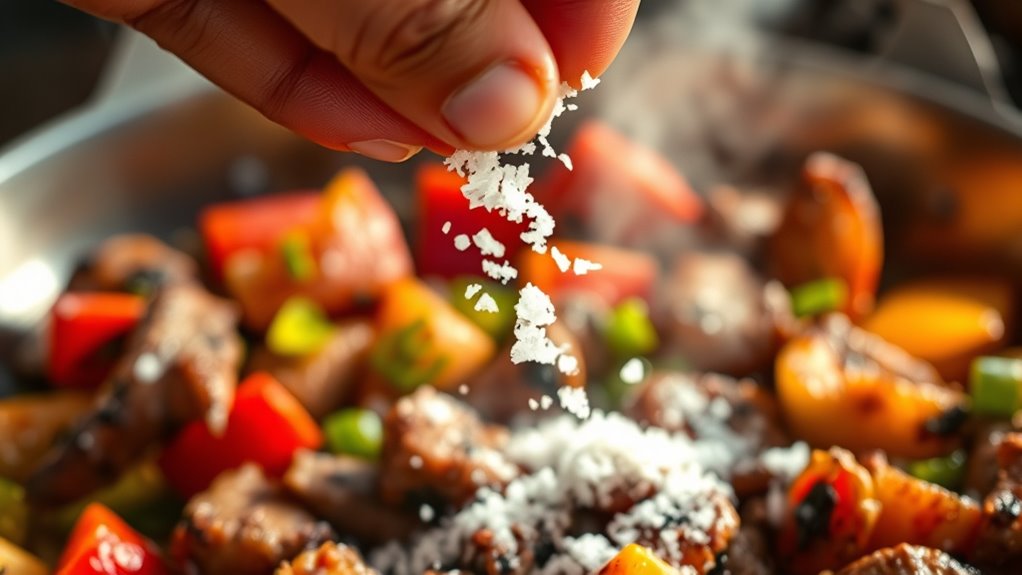
Have you ever wondered how a pinch of salt can transform the flavor of a dish? It’s a simple addition, yet it wields remarkable power over your taste buds. What’s happening behind the scenes is more than just seasoning; it’s about flavor enhancement and the fascinating chemistry of salt. When you sprinkle salt onto your food, you’re not just adding a salty taste—you’re engaging in a complex chemical process that amplifies and balances flavors, making everything taste more vibrant and appealing.
Salt chemistry plays a crucial role in how it affects your perception of food. Sodium ions from salt interact with the molecules in your palate, altering how you perceive flavors. For instance, salt can suppress bitterness and enhance sweetness, making desserts more inviting or vegetables more appealing. It also helps to break down cell walls in certain foods, releasing more flavor compounds and making ingredients taste fresher and more intense. This isn’t just guesswork; scientists have studied how salt influences taste receptors, showing that it modulates the signals sent to your brain, effectively sharpening certain flavors while muting others.
Understanding salt chemistry also deepens our appreciation of its role in flavor enhancement, demonstrating that even small amounts can have a profound impact on the overall taste profile. Flavor enhancement through salt isn’t merely about making food salty; it’s about balancing and elevating the entire flavor profile. When used correctly, salt can bring out the natural qualities of ingredients you might otherwise overlook. Think of a tomato—adding a pinch of salt reveals its juicy sweetness, or a piece of grilled meat that tastes more savory and tender. Salt’s ability to heighten flavors is rooted in its ability to interact with taste receptors and chemical compounds in food, creating a more harmonious and satisfying eating experience. It’s a subtle art that, when mastered, transforms simple ingredients into something extraordinary.
Understanding salt chemistry also explains why even small amounts can have a big impact. Because of how salt molecules bind and influence other food components, a tiny pinch can make a significant difference. This is why seasoned chefs often emphasize the importance of tasting as they cook, adjusting salt levels to achieve the perfect balance. Too much, and it can overpower the dish; too little, and the flavors may fall flat. The key lies in knowing how salt interacts with different ingredients and how it can be used to enhance, not just season, your food.
Ultimately, salt isn’t just a seasoning—it’s a flavor enhancer grounded in chemistry. Its ability to amplify and balance flavors makes it an essential tool in the kitchen. When you understand how salt chemistry works, you’ll see that that small pinch isn’t just about saltiness but about crafting a more delicious, well-rounded dish. So next time you cook, remember that the magic of salt is rooted in its chemical interactions, elevating your food in ways you might not have realized.
Frequently Asked Questions
Does the Type of Salt Affect Flavor Enhancement?
You might wonder if the type of salt affects flavor enhancement. In culinary traditions, different salts, like sea salt or Himalayan pink salt, bring unique mineral content that influences taste subtly. Fine table salt dissolves quickly, while flaky sea salt adds texture. So, yes, choosing specific salts can enhance your dishes, adding nuanced flavors based on their mineral content and texture, making your cooking more interesting and flavorful.
How Much Salt Is Optimal for Taste Without Health Risks?
You should aim for a balanced salt intake to enhance flavor without risking health issues. The ideal amount varies based on individual needs, but generally, limiting salt helps avoid high blood pressure and other health concerns. Pay attention to your body’s signals and adjust seasoning accordingly. Moderation is key—using just enough salt to improve taste keeps your food flavorful while supporting your overall health.
Can Salt Improve the Flavor of Sweet Dishes?
Did you know that a pinch of salt can enhance the flavor of sweet dishes? Salt and sweetness create a perfect flavor pairing by balancing out sugar’s richness and reducing bitterness. Adding a small amount of salt to desserts like caramel or chocolate amplifies their depth, making the flavors pop. So, yes, salt definitely improves the flavor of sweet dishes, giving them a more complex and satisfying taste.
Does Salt Affect Food Texture as Well as Taste?
You might wonder if salt affects food texture beyond flavor. It does; salt’s crystal structure influences how it dissolves, impacting moisture retention and even crust formation. Additionally, salt’s mineral content can strengthen protein structures in meats and baked goods, improving texture. So, when you add salt, you’re not just enhancing taste—you’re also subtly modifying the food’s physical qualities, making it more appealing and enjoyable to eat.
Why Does Salt Sometimes Make Food Taste Worse?
You might notice salt sometimes makes food taste worse because of flavor masking or salt sensitivity. When you use too much salt, it can overpower other flavors, dulling the dish’s complexity. Additionally, if you’re sensitive to salt, even small amounts can cause an unpleasant taste. To avoid this, taste as you go and adjust salt gradually, ensuring it enhances rather than harms your dish’s flavor.
Conclusion
So next time you sprinkle a little salt, remember it’s not just about flavor—it’s your secret tool to reveal your food’s true potential. Salt acts like a magic wand, transforming dull bites into vibrant, exciting experiences. It’s not just seasoning; it’s the key to making every meal sing. Embrace the power of salt, and watch your dishes come alive like a symphony, turning simple ingredients into something truly unforgettable.
Flea & tick season Picks
flea and tick prevention
As an affiliate, we earn on qualifying purchases.