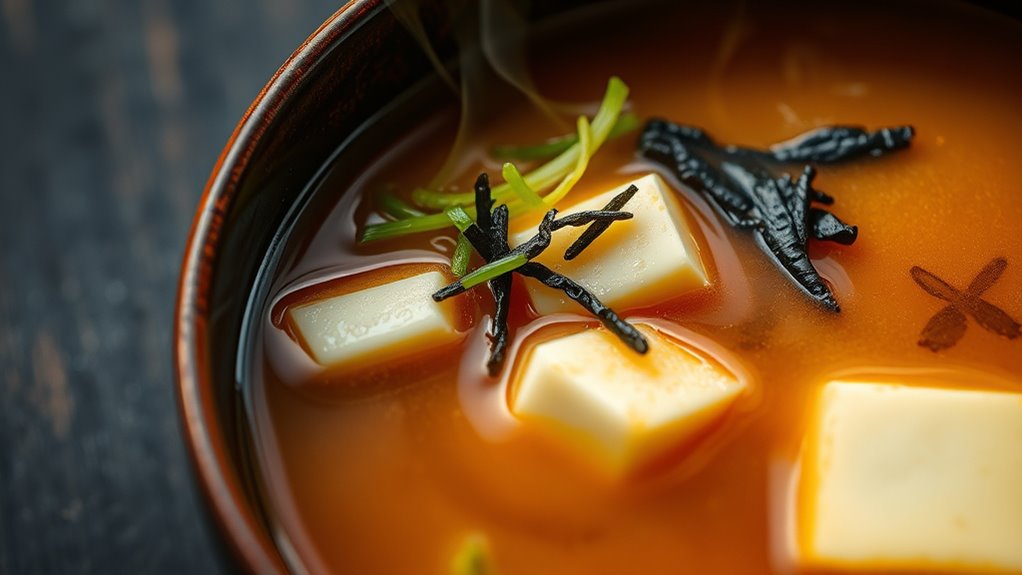

Umami is the fifth fundamental taste, offering a rich, savory flavor that enhances dishes through naturally occurring glutamates found in foods like aged cheeses, mushrooms, and soy sauce. It deepens flavors, balances other taste elements, and can even reduce your salt needs. Using umami-rich ingredients helps you create more satisfying, complex meals. If you want to explore how to incorporate this powerful taste into your cooking, there’s more to discover below.
Key Takeaways
- Umami is the fifth fundamental taste, providing a savory, full-bodied flavor that enhances dishes.
- It originates from glutamates found in foods like aged cheese, mushrooms, soy sauce, and cured meats.
- Incorporating umami-rich ingredients deepens flavor, balances other tastes, and can reduce the need for added salt.
- Recognizing and utilizing umami allows for more intentional cooking and creates satisfying, complex dishes.
- Scientific understanding links umami to glutamate interactions with taste buds, contributing to overall food enjoyment.
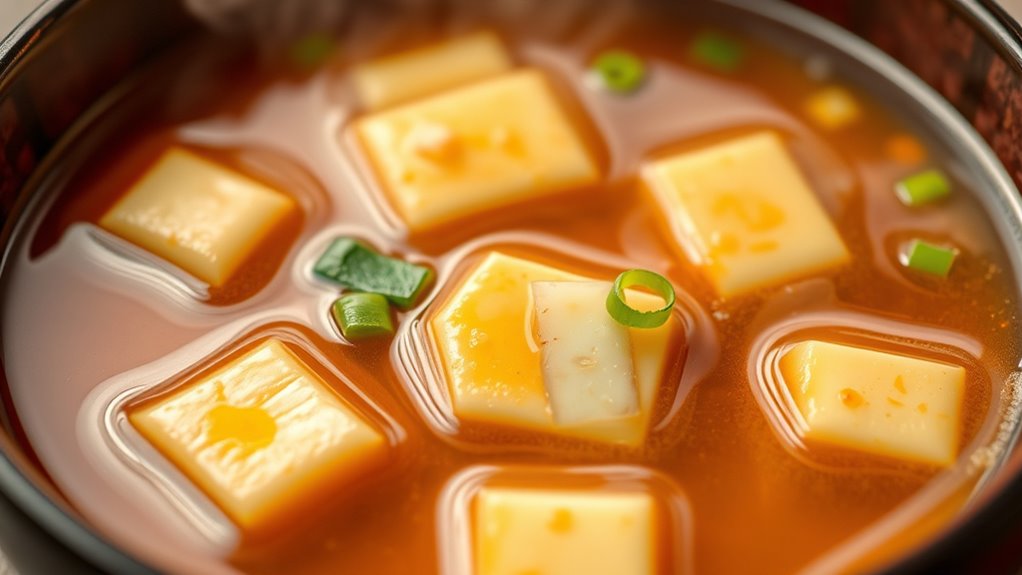
Have you ever wondered what makes certain foods taste so deeply satisfying? That rich, mouth-filling sensation you experience when biting into a perfectly cooked steak or a ripe tomato? It all comes down to the umami flavor, often called the fifth taste. Unlike sweet, sour, salty, or bitter, umami provides a unique depth that enhances other flavors and adds a savory richness to dishes. This taste isn’t just a coincidence; it’s a fundamental part of our palate, recognized across many cuisines around the world. Understanding umami allows you to better appreciate how certain ingredients and cooking techniques can elevate your meals.
Umami is primarily linked to the presence of glutamates—amino acid compounds naturally found in many foods. When these glutamates interact with your taste buds, they produce that savory, full-bodied sensation. That’s why foods rich in umami, like aged cheeses, mushrooms, soy sauce, and cured meats, feel so satisfying. These foods act as savory enhancers, intensifying the overall flavor profile of a dish. Chefs and home cooks alike use savory enhancers intentionally to deepen the complexity of their creations. For example, adding a splash of soy sauce or a sprinkle of Parmesan can turn a simple broth into a rich, flavorful experience. It’s this ability to amplify flavors that makes umami so essential in culinary arts.
Umami-rich foods like aged cheeses and soy sauce deepen flavors and create satisfying, savory dishes.
Knowing about umami also opens up new possibilities in your cooking. You can incorporate ingredients known for their umami qualities to make your dishes more appealing. For instance, adding sun-dried tomatoes or miso paste can boost the savory depth without overwhelming other flavors. This understanding allows you to balance ingredients more effectively, creating dishes that are both nuanced and satisfying. Additionally, many savory enhancers are used to reduce the need for excessive salt, making your meals healthier without sacrificing taste.
The science behind umami reveals that it’s not just a flavor but an essential part of how we perceive deliciousness. When you consciously use umami-rich ingredients and savory enhancers, you’re tapping into a primal sense that makes food more enjoyable. It’s why a bowl of steaming miso soup tastes so comforting or why a perfectly seasoned steak leaves you craving more. Recognizing and harnessing umami in your cooking helps you craft dishes that resonate deeply with your palate, turning ordinary ingredients into extraordinary flavors. Incorporating umami-rich ingredients effectively can also improve the overall satisfaction and depth of your culinary creations. So, next time you’re cooking, think about how to incorporate savory enhancers and umami-rich foods to elevate your culinary creations.
Frequently Asked Questions
How Does Umami Enhance Overall Flavor Profiles?
Umami enhances overall flavor profiles by creating flavor synergy, making dishes taste richer and more complex. It boosts taste enhancement, highlighting the natural savory notes of ingredients and balancing other flavors. When you add umami-rich foods like soy sauce or mushrooms, they deepen the flavor experience, making dishes more satisfying and well-rounded. This subtle yet powerful taste elevates your culinary creations, leaving a memorable and delicious impression.
What Are the Best Sources of Natural Umami?
A picture is worth a thousand words, so think of rich flavors. You’ll find the best natural umami in umami-rich vegetables like tomatoes, mushrooms, and seaweed. Fermented umami foods such as soy sauce, miso, and aged cheeses also pack a punch. Incorporate these into your dishes to deepen flavor naturally, as they boost savoriness and balance tastes without added artificial ingredients.
Can Umami Be Artificially Replicated in Foods?
Yes, umami can be artificially replicated in foods using umami flavoring, such as monosodium glutamate (MSG) or other flavor enhancers. These artificial umami additives boost the savory taste, making dishes more flavorful without relying solely on natural sources. You can find artificial umami in many processed foods and seasoning blends, which help to enhance the overall taste experience. Just be mindful of personal sensitivities to certain additives.
How Does Umami Influence Appetite and Satiety?
Umami acts like a master key in taste modulation, opening the door to better appetite regulation. It enhances flavors, making you feel more satisfied with smaller portions, so you’re less likely to overeat. When umami-rich foods hit your tongue, they send signals to your brain, signaling fullness and reducing hunger. This way, you naturally curb cravings and maintain a balanced diet, all by harnessing the power of this savory taste.
Are There Health Benefits or Risks Associated With High Umami Intake?
High umami intake can offer health benefits like enhanced flavor, leading to reduced salt use, but it also poses risks. You might consume excess sodium, especially if using processed umami-rich ingredients like MSG, which could raise blood pressure. Additionally, some individuals with allergies or sensitivities might experience adverse reactions. So, moderation is key, and it’s wise to monitor your intake to balance flavor benefits with potential health risks.
Conclusion
Now that you understand umami, you can appreciate how it enhances flavors in countless dishes. Did you know that around 60% of the world’s population craves umami-rich foods like mushrooms, aged cheeses, and soy sauce? Incorporating umami can elevate your cooking and satisfy your taste buds more deeply. So next time you cook, remember this secret fifth taste—your palate will thank you for it!