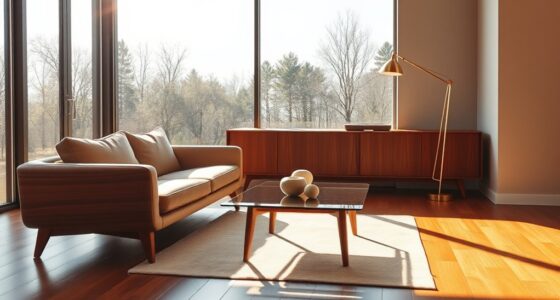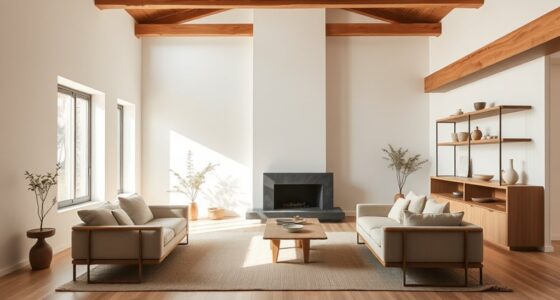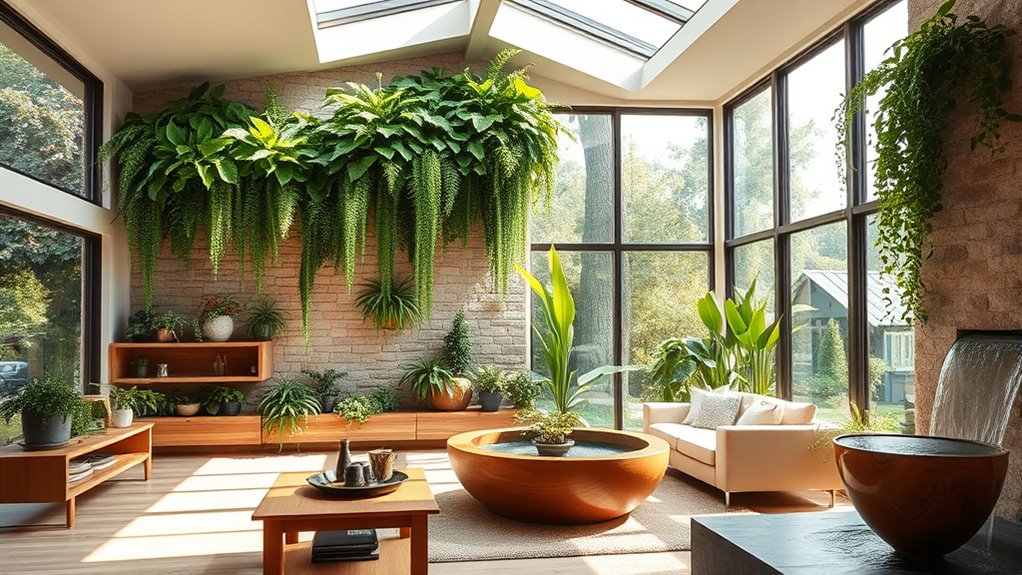

Biophilic design invites you to bring nature indoors by incorporating plants, natural materials like wood and stone, and organic textures into your space. These elements boost your well-being, reduce stress, and improve air quality while adding aesthetic appeal. Whether through lush greenery or natural finishes, this approach creates a calming, authentic environment that reconnects you with nature. Keep exploring to discover how blending these elements can transform your indoor spaces into restorative retreats.
Key Takeaways
- Biophilic design integrates natural elements like plants and natural materials to create calming, aesthetically pleasing indoor environments.
- Incorporating greenery improves air quality, reduces stress, and enhances focus and overall well-being indoors.
- Using natural materials such as wood, stone, and bamboo fosters a warm, authentic, and tactile environment.
- Small-scale elements like terrariums and natural textures support health and add subtle natural accents.
- Combining greenery with natural materials blurs indoor-outdoor boundaries, promoting a restorative and harmonious space.
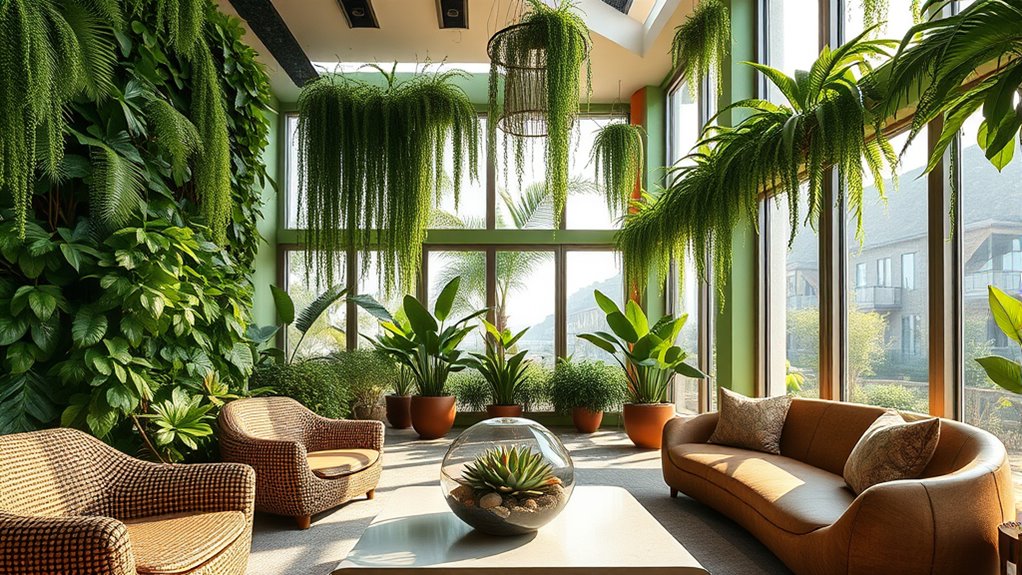
Have you ever wondered how incorporating natural elements into built environments can boost well-being and productivity? Biophilic design makes this possible by seamlessly blending nature with indoor spaces. One of the most effective ways to achieve this is through indoor greenery. When you introduce plants into your environment, you don’t just add aesthetic appeal—you create a calming atmosphere that reduces stress and enhances focus. Greenery like ferns, succulents, or hanging plants can soften harsh lines and bring an invigorating touch of nature indoors. They also improve air quality, which can make your space healthier and more inviting. Incorporating indoor plants such as ferns, succulents, or hanging plants can also help regulate humidity levels, further contributing to a healthier indoor environment.
Bringing indoor plants creates calming, healthier, and more inviting spaces that boost well-being and focus naturally.
Natural materials play a pivotal role in biophilic design, too. Using materials like wood, stone, cork, or bamboo connects your space directly to nature’s textures and patterns. These materials evoke a sense of warmth and authenticity, making your environment feel more grounded and comforting. For example, a wooden desk or stone accent wall can create a tactile experience that stimulates your senses and fosters a feeling of harmony. Natural materials also tend to age gracefully, developing character over time, which reinforces the idea of an organic, evolving space.
When you combine indoor greenery with natural materials, the effects amplify. Imagine a room where lush plants sit beside a reclaimed wood table, or a stone fireplace is framed with potted succulents. These elements work together to blur the boundary between indoors and outdoors, fostering a sense of connection to nature. This connection is essential because humans are inherently drawn to natural environments; biophilic design taps into this instinct, making your space more restorative and inspiring.
Furthermore, incorporating natural elements doesn’t mean overhauling your entire environment. Small touches, like a terrarium on your desk or a bamboo flooring, can make a significant difference. The key is to select elements that resonate with your space and style while promoting a sense of well-being. With thoughtful integration of indoor greenery and natural materials, your environment becomes more than just a place to work or relax—it transforms into a sanctuary that nurtures your mental and physical health.
In essence, biophilic design invites you to bring nature inside intentionally. By doing so, you create spaces that are not only visually appealing but also supportive of your overall health. Whether through vibrant plants or warm natural textures, these elements help foster a sense of tranquility and vitality, making everyday environments more aligned with our innate love for the natural world.
Frequently Asked Questions
How Does Biophilic Design Improve Mental Health?
Biophilic design improves your mental health by reducing stress and boosting cognitive function. When you connect with natural elements like plants and sunlight, you feel calmer and more focused. This design approach helps lower anxiety levels and enhances your ability to concentrate. By surrounding yourself with nature indoors, you create a space that promotes relaxation and mental clarity, making it easier to handle daily challenges with a positive mindset.
What Materials Are Best for Biophilic Interiors?
You’ll find that natural materials like wood, stone, and bamboo are best for biophilic interiors because they connect you to nature and improve well-being. Many experts believe these materials support sustainability, making them sustainable options that also reduce environmental impact. Using these elements can create a calming, authentic space that enhances your mental health and fosters a stronger bond with the natural world around you.
How Can Small Spaces Incorporate Biophilic Elements?
You can incorporate biophilic elements in small spaces by adding indoor plant arrangements that don’t clutter. Opt for compact, low-maintenance plants like succulents or pothos. Maximize natural light by using sheer curtains and placing plants near windows, which boosts their growth and your well-being. You might also hang planters or use vertical gardens to save space while creating a lush, calming environment that connects you with nature.
What Are Cost-Effective Ways to Implement Biophilic Design?
You can implement biophilic design on a budget by choosing budget-friendly plants like pothos or snake plants, which are easy to care for and affordable. Consider creating DIY green walls using reclaimed materials or vertical planters to maximize space. These solutions add natural elements without high costs, boosting your space’s ambiance and air quality. Get creative with simple, cost-effective ideas to bring nature indoors effortlessly.
Are There Any Cultural Considerations in Biophilic Design?
You should consider cultural symbolism and traditional practices when implementing biophilic design because they influence how people connect with nature. Coincidences often reveal unique cultural meanings behind natural elements, making your space more meaningful. Incorporate local plants or motifs, respecting cultural norms. By doing so, you honor diverse perspectives, creating a harmonious environment that resonates deeply and fosters comfort, inclusivity, and cultural appreciation within your design.
Conclusion
By embracing biophilic design, you create spaces that boost mood and productivity. Did you know that offices with natural elements can increase productivity by up to 15%? Incorporating plants, natural light, and organic materials helps you feel more connected to nature, even indoors. So, next time you redesign your space, remember that bringing nature inside isn’t just aesthetic—it’s a smart way to enhance your well-being and overall happiness every day.