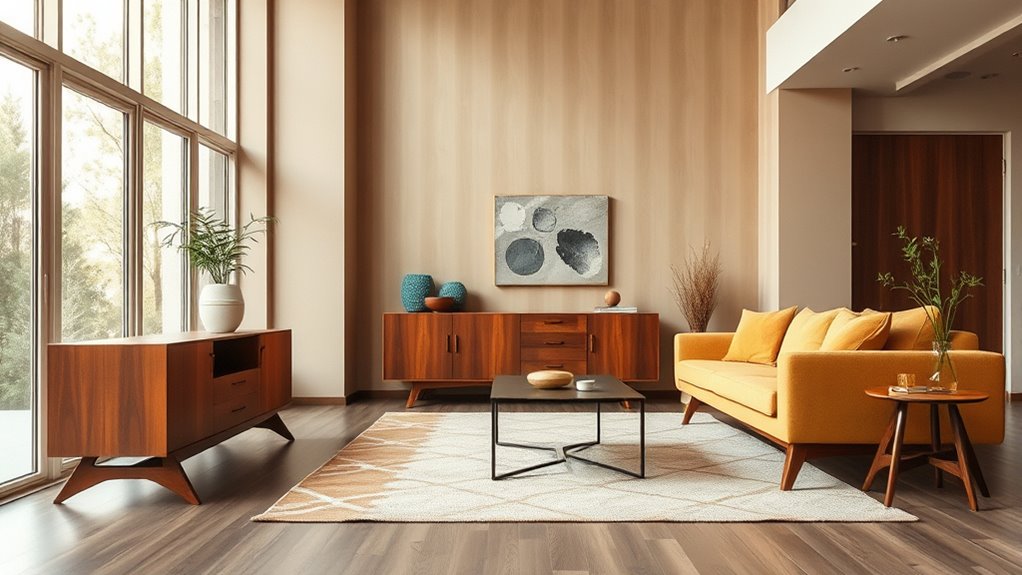

Midcentury Modern design highlights sleek lines, organic shapes, and a sense of optimism that emerged after World War II. It emphasizes simplicity, functionality, and bold statement pieces, often using innovative materials like molded plywood and fiberglass. This style creates spaces that are both stylish and practical, blending form and function seamlessly. If you want to uncover more about how this distinctive style continues to influence design today, there’s plenty more to explore.
Key Takeaways
- Midcentury Modern design features clean, sleek lines that emphasize simplicity and practicality.
- It draws inspiration from the optimism and innovative spirit following World War II.
- Iconic furniture pieces like the Eames lounge chair showcase functional beauty and modern materials.
- Geometric shapes and organic curves define the aesthetic, balancing minimalism with bold statements.
- The style reflects a cultural shift toward innovative, accessible, and timeless design principles.

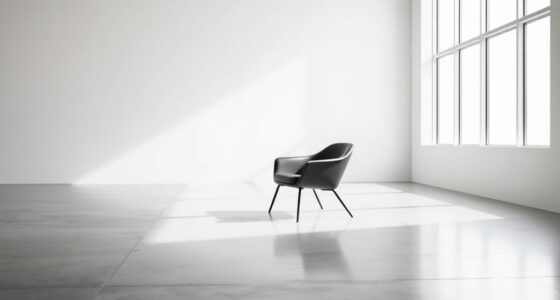
Have you ever wondered what makes Midcentury Modern design so timeless? It’s the perfect blend of sleek lines, functional beauty, and a sense of optimism that emerged after World War II. This style isn’t just about aesthetics; it’s a reflection of a period marked by innovation and new possibilities. When you look at Midcentury Modern spaces, you’re immediately struck by the clean, uncluttered look that emphasizes simplicity and practicality. But what truly sets it apart are the famous designers behind it and the iconic furniture pieces they created. These designers, like Charles and Ray Eames, Eero Saarinen, and Arne Jacobsen, revolutionized furniture design with their innovative ideas and craftsmanship. Their work remains influential because it combines form and function seamlessly, embodying the spirit of the era.
Midcentury Modern design blends sleek lines, innovation, and optimism, reflecting a timeless harmony of form and function.
The iconic furniture from this period isn’t just visually appealing; it’s built for everyday use. The Eames lounge chair, for example, is a masterpiece of comfort and style that continues to define modern living. Saarinen’s Tulip Table and Chairs streamlined the cluttered, ornate furniture that preceded it, offering a fresh, minimalist alternative. These pieces are more than furniture; they’re symbols of a cultural shift toward embracing new materials like molded plywood, fiberglass, and steel, which allowed for more daring shapes and designs. When you incorporate these iconic furniture pieces into your home, you’re not just adding style—you’re paying homage to a design movement that prioritized innovation and practicality.
The influence of these famous designers goes beyond just one piece of furniture. They set a standard for what modern design could be, emphasizing simplicity without sacrificing comfort. Their work often features geometric shapes, organic curves, and a focus on functionality—traits that make Midcentury Modern furniture timeless. You’ll notice that the designs are accessible yet sophisticated, appealing to both minimalists and lovers of bold, statement pieces. It’s this balance that keeps Midcentury Modern relevant today. Whether you’re decorating a small apartment or a spacious home, the iconic furniture from this era offers versatile options that can blend seamlessly with contemporary styles.
In essence, the enduring appeal of Midcentury Modern lies in its pioneering spirit, driven by famous designers and their iconic furniture. They captured the optimism of a postwar world, and their creations continue to inspire us to combine beauty with utility. Color accuracy plays a crucial role in achieving the authentic look of Midcentury Modern interiors, ensuring that the visual harmony and vibrant palettes characteristic of the style are maintained. When you choose pieces from this era, you’re not just decorating; you’re celebrating a design philosophy that values clarity, innovation, and timeless elegance.
Frequently Asked Questions
What Are the Key Materials Used in Midcentury Modern Furniture?
You’ll find iconic wood like teak and walnut, which give midcentury modern furniture its warm, natural look. Plastic accents are also common, adding color and flexibility to designs. You might notice metal legs and frames that provide sturdy support and a sleek appearance. These materials combine to create furniture that’s both stylish and functional, making your space feel timeless and inviting.
How Did Postwar Culture Influence Midcentury Modern Design?
Postwar optimism and technological innovations heavily influenced your midcentury modern design choices. You embraced new materials and sleek lines, reflecting hope and progress after the war. The era’s enthusiasm for innovation led you to incorporate functional, futuristic elements into your furniture and architecture. This cultural shift encouraged you to create spaces that felt modern, optimistic, and forward-looking, capturing the spirit of a bright, evolving future.
Which Designers Are Most Associated With This Style?
You’ll recognize designers like Charles and Ray Eames, Eero Saarinen, and Arne Jacobsen as most associated with midcentury modern style. They often worked on famous designer collaborations, blending innovative materials and sleek lines. Their designs also reflect midcentury fashion influence, emphasizing minimalism and functionality. You’ll see their work in iconic furniture pieces and architecture, shaping the timeless, clean aesthetic that defines this influential design movement.
How Can I Incorporate Midcentury Modern Into a Modern Home?
To incorporate midcentury modern into your home, focus on clean lines, functional furniture, and minimal decor. You can add a vintage-inspired outdoor patio with sleek furniture and bold geometric patterns. For practicality, incorporate smart garage organization with simple, streamlined storage solutions. Mix natural woods and bold accent colors, and keep spaces uncluttered to achieve that authentic midcentury modern vibe. This approach creates a stylish, functional living environment.
What Are Common Color Schemes in Midcentury Modern Interiors?
You’ll notice that midcentury modern interiors often feature neutral palettes as the base, creating a calm and timeless backdrop. To add vibrancy, you incorporate vibrant accent colors like bold oranges, teals, or mustard yellows in furniture or accessories. This balanced mix of neutral tones with pops of vibrant hues gives your space a stylish yet inviting look, perfectly capturing the essence of midcentury modern design.
Conclusion
As you embrace midcentury modern design, you might wonder if its sleek lines truly reflect postwar optimism. notably, some experts believe the minimalist aesthetic was a subconscious response to the chaos of war, offering a sense of calm and clarity. Whether you see it as a design trend or a psychological refuge, one thing’s clear: its timeless appeal continues to inspire. So, next time you choose a piece, remember—you’re connecting with a movement born from resilience and hope.