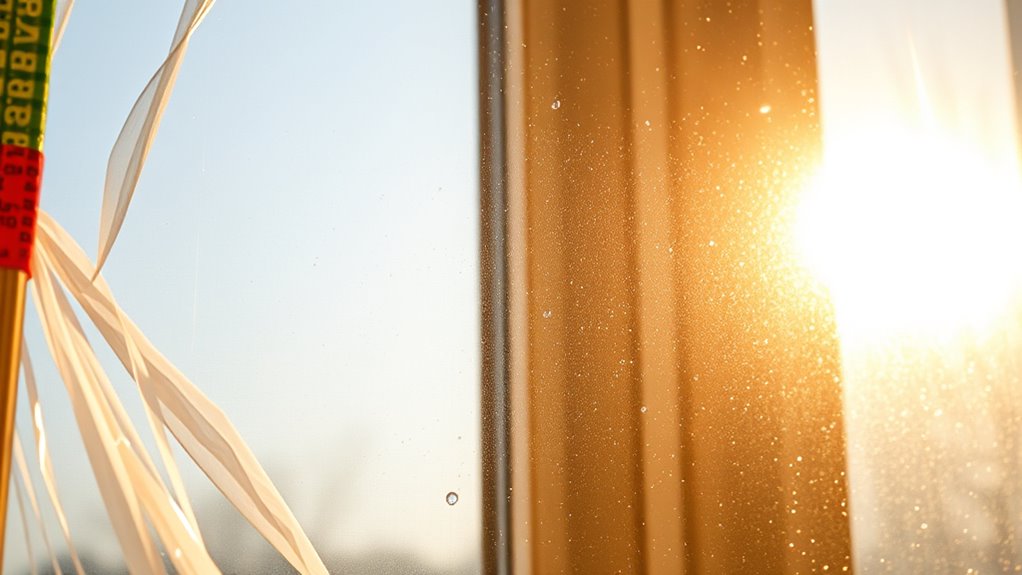

To improve your window energy efficiency on a budget, start by sealing gaps around frames to prevent drafts. Add thermal curtains or blinds to trap warm air and block cold drafts at night. Applying affordable window film directly to glass can reduce heat loss without changing your windows. Combining these solutions boosts insulation and lowers energy bills. Keep exploring simple tips to make your home cozier and more energy-efficient throughout the year.
Key Takeaways
- Install affordable window film to create a thermal barrier and block heat transfer through glass.
- Use thermal curtains to seal gaps, retain warm air, and reduce drafts effectively.
- Seal cracks and gaps around windows with weatherstripping to prevent cold air infiltration.
- Combine window film and curtains for layered insulation, maximizing energy savings on a budget.
- Maintain clean, unobstructed windows to improve insulation efficiency and heat retention indoors.

Are your windows letting in drafts and causing your energy bills to spike? If so, you’re not alone. Cold air slipping through gaps can make your home uncomfortable and force your heating system to work overtime. Luckily, you can improve your home’s energy efficiency without breaking the bank by using simple, cost-effective solutions like thermal curtains and window film. These options are easy to install, affordable, and can make a noticeable difference in maintaining a cozy indoor temperature.
Thermal curtains are an excellent first step. They’re designed with insulating materials that help block drafts and prevent heat from escaping through your windows. When closed, they create a barrier that keeps warm air inside and cold air outside. You can choose thermal curtains in a variety of styles to match your decor, making them both functional and attractive. The key is to ensure they fit snugly against the window frame, covering the entire window to maximize their insulating effect. During cold nights or winter months, pulling these curtains closed can substantially reduce heat loss, helping you stay warm without cranking up the thermostat. Plus, they’re easy to remove or open during warmer days, giving you flexibility based on the weather.
In addition to curtains, applying window film is a another smart, budget-friendly way to insulate your windows. Window film is a thin, transparent layer that adheres directly to the glass surface. It acts as a thermal barrier, reducing heat transfer and reflecting cold air back into the room. Installing window film is straightforward—you simply clean your windows thoroughly, cut the film to size, and apply it with water or a mild adhesive. Once in place, it becomes almost invisible, yet it works tirelessly to improve your window’s insulation properties. Some films are designed to block UV rays, which can also help protect your furniture and flooring from fading. Using window film can be particularly effective on large or single-pane windows that lack the insulation of double-glazed options.
Combining thermal curtains and window film can amplify your efforts, creating a layered defense against drafts and heat loss. These solutions are budget-friendly, easy to implement, and require minimal maintenance. They’re perfect for renters or homeowners looking to save on energy costs without investing in expensive window replacements. Additionally, maximizing space and organization can help keep your windows clear of clutter, making the insulation more effective. By sealing gaps and reducing heat transfer, you’ll notice a more comfortable home, lower heating bills, and a smaller carbon footprint. So, don’t underestimate the power of these simple upgrades—they can make a big difference in how warm and energy-efficient your home feels, all while keeping costs low.
As an affiliate, we earn on qualifying purchases.
Frequently Asked Questions
What Are the Best DIY Window Insulation Methods?
You can start by installing thermal curtains to block drafts and keep heat inside. Additionally, apply weather stripping around your windows to seal gaps and prevent air leaks. For extra insulation, use plastic film kits that you can easily attach with a hairdryer. These simple DIY methods are affordable and effective, helping you improve energy efficiency without breaking the bank.
How Long Does Window Insulation Last Before Needing Replacement?
You might wonder how long your DIY window insulation lasts before needing a redo. Typically, window seal longevity depends on insulation material durability, which can range from 3 to 10 years. Factors like weather and installation quality also matter. If you notice drafts or condensation, it’s time to check and possibly replace the seal. Proper maintenance keeps your insulation effective longer, ensuring your home stays warm and energy-efficient.
Are There Eco-Friendly Insulation Options for Windows?
Yes, you can choose eco-friendly materials for window insulation, like recycled foam, cellulose, or wool. These sustainable solutions reduce environmental impact and are safe for your home. By opting for these options, you support eco-conscious choices while improving energy efficiency. Keep in mind, proper installation and maintenance help these materials last longer, ensuring your investment benefits both your home and the planet.
Can Window Insulation Reduce Outside Noise Effectively?
You might think window insulation won’t block noise, but it actually can substantially reduce outside sounds. Using soundproofing techniques like applying weatherstripping or adding interior window inserts creates an effective barrier. For even better results, consider exterior barrier options such as window awnings or exterior shutters. These methods dampen noise and improve comfort, making your space quieter without breaking the bank.
What Is the Cost Comparison Between DIY and Professional Insulation?
A DIY window insulation cost is considerably lower, usually between $20 and $50 per window, making it a budget-friendly option. Professional insulation services can cost $100 to $300 per window, depending on the material and labor. Conducting a cost analysis helps you choose the best approach. For budget strategies, DIY methods save money upfront, but professional insulation offers longer-lasting, more effective results.
Conclusion
Think of your windows as the gatekeepers of your home’s warmth, gently guarding against the chill. By insulating them, you’re building a fortress that keeps your cozy energy inside, saving you money and reducing waste. Just like a wise guardian, these simple upgrades stand firm against the cold, ensuring your comfort all season long. With a little effort, you’ll transform your home into a warm sanctuary—protected, efficient, and inviting, all without breaking the bank.


![A Better Way To Tie Your Gym Shorts. (Or Any Drawstring) [Video]](https://babazam.com/wp-content/uploads/2026/07/a-better-way-to-tie-your-gym-shorts-or-any-drawstring-video-featured-560x300.jpg)