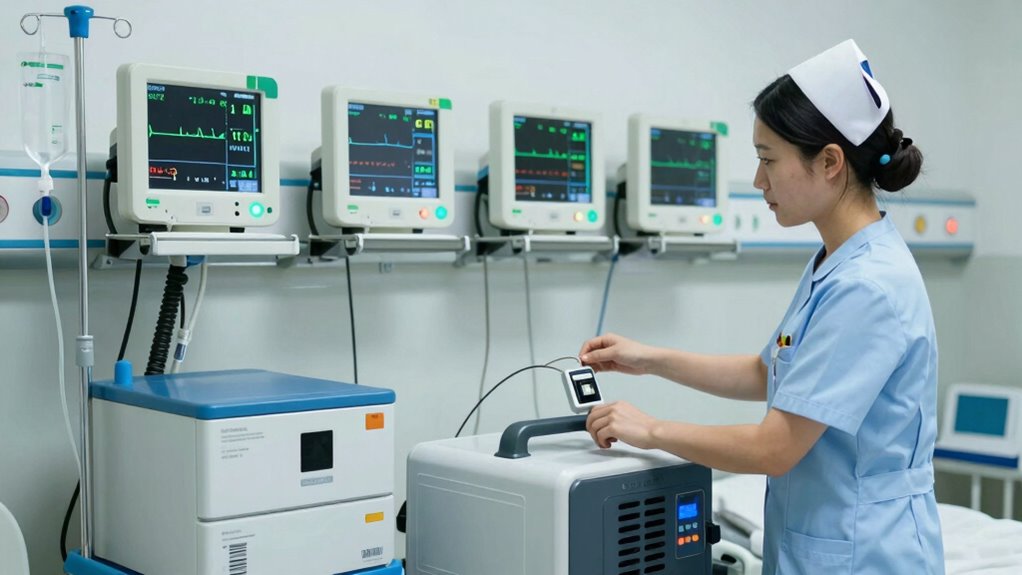

When planning backup power, you should always start with medical needs to guarantee patient safety and continuous operation of critical devices like ventilators and infusion pumps. Identify the specific devices used and their energy requirements to choose the right backup sources, whether batteries, generators, or renewable systems. Prioritizing medical needs minimizes risks during outages, and understanding different options helps you build a reliable, sustainable system. Keep going to discover how to optimize your backup strategy for various outage durations.
Key Takeaways
- Prioritize critical medical devices to ensure uninterrupted operation during power outages.
- Assess specific energy requirements of essential medical equipment for effective backup sizing.
- Choose backup power sources capable of supporting medical needs for both short and long outages.
- Incorporate renewable and hybrid systems to enhance reliability and sustainability for medical facility backup power.
- Implement energy management strategies to optimize backup system performance and ensure patient safety.
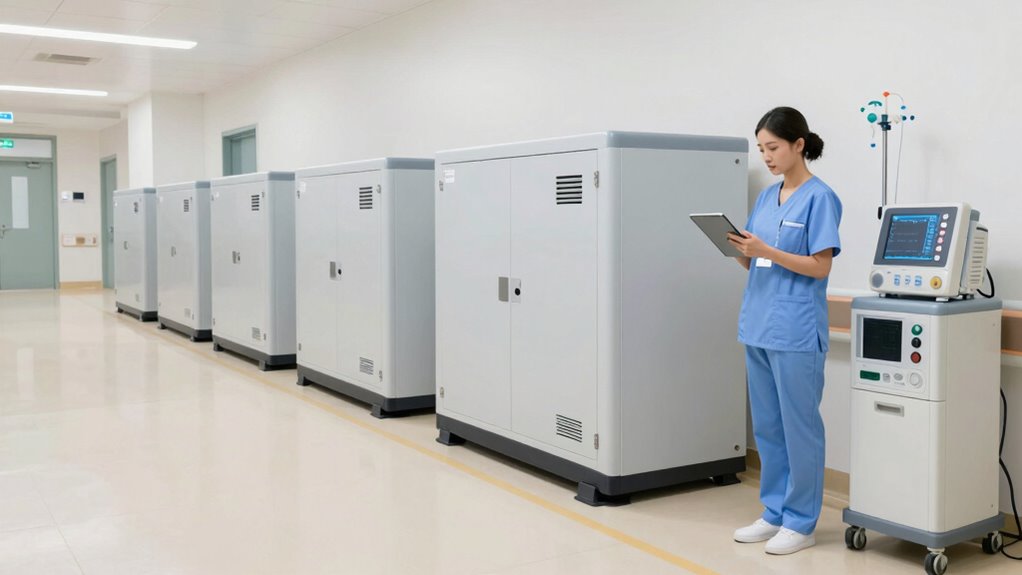
Having reliable backup power is crucial to keep your operations running smoothly during outages. When planning your backup power system, your first priority should be addressing medical needs. Medical equipment, such as ventilators, infusion pumps, and oxygen concentrators, often cannot tolerate interruptions. Any disruption could jeopardize patient safety or compromise critical treatments. Consequently, your backup plan must guarantee these devices remain operational at all times, regardless of power outages.
Prioritize medical needs in backup power planning to ensure critical devices remain operational during outages.
To achieve this, you need to evaluate the specific medical devices in use and determine their power requirements. Once you know their energy needs, you can select an appropriate backup power source. While traditional generators are common, integrating renewable sources, like solar panels with battery storage, offers a sustainable and reliable option. Solar-powered backup systems can provide continuous power during daylight hours and store excess energy for use during night or cloudy days, reducing your reliance on fuel-based generators and minimizing environmental impact.
It’s also essential to think about the duration of potential power outages in your area. Short outages may only require a battery backup or uninterruptible power supply (UPS), which can keep critical devices running for a limited time. Longer outages, however, demand a more robust solution, such as a generator with sufficient fuel or a renewable hybrid system that can sustain power for days. Combining renewable sources with traditional backup systems ensures you are prepared for various scenarios while promoting sustainability.
Incorporating renewable energy into your backup power plan not only supports environmental goals but also enhances resilience. During power outages, renewable systems can provide a stable source of energy, especially when paired with batteries that store excess power generated during normal operations. This setup reduces dependency on fossil fuels and can lower ongoing operational costs, making your backup power more sustainable and cost-effective in the long run. Understanding renewable energy and its benefits is key to developing an effective backup power strategy that balances safety, sustainability, and cost-efficiency.
Additionally, considering energy storage options is vital, as they can significantly improve your system’s ability to supply power during extended outages. This proactive approach not only protects your operations but also demonstrates a commitment to safety and responsible energy use, giving you peace of mind during unforeseen disruptions. Incorporating advanced energy management can further optimize energy use and ensure your backup system responds effectively to varying power demands. Using energy management systems can help monitor and control your backup power sources more efficiently, ensuring optimal performance.

CyberPower CP1500PFCLCD PFC Sinewave UPS Battery Backup and Surge Protector, 1500VA/1000W, 12 Outlets, AVR, Mini Tower, UL Certified
- Power Capacity: 1500VA/1000W PFC sine wave UPS
- Number of Outlets: 12 outlets with surge protection
- Outlet Types: Six battery backup, six surge protected
As an affiliate, we earn on qualifying purchases.
As an affiliate, we earn on qualifying purchases.
Frequently Asked Questions
How Do Medical Emergencies Influence Backup Power Priorities?
Medical emergencies profoundly influence backup power priorities because patient safety and emergency preparedness depend on reliable power sources. You must guarantee critical medical equipment, like ventilators and monitors, stay operational during outages. Prioritizing backup power for healthcare facilities helps prevent life-threatening situations. By focusing on these needs, you enhance overall emergency readiness, safeguarding patient well-being and maintaining healthcare services during power disruptions.
What Regulations Govern Backup Power for Healthcare Facilities?
Did you know that over 90% of healthcare facilities must comply with strict backup power regulations? These rules, governed by agencies like the Joint Commission and NFPA 99, focus on electrical safety and battery maintenance. You need to guarantee generators are reliable, regularly tested, and meet safety standards to keep essential medical equipment functioning during outages. Staying compliant helps protect patient safety and avoids costly penalties.
How Long Should Backup Power Last for Critical Medical Equipment?
You should guarantee your backup power lasts at least 96 hours for vital medical equipment. The power source, often a generator or battery backup, needs sufficient battery capacity to sustain essential devices during outages. Evaluate the equipment’s energy demands to determine the appropriate battery capacity, ensuring continuous operation without interruptions. Regular testing and maintenance are essential to confirm your backup power system can reliably meet these duration requirements when needed.
What Are the Costs Associated With Medical Backup Power Solutions?
The costs of medical backup power solutions vary based on battery lifespan and system complexity. You’ll need to take into account initial setup costs, including equipment and installation, plus ongoing expenses like maintenance and battery replacements. Conducting a thorough cost analysis helps you understand long-term affordability. While upfront costs can be significant, investing in reliable backup power ensures patient safety and compliance, making it a worthwhile and essential expense for medical facilities.
How Often Should Medical Backup Power Systems Be Tested?
You should test your medical backup power systems at least twice a year to guarantee reliability. Don’t wait for an emergency—regular testing reveals issues like battery lifespan decline or power redundancy failures before they become critical. Suspense builds as you realize that failing to test could leave patients vulnerable. Maintain a strict schedule to confirm your backup systems function flawlessly, providing peace of mind when it matters most.
Conclusion
Thinking about backup power isn’t just about convenience — it’s about safeguarding lives and health. When medical needs are at stake, can you really afford to be unprepared? Imagine a power outage during a critical moment, leaving patients without the care they depend on. Starting your backup power plan with medical needs guarantees you’re ready for the unexpected. Are you willing to risk the safety of those who rely on you? Prioritize health, plan ahead.