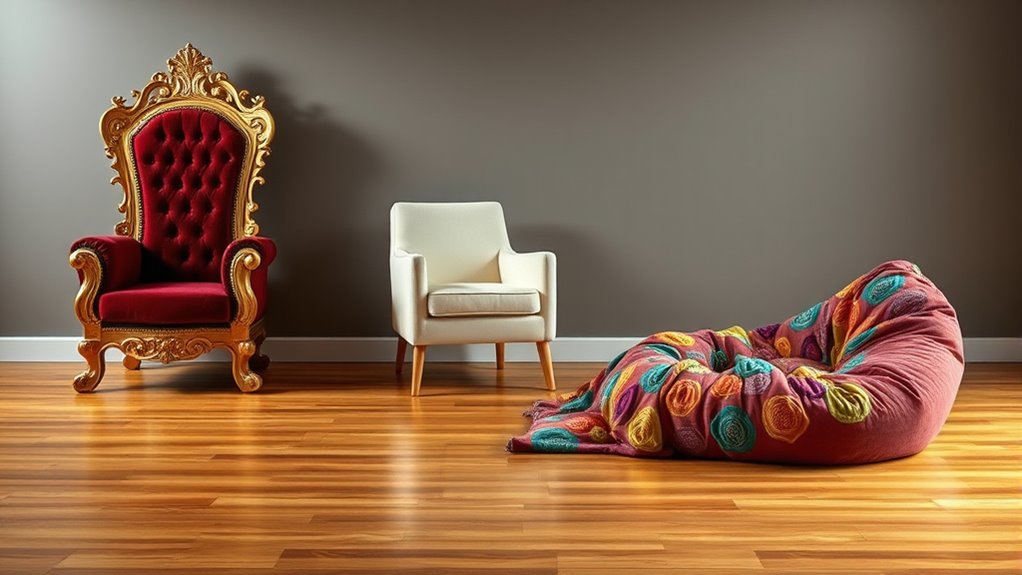

Throughout history, furniture has transformed from ornate thrones and carved symbols of power to simple, ergonomic designs focused on your comfort and health. Medieval pieces showcased craftsmanship and status, while modern furniture emphasizes ergonomics, adaptability, and well-being. Innovations like adjustable desks and cozy beanbags reflect your evolving needs for comfort and flexibility. If you keep going, you’ll discover how these changes mirror cultural shifts and our desire for better living spaces.

Get decor and gifts delivered free — and shop member deals
- Fast, free delivery on millions of items
- Access to Prime Big Deal Days deals on October 6–7
- Prime Video, Amazon Music and more included
Key Takeaways
- Medieval furniture was handcrafted, ornate, and symbolized wealth, with thrones representing authority and social status.
- Transitioned from elaborate craftsmanship to modern ergonomic designs prioritizing comfort and health.
- Ancient thrones and heavy furniture reflected social hierarchy, contrasting with today’s lightweight, adaptable pieces.
- Contemporary furniture features modular, adjustable, and inclusive designs promoting better posture and well-being.
- The evolution from ornate thrones to casual beanbags mirrors cultural shifts toward comfort, functionality, and health awareness.
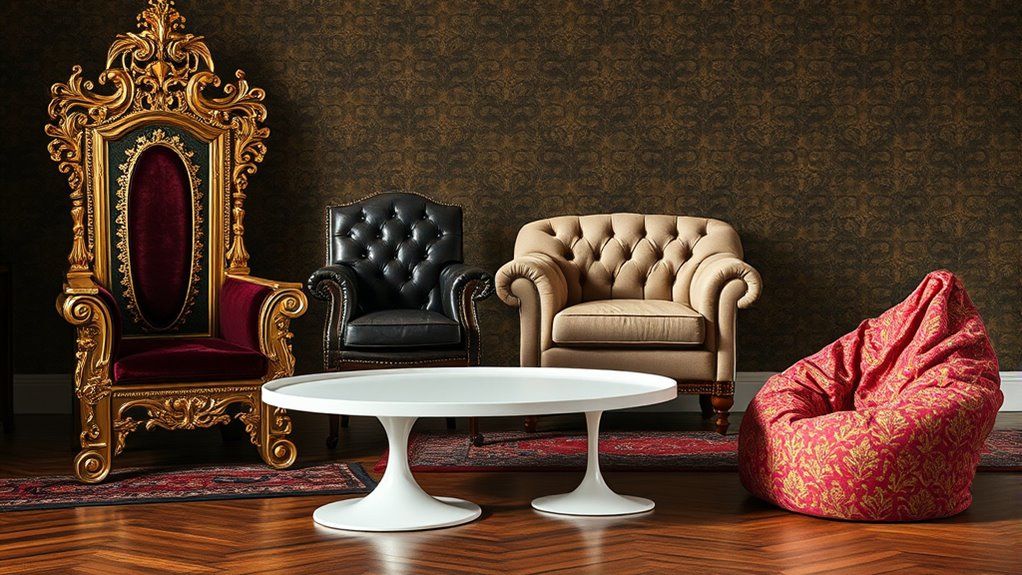
Furniture has evolved considerably over the centuries, reflecting changes in technology, culture, and lifestyle. When you look back, you’ll notice how early designs were often handcrafted with medieval craftsmanship, emphasizing durability and status. Back then, furniture was a symbol of wealth and power, crafted with intricate details and rich materials. Chairs and thrones weren’t just functional; they were statements of authority. The artisans of the medieval period took pride in their craftsmanship, creating pieces that often featured carvings, gilding, and elaborate upholstery. These pieces weren’t mass-produced but carefully built by skilled craftsmen, meant to last generations. The emphasis on craftsmanship during this era highlights the value placed on artisanal skill and personalized design.
Medieval craftsmanship crafted durable, ornate furniture as symbols of wealth and authority, emphasizing intricate details and rich materials.
As time moved forward, furniture design shifted from ornate craftsmanship to prioritize human comfort and efficiency. Today, you benefit from modern ergonomics, which focus on supporting your body’s natural posture and reducing strain. Whether you’re sitting at a desk or lounging in a sofa, ergonomic principles guide the design to promote health and well-being. This shift reflects a broader cultural change: furniture is no longer just about displaying status but about enhancing everyday life. Ergonomic chairs with adjustable features, memory foam cushions, and supportive backrests show how far furniture has come in prioritizing your comfort. While medieval furniture was often heavy and ornate, modern pieces are sleek, lightweight, and designed with your physical needs in mind.
You’ve probably noticed that recent innovations have made furniture more adaptable and inclusive. Adjustable height desks, modular sofas, and multi-purpose pieces cater to different lifestyles and spaces. The influence of modern ergonomics has also led to the development of furniture that promotes better posture, reduces discomfort, and even prevents long-term health issues. This evolution is a response to your increasingly dynamic and health-conscious way of living.
ergonomic adjustable office chair
As an affiliate, we earn on qualifying purchases.
As an affiliate, we earn on qualifying purchases.
Frequently Asked Questions
How Did Furniture Design Influence Social Hierarchies Historically?
You see, furniture design has historically shaped social hierarchies by emphasizing status and power. Royal thrones, for example, symbolize authority and elevate the social standing of rulers, reinforcing social stratification. Wealthy families often have elaborate pieces, while common folk’s furniture remains simple. This visual distinction helps reinforce societal roles, making it clear who holds power and who doesn’t, ultimately influencing social dynamics throughout history.
What Materials Were Used in Ancient Furniture Construction?
You’re asking about the materials used in ancient furniture construction. Back then, artisans relied heavily on wood carving for durability and aesthetics. They also used textiles for upholstery, adding comfort and style to their creations. Natural materials like stone, bone, and ivory sometimes made their way into furniture pieces. It’s clear that these materials laid the foundation for timeless designs, proving that sometimes, old tricks are the best.
How Did Technological Advances Impact Furniture Manufacturing?
You see, technological advances greatly impacted furniture manufacturing by introducing automation, which increased efficiency and precision. This shift also encouraged the use of sustainable materials, reducing environmental impact. With automation, you get faster production times and consistent quality, making furniture more accessible. These innovations enable manufacturers to experiment with eco-friendly resources, leading to durable, stylish pieces that meet modern demands for sustainability and affordability.
Were There Regional Differences in Furniture Styles Worldwide?
You’ll find regional differences in furniture styles worldwide due to unique craftsmanship and cultural symbolism. Local materials, techniques, and traditions shape what’s created, reflecting each area’s identity. For example, intricate carvings might symbolize status or beliefs, while regional craftsmanship guarantees furniture fits local needs and aesthetics. These distinctions highlight how diverse cultures express their values through furniture, making each style a reflection of its origin’s history and symbolism.
How Has Furniture Ergonomics Evolved Over Centuries?
You’ll see how furniture ergonomics have evolved with ergonomic innovations and comfort-focused designs over centuries. Early furniture prioritized status, but over time, it shifted towards supporting health and well-being. Modern designs incorporate adjustable features, lumbar support, and materials that reduce strain. You benefit from these advancements every day, enjoying furniture that adapts to your body and promotes comfort, reflecting a continuous journey toward better ergonomic solutions.
Conclusion
As you’ve seen, furniture has evolved from majestic thrones to comfy beanbags, reflecting changes in culture, technology, and comfort. It’s fascinating to realize how each piece tells a story about its time. So, next time you sit down, ask yourself: isn’t it incredible how something so simple can hold centuries of history and human ingenuity? After all, isn’t every chair, every table, a demonstration of our ongoing quest for comfort and expression?
Halloween Picks
halloween
As an affiliate, we earn on qualifying purchases.